



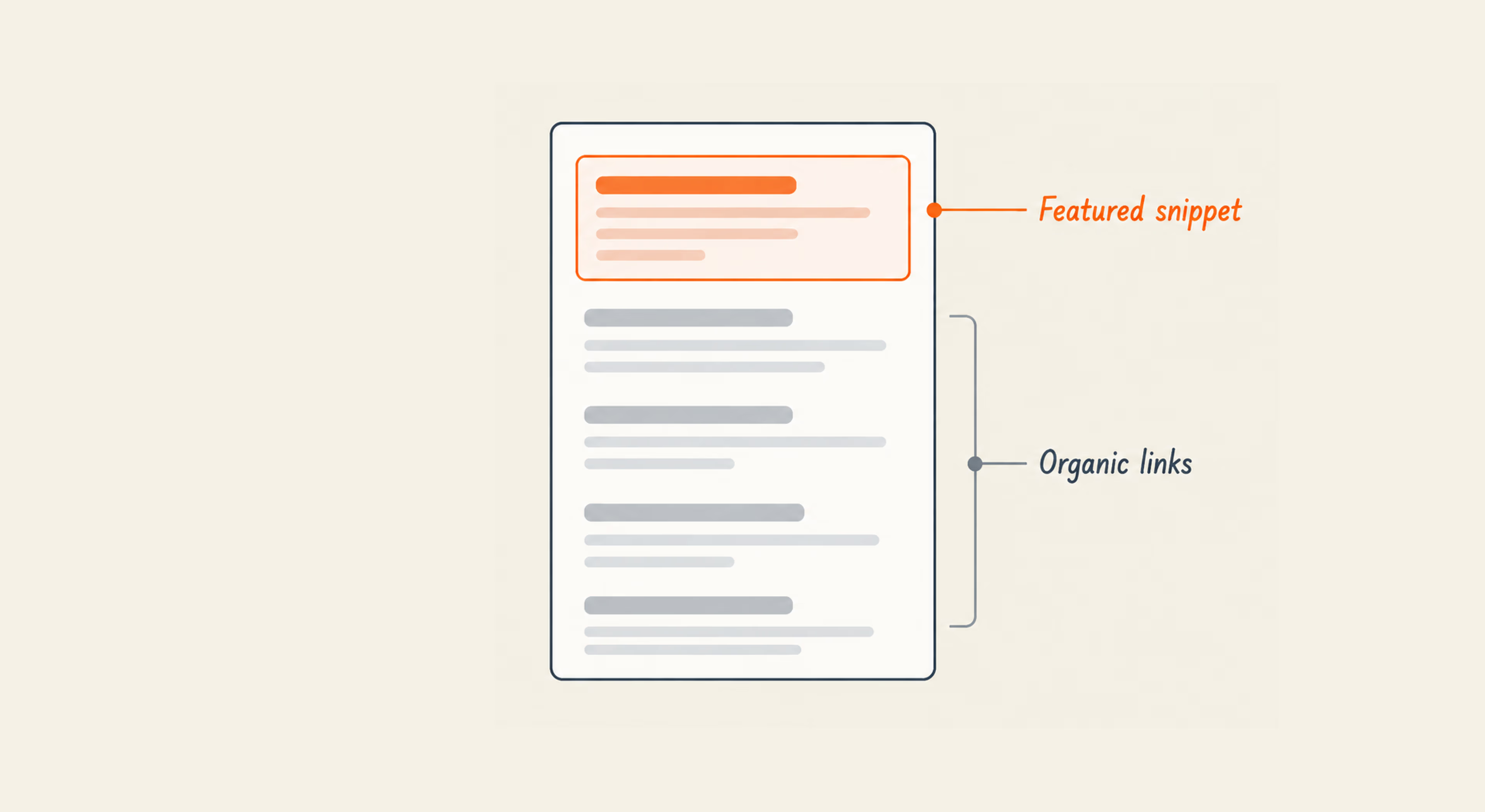
For years, ranking on Google meant climbing toward the top of the blue links, but that target has quietly moved. Above those links now sits a featured snippet — a box that answers the query outright, and often the first thing a searcher reads. Getting into it works differently from ranking well.


The difference is that the box rewards how clearly a page answers a question, more than how large or established the site behind it is. Google lifts the text that resolves the query most directly, which is why a modest page can hold the spot over a much bigger competitor. This guide covers what the above-mentioned snippets are, why they’re worth targeting, the formats the search engine pulls from, and how to structure a page to win one.
What are featured snippets?
Before getting into optimization, it helps to understand what Google is actually showing in a featured snippet and how that result differs from a standard organic listing. The mechanics behind it shape what you should optimize for later.
What featured snippets actually are
A featured snippet is an excerpt from a web page that Google highlights in a special search result to answer a query directly. It can feature a paragraph, list, table, or other extract from the source, along with a link back to the page. When a page is elevated into a featured snippet, Google generally does not repeat the same listing again among the standard organic results on that page.
Whether a page earns that placement still depends on the broader fundamentals of search visibility, which our guide to SEO basics covers from the ground up.
How featured snippets work in Google’s SERP
Google’s systems automatically decide when a featured snippet would be useful for a query and which page provides a suitable extract. The selected content is then surfaced in the featured result with a link back to its source.
Ranking well still matters, since Google needs to consider the page relevant and useful for the query in the first place. But the highest-ranking result does not automatically win the snippet. A lower-positioned page can still be featured if Google determines that one of its passages provides a particularly useful answer.
That changes the optimization goal: you do not necessarily need to outrank every competitor first. You need a page that is competitive for the query and an answer that Google can clearly identify and surface.
Why featured snippets matter for SEO
Winning one of these boxes changes how people meet your brand in the results — what shows up first, whether a click follows, and what a searcher sees before arriving on your site. Those shifts aren’t all the same kind, and they are worth getting right.
Greater visibility at the top of search results
Where Google shows one, the snippet holds the most prominent spot among the classic results — a searcher sees your answer before weighing the alternatives. That head start is pronounced on a phone, where the box can fill the opening view and push competing results below the fold until someone scrolls.
Higher click-through potential
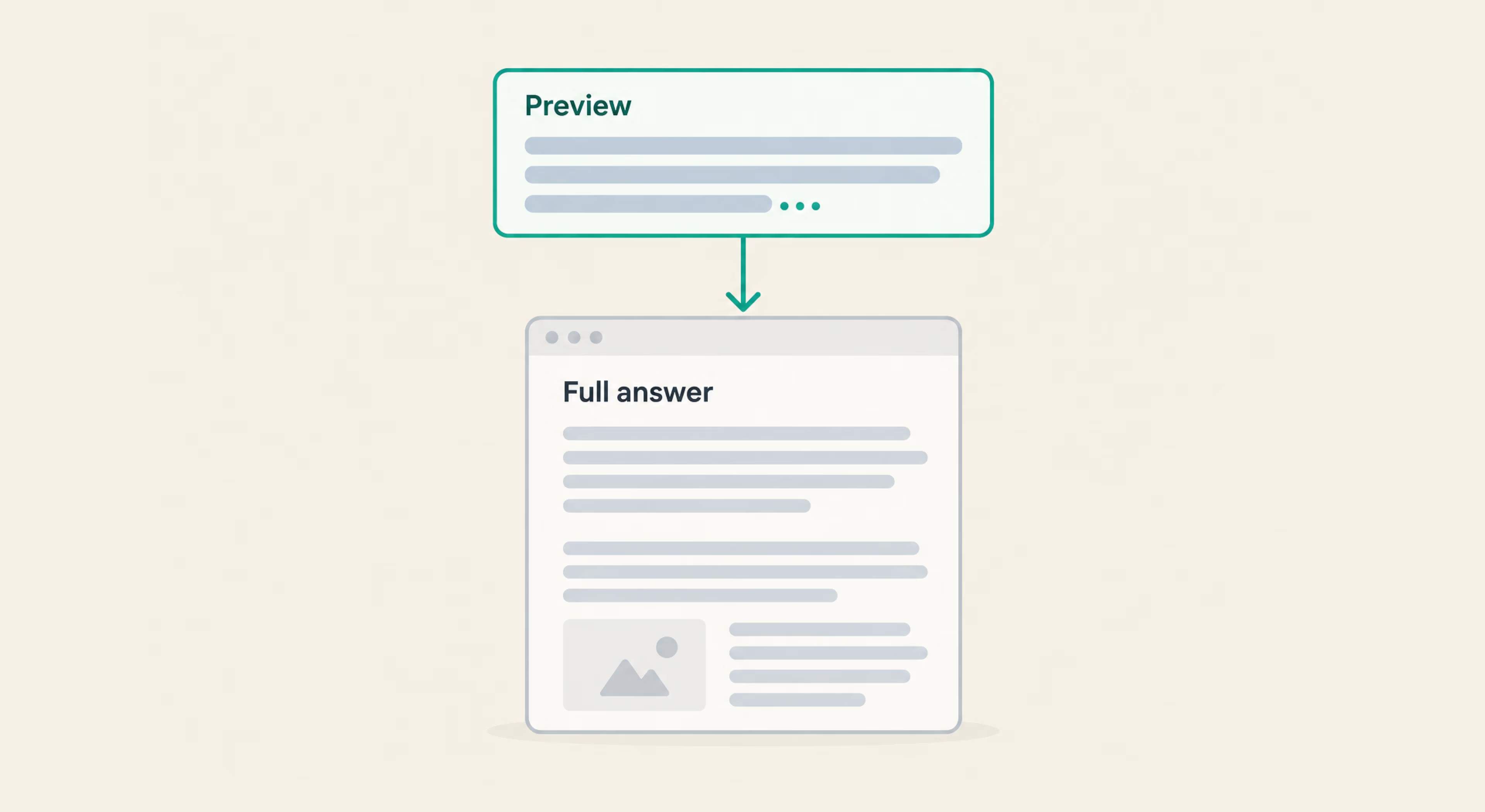
A snippet doesn’t always cost you the click. Simple factual queries can be resolved directly in the box, but richer topics work differently — when the answer only opens the subject, or lays out the first steps of a longer process, the snippet can give readers a reason to follow the link for more detail. In those cases, the box acts as a preview of the fuller answer on the source page.
Perception of authority and brand credibility
When Google puts your page forward prominently as a direct answer, it can give the source greater authority at first glance. Searchers encounter your brand before many of the alternatives, which can strengthen the impression that the page is relevant to the subject.
This impression can carry beyond the single query. A reader who first encounters you as a prominently featured source may arrive with greater familiarity when they later consider what you offer.
Influence on deduplication, ranking signals, and AI answers
A featured snippet can influence more than the box itself:
- Deduplication. Google generally does not repeat the same listing again among standard organic results when that page is shown as the featured snippet.
- Broader content clarity. A featured snippet is not itself a ranking signal, but making an answer clear, self-contained, and easy to understand can improve the page for both readers and search engines.
- AI visibility. The same clear, well-structured content can also support visibility in generative search experiences. Featured snippets and AI Overviews work differently, so appearing in one does not guarantee inclusion in the other, but the underlying SEO principles overlap. We compare the two formats later in this guide.
When featured snippets reduce CTR
Zero-click results are part of how search works now, but they don’t affect every query in the same way. Whether a featured snippet reduces or encourages clicks depends largely on how much of the searcher’s need the result can satisfy on its own. Three common query types help illustrate the difference.
Factual queries
Simple factual queries are the most likely to end in the results page itself. Ask for the capital of France or a straightforward conversion, and the snippet may provide everything the searcher needs without a click. These snippets can still increase visibility, but they may be less valuable when traffic is the primary goal.
Process queries
Process queries often leave more room for a click because a short snippet can only cover part of the answer. A search like “how do I optimize…” may surface the first step or a concise summary while the full method remains on the source page. That makes these queries useful targets when the goal is both visibility and traffic.
Comparison queries
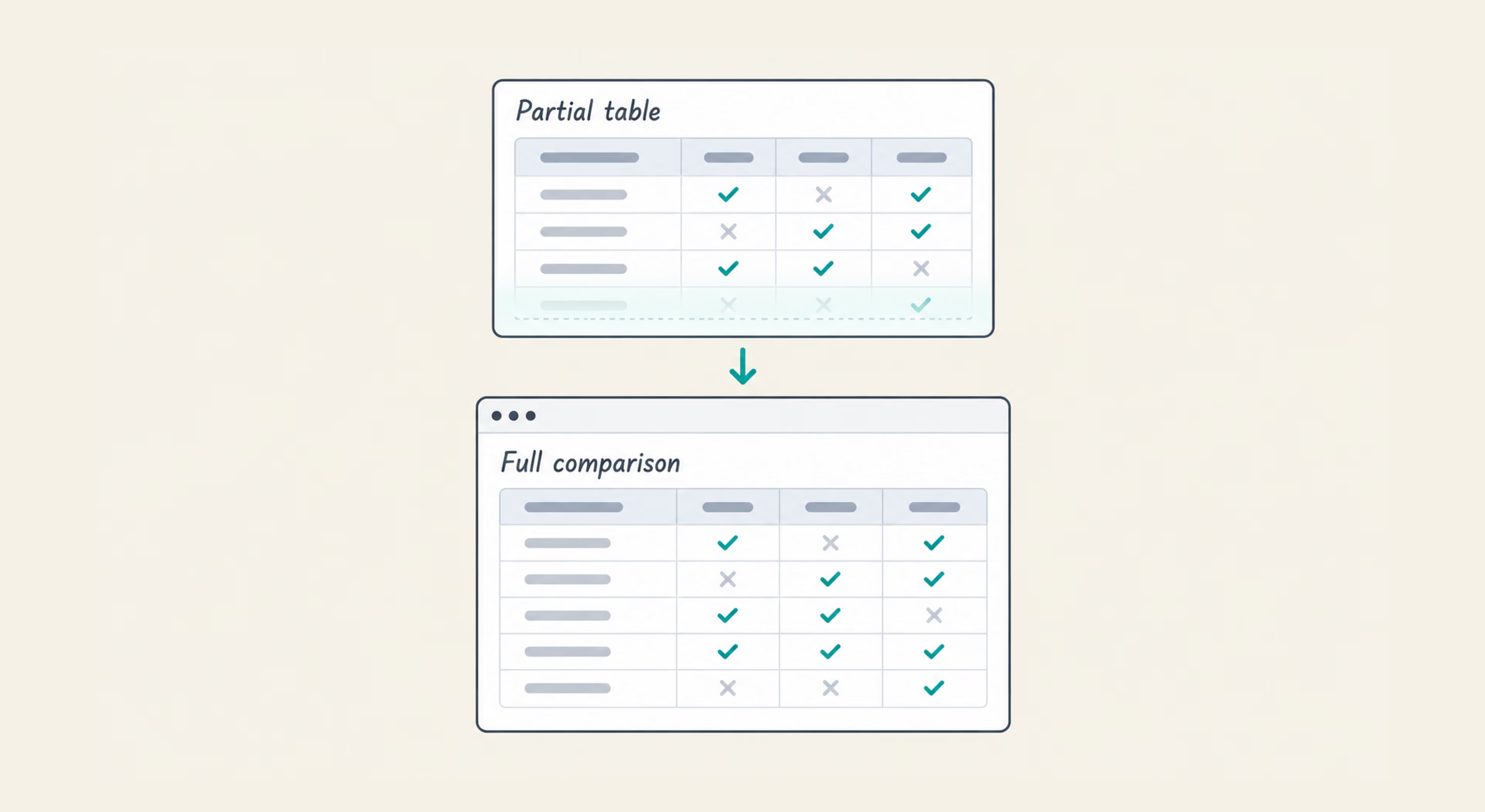
Someone weighing options wants the full picture. A snippet that displays part of a table tends to draw the click rather than end it, sending the reader to the page for the rest. The partial table works in your favor here — showing enough to prove you have the data, while leaving the reason to visit intact.
Types of featured snippets
The format a snippet takes depends on the shape of the answer Google is trying to show. Understanding these variations helps you structure content in a format that fits the query and is easy for Google to surface.
Paragraph snippets
The paragraph format remains the most common variation on the web. Google displays a block of text, usually between 40 and 50 words, to answer “why,” “who,” or “what” questions. To win these, place a direct, definition-style sentence immediately beneath a relevant subheader.
List snippets
When an informational query involves a sequence of instructions or a collection of items, Google may surface the answer as an ordered or unordered list:
- Numbered lists suit step-by-step instructions, recipes, and anything chronological. Google may show only part of a longer sequence in the search result, giving users the option to continue to the source page.
- Bulleted lists fit roundups, checklists, and groupings where sequence is irrelevant, and the items simply need to be gathered together.
Table snippets
For datasets, pricing comparisons, or technical specifications, Google may extract relevant values and present them in its own simplified table format. What you see in the box is your data, reformatted for the search results.
Video snippets
If a user query is best answered through motion — such as “How to tie a tie” — Google pulls a video clip directly into position zero. The system often highlights a specific timestamp within a YouTube video, skipping the user directly to the exact steps that resolve their question.
To be the video Google chooses, structure the upload for that behavior: give each stage a clear chapter marker, add descriptive titles and supporting text, and title the video around the question people actually search rather than something clever.
A video becomes more useful in search when users can get straight to the part that answers their question.
How to find featured snippet opportunities
You cannot optimize for featured snippets effectively without knowing which searches are most likely to surface one. Finding the most promising targets requires a structured approach to search data. Here are a few practical research methods that can help narrow that list before you start optimizing.
Identify questions and long-tail queries
Start by collecting the actual phrases people type when researching your industry — the more specific, often longer queries rather than broad head terms. Informational searches built around “how to fix,” “difference between,” or “cost of” often make good candidates because they express a clear question or comparison that Google can answer concisely. Finding these phrases is part of keyword research, and our guide to SEO keywords explains how to uncover and evaluate them.
{{banner}}
Use research tools to surface snippet opportunities
One efficient way to find snippet opportunities is to use an SEO tool to filter for them. In Ahrefs or Semrush, pull your domain’s organic keywords and apply the SERP-feature filter for featured snippets to see which of your ranking queries currently show one.
A useful place to start is with queries where you already rank well, but another page holds the featured snippet. You are already competitive for the search, so improving the clarity, structure, or format of your answer may give you a realistic opportunity to win the box.
Analyze competitor snippet wins for quick gains
A strong opportunity is a snippet a competitor already holds for a query you rank for. Pull up the pages winning those boxes and look closely at how the answer is built — its length, the heading it sits under, and whether it appears as a paragraph, list, or table.
Look for the format Google is already surfacing for that query, then see whether your answer can be clearer, more complete, or easier to extract. If a competitor holds a list snippet, compare how clearly the steps are labeled, whether anything important is missing, and how easily the sequence can be understood on its own. Our step-by-step guide to competitor analysis covers the broader process in more detail.
How to optimize for featured snippets
Optimizing for featured snippets means making relevant answers clear, self-contained, and easy to identify within a page. That depends both on how you write the answer and how you structure the content around it.
Provide clear, direct answers to user questions
A snippet-friendly answer gets to the point quickly without sacrificing the context a reader may need. A few SEO copywriting principles are especially useful here:
- Put the answer under the question. Place the answering paragraph directly beneath the relevant H2 or H3 so readers can find the response immediately.
- Lead with the answer itself. State the main point in the first sentence before adding context.
- Cut the throat-clearing. Skip unnecessary setup that delays the actual answer.
- Add the details. Follow the concise response with the caveats, context, and specifics a reader may need.
Format content the way Google understands best
A definition, a sequence of steps, and a data comparison naturally call for different structures. Use a concise paragraph for a direct explanation, a semantic list for a sequence, and a proper table for structured data. Clear hierarchy and formatting matter beyond snippets too. They are part of the broader on-page SEO work that helps search engines interpret a page.
Apply effective content structures and writing techniques
The inverted pyramid can work well here: give the short answer first, then add explanation and context underneath. A self-contained opening statement is especially useful because it still makes sense when read on its own.
Keep the wording close to the question where it feels natural, use plain language, and avoid making the reader reconstruct the answer from several paragraphs. The goal is a response that is concise enough to stand alone without stripping away the meaning.
Strengthen page signals to become snippet-eligible
Snippet optimization still sits on top of basic SEO. Google needs to be able to crawl and index the page, understand its content, and consider it relevant enough to appear in Search in the first place.
Check for crawl or indexing issues, make sure the main content is accessible, and keep the page technically sound across devices. These improvements do not guarantee a featured snippet, but they remove broader search issues that could limit the page’s visibility.
{{banner-2}}
Tracking your featured snippets
Winning a snippet isn’t a permanent state — positions can shift as search results and competing pages change. Holding one means tracking who owns the spot, how stable it is over time, and what it actually brings to the page.
Tools for monitoring snippet performance
SEO platforms such as Ahrefs, Semrush, SE Ranking, and Advanced Web Ranking can track featured snippets across your target keywords. They show where a snippet appears, whether your page or a competitor holds it, and how that ownership changes over time.
Google Search Console and GA4 add the performance layer. They do not identify featured snippet ownership directly, but they help you compare changes in impressions, clicks, CTR, engagement, and conversions around snippet wins or losses.
Measuring snippet stability over time
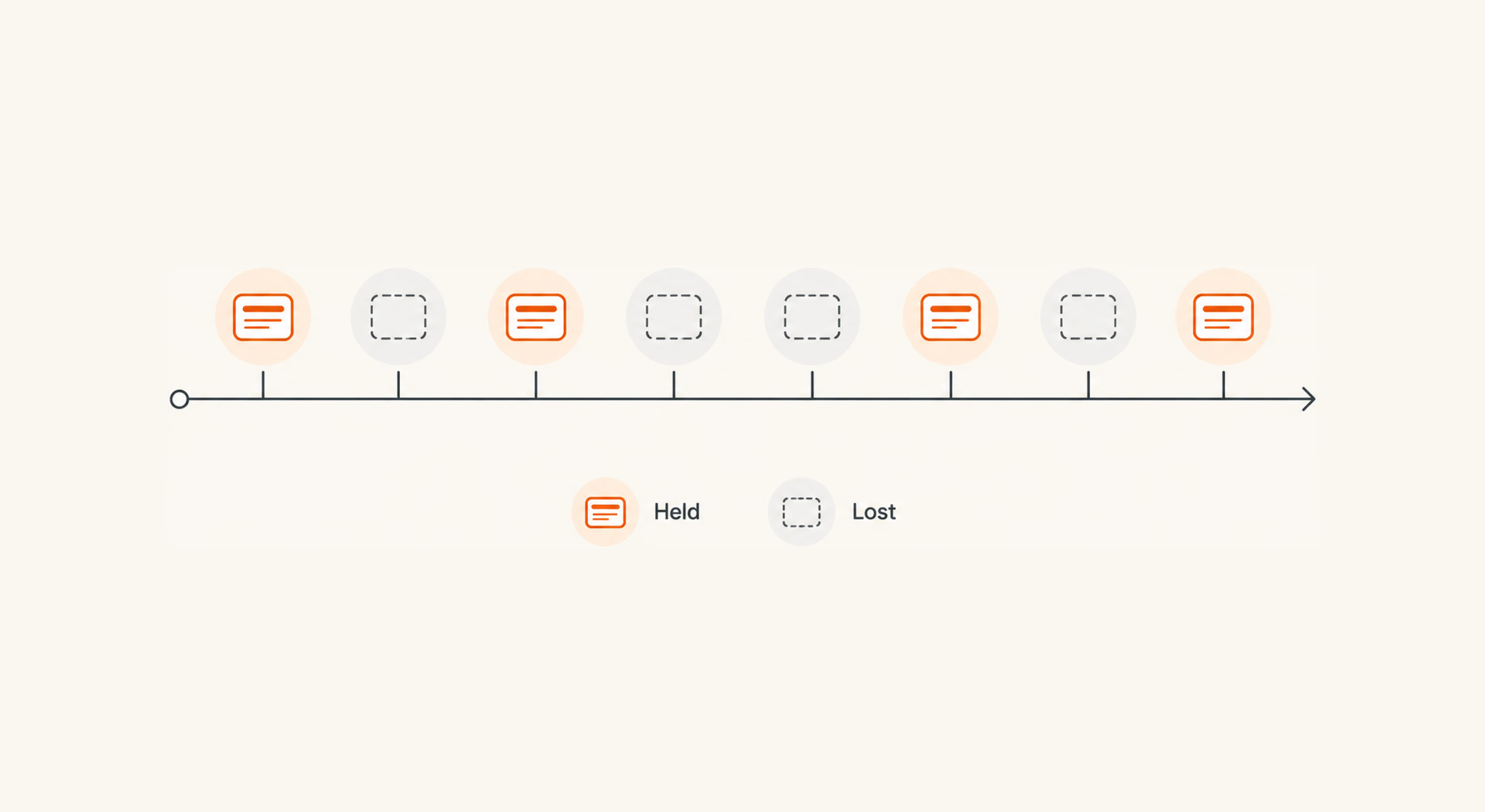
A single snippet win tells you less than how consistently you hold it. Look for patterns over time: whether your page keeps the position, loses it occasionally, or regularly trades it with competing results. If ownership keeps changing, compare the pages taking the spot and check for changes in their answers, your own content, or the SERP before deciding what to adjust.
Analyzing traffic shifts after snippet wins
Earning a featured snippet is worth measuring because not every one affects performance in the same way. Compare clicks and CTR before and after it appears, then look at engagement, downstream actions, and conversions once users reach the page.
If impressions rise while clicks stay flat, the snippet may be increasing visibility without generating additional traffic. If it brings engaged visitors who continue through the site or convert, that is a stronger signal that the query is worth further investment.
A snippet win means more when you know what happened after it.
Featured snippets vs. AI Overviews in 2026
Both can surface answers prominently in Google Search, but they are built differently and draw on web content in different ways. The contrast is clearest when laid out side by side:
| Aspect | Featured snippet | AI Overview |
|---|---|---|
| Source | One featured web page | May draw on multiple web sources |
| Answer | Extracted from the source page | Generated from information across multiple sources |
| Attribution | Links to the featured source | Can include links to multiple supporting sources |
Beyond the format itself, the optimization principles overlap more than they differ. Google recommends applying the same foundational SEO practices to its generative AI features: create useful, unique content, keep pages technically accessible, and structure information so Search can understand it clearly.
For brands, that means giving Search something distinctive to surface: original research, first-hand expertise, clear product or service information, and answers that add value beyond generic summaries. Structured data can still support broader SEO and rich-result eligibility, but Google does not require special schema or additional technical markup for appearing in AI Overviews.
Choose snippet opportunities wisely
Featured snippets can put a page in one of the most visible places in search, but that visibility does not carry the same value for every query. A factual answer may end the search on Google, while a process or comparison query can leave plenty of reason to click through. That difference is why the best opportunities are not necessarily the easiest snippets to win, but the ones that make sense for what you want the page to achieve.
The real takeaway is to be selective. Look for queries where your page is already competitive, shape the answer so it can stand on its own, and then judge the result by what happens after the box appears. A featured snippet is a useful win when it supports the outcome you actually care about — not simply because Google placed your page at the top.
FAQ
How long does it take to win a featured snippet?
There is no fixed timeline for winning a featured snippet. If Google recrawls an updated page and finds it a better fit for the query, the change may appear relatively quickly, but snippet selection can also take longer or not happen at all. Existing rankings, query relevance, competition, and how Google interprets the result all play a role.
Can featured snippets reduce organic traffic?
Yes, especially for simple factual queries that can be answered directly in the results. In those cases, users may have little reason to visit the source page. For process or comparison queries, a snippet can leave more room for a click because the full explanation, steps, or context still sit on the page.
Do schema types help with featured snippets?
Not directly. There is no special schema type that makes a page eligible for a featured snippet. Structured data can still help Google understand page content and qualify pages for supported rich results, but it works separately from featured snippet selection.
Are featured snippets still useful with AI Overviews?
Yes, but their role is changing. Featured snippets remain a separate Search feature from AI Overviews, though AI-generated results can take more of the most prominent SERP space for complex queries. Featured snippets can still provide valuable visibility, especially where Google continues to surface them.
Can low-authority sites win featured snippets?
Yes. A smaller or less established site can earn a featured snippet if Google considers its page a useful result for the query and selects content from it for the featured answer. In practice, featured snippets tend to come from pages that already rank competitively for the query, so strong organic visibility still matters.