




In an era of AI-generated noise, standing out requires verified expertise — keywords alone no longer open that door. Search engines now favor creators who demonstrate actual field experience. How can your brand become a source that both users and algorithms trust?


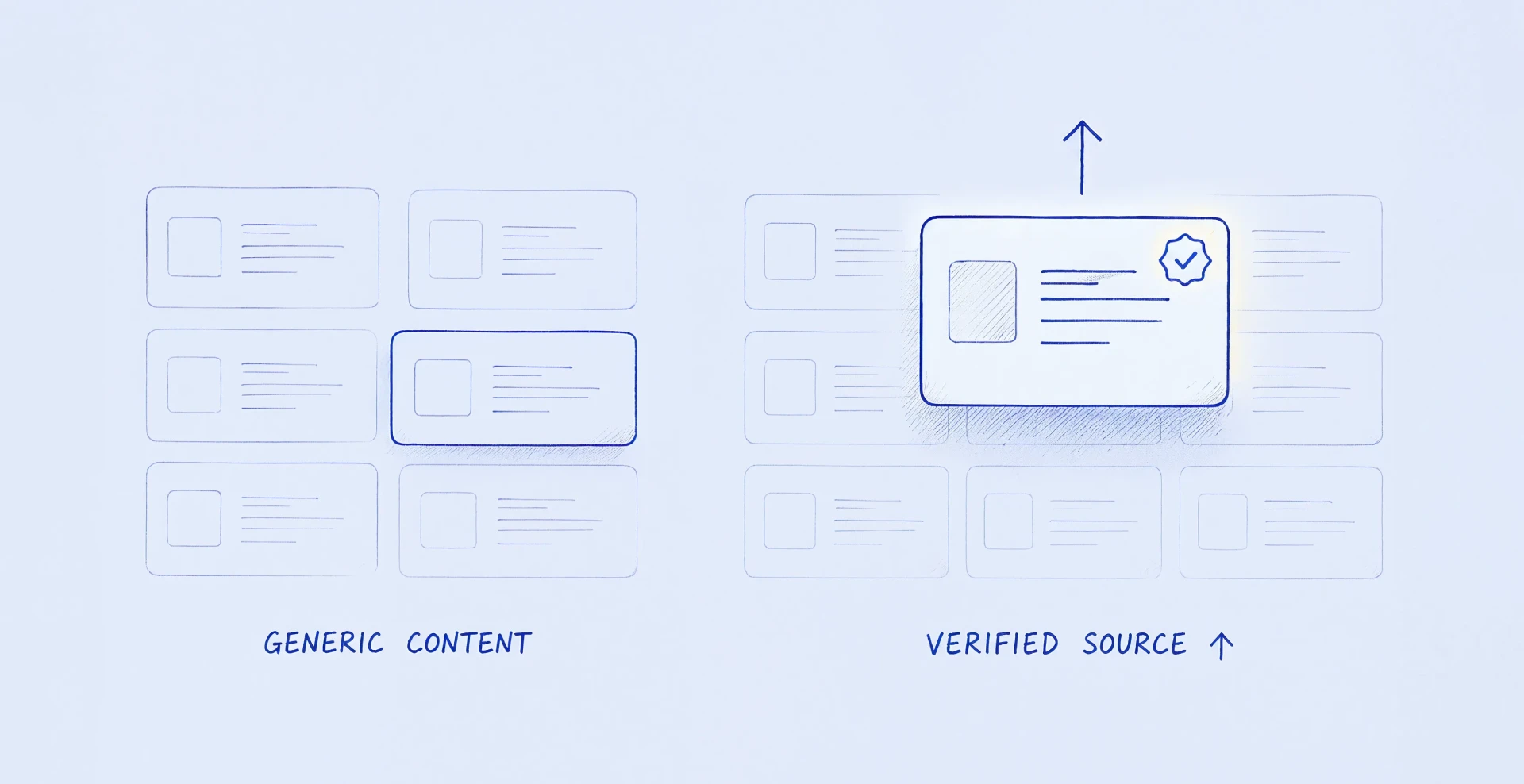
The current web is increasingly saturated with algorithmically generated content that is difficult to distinguish from genuine expertise. For businesses and content creators, the challenge has shifted from being found to being believed. As search algorithms grow more sophisticated, they’ve developed increasingly precise mechanisms for identifying authenticity, prioritizing content that carries the weight of real-world application. This evolution has transformed the way we approach discovery and reputation management.
Google EEAT has become the backbone of modern discovery. It dictates how algorithms perceive the value of your insights and whether your pages deserve a spot at the top of the results. This guide explains what EEAT means in 2026, how to strengthen each signal, and what brands can do to build a presence that feels credible, verifiable, and difficult to replace.
What is EEAT?
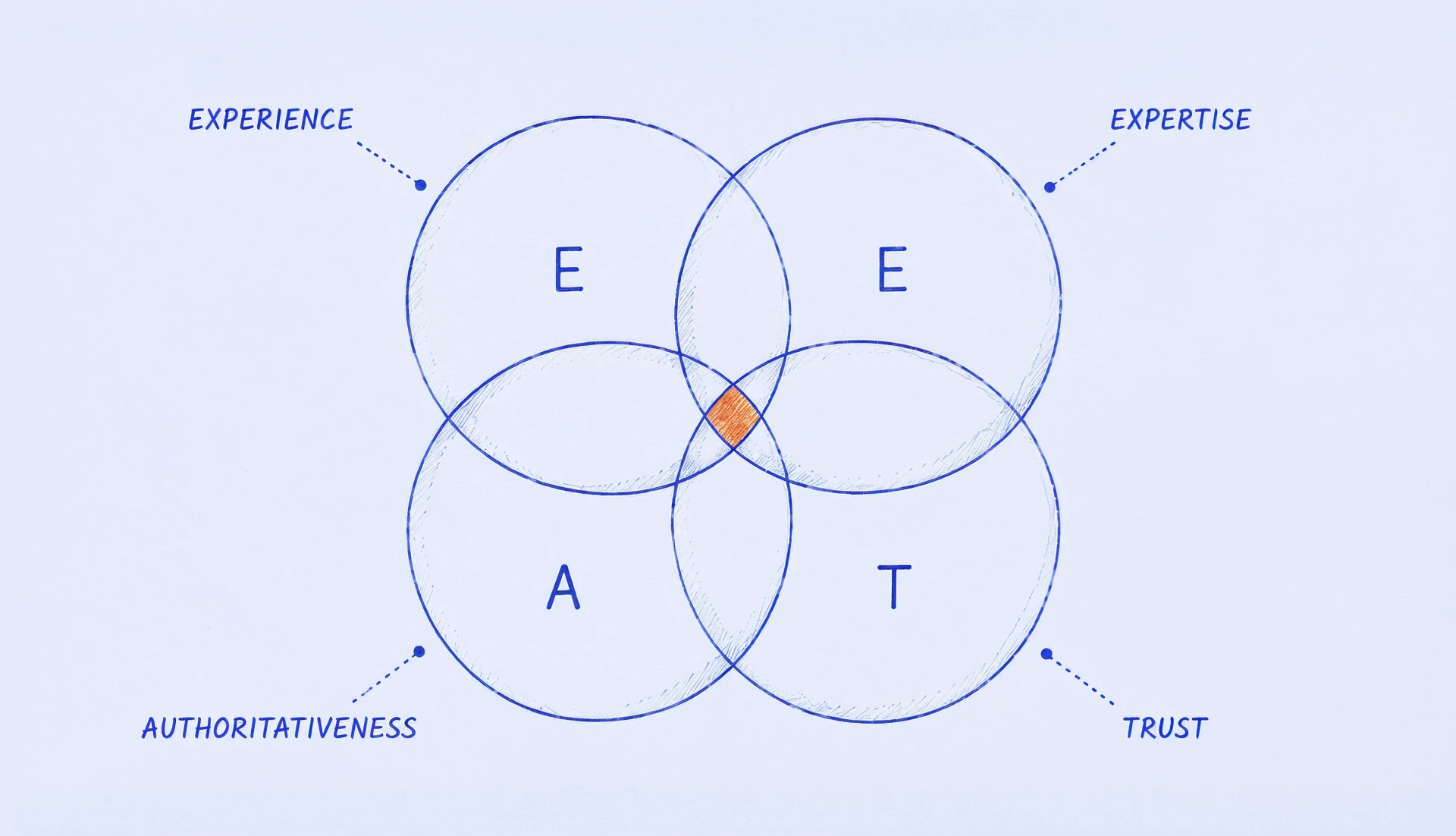
At its core, EEAT is a framework used by search evaluators to assess a page’s quality. It stands for Experience, Expertise, Authoritativeness, and Trustworthiness. Rather than functioning as a single ranking factor, it operates as a set of signals that help the algorithm identify which sources are most likely to provide helpful, safe, and accurate information.
Signals are now processed with higher precision thanks to advanced semantic understanding that identifies the “entities” behind the words. The move from keyword matching to semantic interpretation has made entity signals the primary relevance mechanism — a shift explored in our guide to LSI keywords and modern search.
Understanding EEAT requires looking at how Google aims to protect users from misinformation. By prioritizing creators who have demonstrably engaged with a topic, the system ensures high-stakes questions are answered by qualified individuals. This evaluation extends beyond a single page to the entire site’s reputation across the web. If you are just starting out, the beginner’s guide to SEO covers how these elements fit into a broader strategy.
Google’s algorithms look for evidence of overlapping signals — what we call “verified knowledge”:
- Credential verification: Does the author have a history of publishing on this specific topic?
- Reputational cross-referencing: Is the brand mentioned in high-authority tech publications without a “nofollow” tag?
- User satisfaction signals: Does the content solve the user’s query on the first visit, or do they return to the search results for a better answer?
The framework now reaches further than bio boxes to encompass sentiment analysis — how your brand is discussed on forums and review platforms. If the consensus among real users is that your advice is flawed, trustworthiness signals drop regardless of keyword density.
Why EEAT matters
The stakes for EEAT have never been higher. In a world of deepfakes and mass-produced content, verified authority creates a durable advantage — and sites that lack these signals risk suppression during core updates regardless of their technical optimization.
Focusing on EEAT is about future-proofing against the filters of modern search engines. Algorithm updates increasingly reward proprietary data and unique perspectives that a standard LLM cannot generate. For businesses, this translates directly into conversion rates — users who perceive a brand as an expert are significantly more likely to engage with its services.
The framework also serves as a safeguard for companies in technical or high-stakes niches. Providing outdated or inaccurate advice now triggers an immediate reputational decline across the Knowledge Graph, as Google cross-references claims against industry standards and real-world feedback. A single untrustworthy piece of content can have a cascading effect on an entire domain’s rankings.
The rise of AI-driven search overviews compounds this further. Only the most authoritative sources are selected as primary citations — and earning that status requires a demonstrable track record of accuracy. By investing in these reputational signals, a brand transitions from being one of many indexed sites to becoming a source the algorithm actively trusts.
{{banner}}
The core elements of EEAT
The framework consists of four pillars that work in tandem to validate your digital footprint. While each is distinct, their overlap determines whether your brand is categorized as an industry leader or a generic aggregator.
Experience
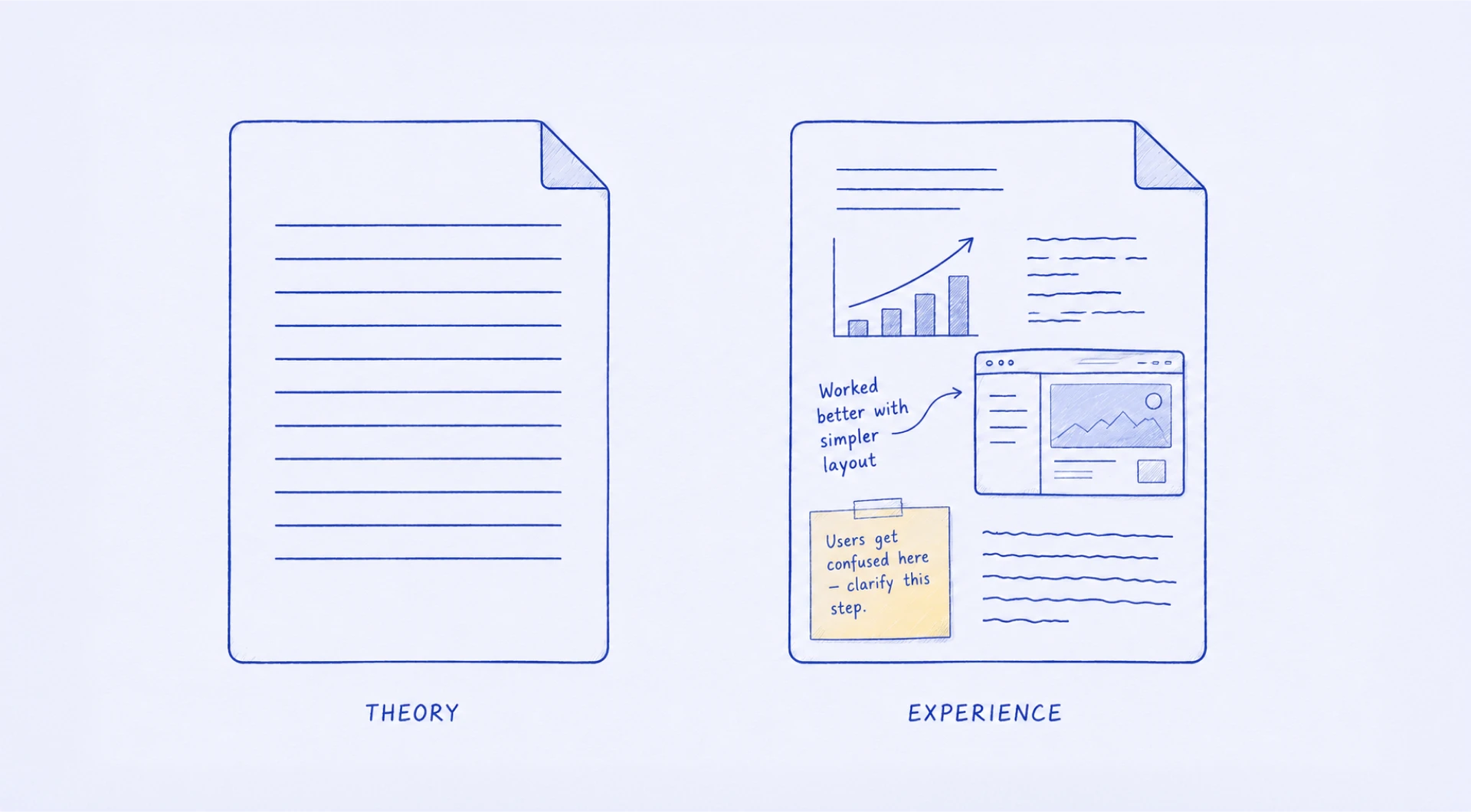
This is the most recent addition to the framework, emphasizing first-hand involvement. In the current era of verified content, the author’s experience is often the deciding factor for ranking. Documenting a project’s timeline, failures encountered, and specific metrics achieved is the gold standard for proving genuine engagement.
To demonstrate this, creators must move away from generic “we” statements and embrace the “I” perspective. Raw data, unpolished screenshots of workflows, and specific lessons learned are the signals that algorithms now look for. These are details that could only come from someone who has navigated the situation in real time.
Consider two articles about migrating a legacy codebase to microservices. The first lists recommended steps, cites documentation, and summarizes common best practices. The second opens with a real incident: a cascading failure on day four, the error log that exposed it, and the decision the team had to make between rolling back and pushing through. It explains what changed after that moment, which trade-offs were accepted, and which lesson the team would apply differently next time.
The second article carries a stronger experience signal because it shows the work behind the advice. Readers can see the context, constraints, and decisions that shaped the outcome, rather than receiving a polished summary that could apply to any project.
Search systems may not evaluate experience the way a human editor does, but users do. Specific details, original assets, named tools, and honest lessons make content easier to trust and harder to replace with a generic AI-generated summary.
Expertise
While experience focuses on the “doing,” expertise focuses on the “knowing.” This refers to the formal or informal skills and knowledge of the creator. For technical topics, this might be a degree, a certification, or a decade of senior-level development work.
Google looks for signs that the person behind the keyboard has the necessary depth to discuss the topic accurately without spreading errors. The expertise is often verified through entity connections — how often your name is associated with high-level discourse in specialized forums or academic citations.
An expert’s presence is validated by their digital footprint across authoritative platforms, showing a consistent history of contributing to the field. This means that a developer’s expertise is not claimed in a bio box but is backed by a visible trail of peer-reviewed contributions and industry-recognized certifications. The system prioritizes those who have a measurable impact on their professional community over those who merely echo facts.
Authoritativeness
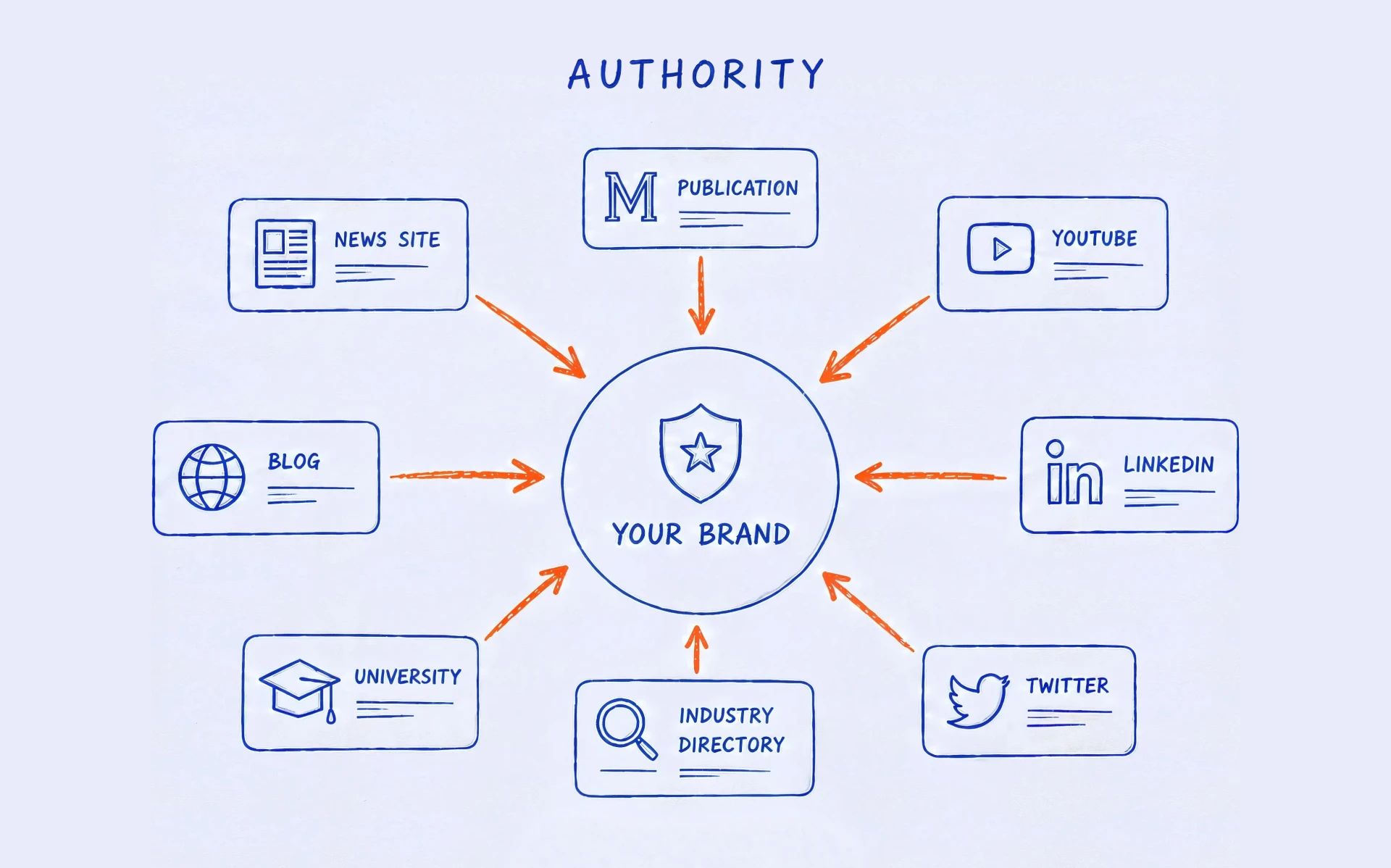
Authoritativeness is your reputation among peers — measured by how often other experts cite your work and reference your brand as a reliable source. When reputable sites link to you or industry leaders engage with your insights, authority accumulates.
This external validation acts as a seal of approval that the algorithm uses to rank your website above those that lack external citations. The mechanism becomes clearer with a concrete example. A UX research consultancy working with e-commerce clients publishes an annual benchmark report on mobile checkout behavior, based on anonymized data from real product audits. Over time, the report gets referenced in industry articles, cited in conference presentations, linked by product teams, and mentioned in newsletters read by UX and growth professionals.
The firm didn’t build authority by publishing more content. It built authority by creating a source others could use to support their own arguments. That’s the difference between filling a blog and becoming a reference point in your market.
Trustworthiness
This is the most critical pillar. Trustworthiness encompasses the security, transparency, and honesty of the website. Are the citations accurate? Is the checkout process secure? Is there a clear way to contact the team? If a user feels unsafe or misled on a page, the other three pillars cannot save the ranking.
Trust is the foundation upon which the entire framework rests. In 2026, this includes factors like data privacy adherence and the absence of deceptive UX patterns that trick users into actions.
Trust is also gauged by how transparent a site is regarding its funding, its editorial process, and its physical presence. A site that operates in the shadows, lacks a clear refund policy, or uses misleading titles to drive clicks will find its trust score decimated, regardless of the credentials of its writers.
Every trust signal you send — from technical security to editorial honesty — serves to solidify your position as a reliable partner for both users and search engines.
A site earns trust by making safety, transparency, and accountability visible before users have to look for them.
How Google evaluates EEAT
The evaluation process is a complex blend of automated algorithmic signals and nuanced human feedback. It functions as a multi-layered system designed to assess whether content meets the standards a knowledgeable reader would expect. In 2026, this evaluation is no longer about scanning for keywords but about verifying the digital “handshake” between the content creator and the reader.
How quality raters judge content quality
Google employs thousands of Search Quality Raters who follow a massive set of guidelines to manually evaluate the effectiveness of the search engine’s results. While these raters do not have a “slider” to directly change the ranking of your specific website, their collective feedback is widely understood to inform the machine-learning models that define future updates.
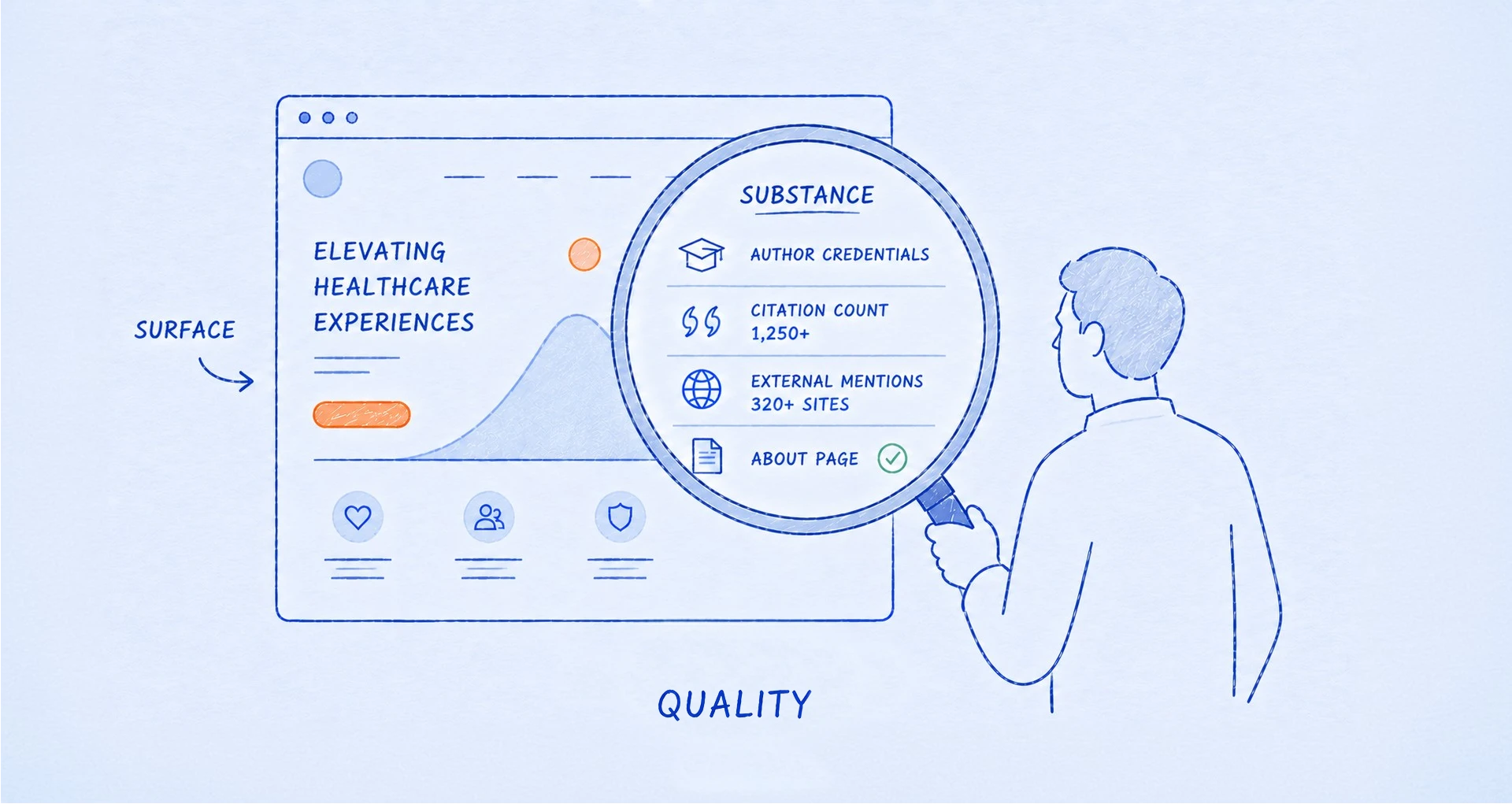
They are instructed to investigate the reputation of the site and the individual author by looking for “Very High” levels of quality. This involves digging deep into author bios, scrutinizing “About Us” pages for transparency, and performing independent searches to find external reviews, press mentions, or industry awards associated with the brand.
Evaluators are specifically trained to look past a polished, high-end design to find the actual substance and accuracy of the information provided. They look for evidence that the creator is a legitimate authority within the topic, often checking if the person is cited by other peers in the same industry.
If a rater discovers a history of factual errors or a pattern of deceptive practices, that feedback informs the algorithm to treat similar patterns as “low quality,” regardless of how well the page is optimized for technical SEO.
How helpful content updates reward EEAT
The algorithm uses “Helpful Content” signals to identify sites created primarily for people, rather than solely to manipulate search rankings. These updates look for specific EEAT signals indicating that the page provides a truly satisfying, unique experience that comprehensively answers a user’s intent.
If a marketing strategy relies on churning out high-volume, low-value text — often characterized by circular logic or generic AI summaries — these updates will categorize the domain as unhelpful. The reward for demonstrating high expertise and experience is a “ranking floor” that keeps your content visible even during volatile market shifts.
The system is designed to favor the “expert voice” that provides a perspective that cannot be found elsewhere, ensuring that the most trustworthy voices rise to the top of the pile.
Reaching that point takes more than stronger individual articles. Our SEO content strategy guide explains how to build a publishing system around search intent, expert insight, and long-term content quality.
EEAT levels
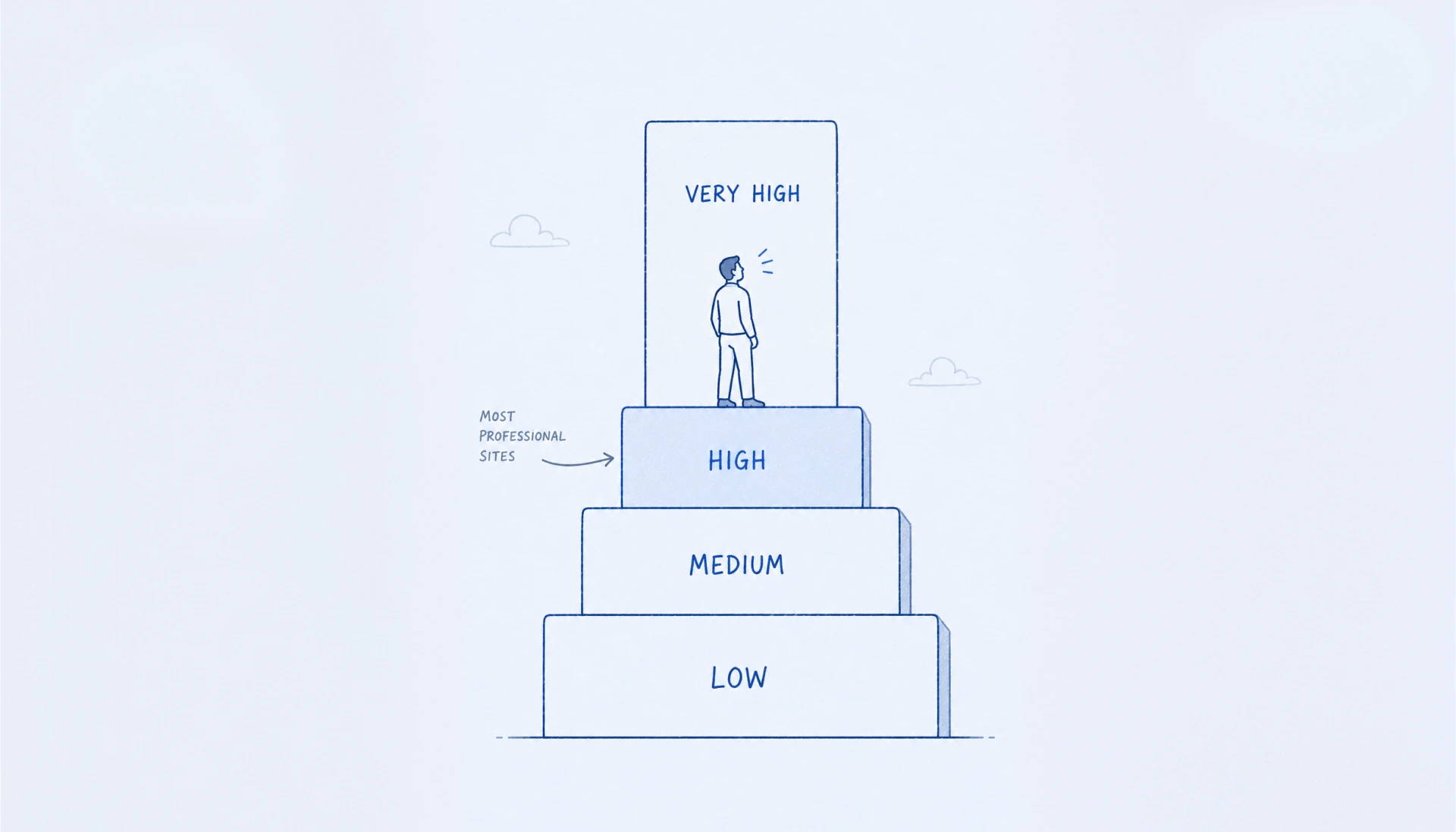
To help categorize the vast amount of data on the web, evaluators and algorithms use a tiered approach to quality. These levels act as a benchmark for what a site must achieve to dominate a specific topic:
- Low: These pages often feature anonymous authors, significant factual errors, a complete lack of citations, or no clear purpose for existing beyond ad revenue. Such sites are frequently flagged as spam or low-value and are the first to lose visibility during core updates.
- Medium: Level covers basic information that is technically accurate but lacks original insight, first-hand experience, or a strong brand voice. It essentially provides what every other site is providing, making it a “commodity” in the eyes of the search engine.
- High: This is the threshold for professional sites. It features content written by known experts with clear evidence of real-world experience and a history of reliable publishing. These sites have visible editorial standards and a clear, trustworthy mission.
- Very High: The gold standard of digital presence. These are undisputed industry leaders with massive authority in their niche. They are the sources cited by governments, top-tier universities, and global news outlets. Achieving this level requires a decade-long track record of trustworthiness.
Navigating these levels requires a constant push toward transparency and factual excellence. While most professional blogs aim for the “High” tier, reaching “Very High” status is what allows a brand to define the conversation in their industry. Moving from one level to the next is about proving your reliability through every link, citation, and technical signal you publish.
How to build and demonstrate EEAT
Building SEO EEAT is a marathon, not a sprint. It requires a long-term commitment to transparency and a fundamental shift in how you produce every piece of digital collateral. You cannot simply declare yourself an authority; you must provide a verifiable trail of evidence that proves your standing to both users and search engines. Below is the blueprint for transforming your site into a high-trust entity.
Highlight author credentials and bios
Every article should be attributed to a real person whose identity is verifiable. Include detailed bios that mention their professional background, years in the industry, and links to their social profiles, such as LinkedIn or X, or professional portfolios like GitHub. This allows the search engine to connect the content to an “entity” with established credentials in its Knowledge Graph.
A simple byline is no longer enough; you need to prove the person is a recognized figure in their field by mentioning specific past projects, certifications, or professional memberships. When a user sees that an article was written by a Senior Architect with fifteen years of experience rather than a generic “Admin” account, the trust in the information increases immediately.
Share firsthand experience and case studies
Don’t simply explain a concept; show it in action through a lens of personal involvement. Use screenshots of actual workflows, specific data points, and “lessons learned” from your own client projects to provide the experience signal that AI cannot easily replicate.
Case studies are particularly effective because they prove that your theories work in the real world and provide the “proof of work” that modern algorithms crave. By detailing the specific obstacles you overcame during a migration or a redesign, you offer a unique value that generalists cannot match. This “lived-in” knowledge is what distinguishes a leader from a follower.
Consider a boutique cybersecurity consultancy trying to compete for enterprise security topics. Instead of publishing another generic best-practices guide, the team documents a real internal migration in detail: the misconfiguration they found on day three, the custom script they wrote to fix it, and the before-and-after audit logs that showed the remediation worked.
The article names the tools used, explains the trade-offs behind key decisions, and includes one approach the team later changed. That level of detail gives readers something a generic overview cannot: evidence that the advice comes from direct work, not recycled research. Specificity becomes the advantage here. Readers can see the process, the constraints, and the lessons behind the recommendation.
Keep a detailed About page with brand background
Your “About us” page should be the heart of your site’s identity, not a generic mission statement. It should detail your company’s history, introduce the founders, showcase your physical location, and list any press coverage, industry awards, or community contributions you’ve received.
This builds the “Authoritativeness” of the website as a whole by proving there is a tangible, reliable organization behind the digital interface. Mentioning your office locations, the current size of your team, and your company’s involvement in industry events helps anchor your brand in reality. Transparency regarding who you are and where you come from is a prerequisite for high-level ranking.
Add clear Contact and Policy Pages for transparency
A site that hides its contact information or ownership is inherently untrustworthy in the eyes of an evaluator. Ensure your footer contains links to a clear Privacy Policy, Terms of Service, and a functional Contact page with a physical address and verified phone number. These are basic trust signals that both users and bots look for to ensure accountability.
With transparency now a baseline user expectation, being open about how you handle user data and providing a clear path for customer support is more important than ever for maintaining global trust. If a user cannot find a way to reach a human being within two clicks, your trustworthiness score will likely suffer.
Publish people-first content that solves real problems
Stop chasing high-volume keywords that have no relevance to your core business or the actual problems your audience faces. Effective SEO copywriting starts with the specific, nuanced questions your clients ask during sales calls or support sessions.
When you prioritize solving a human problem over gaming a ranking, you naturally align with what Google considers “helpful.” It will build long-term loyalty and reduce bounce rates, as users feel understood rather than targeted. People-first content creates a virtuous cycle where high engagement signals tell the algorithm that your page is the definitive answer to the query.
Support every claim with research and reliable sources
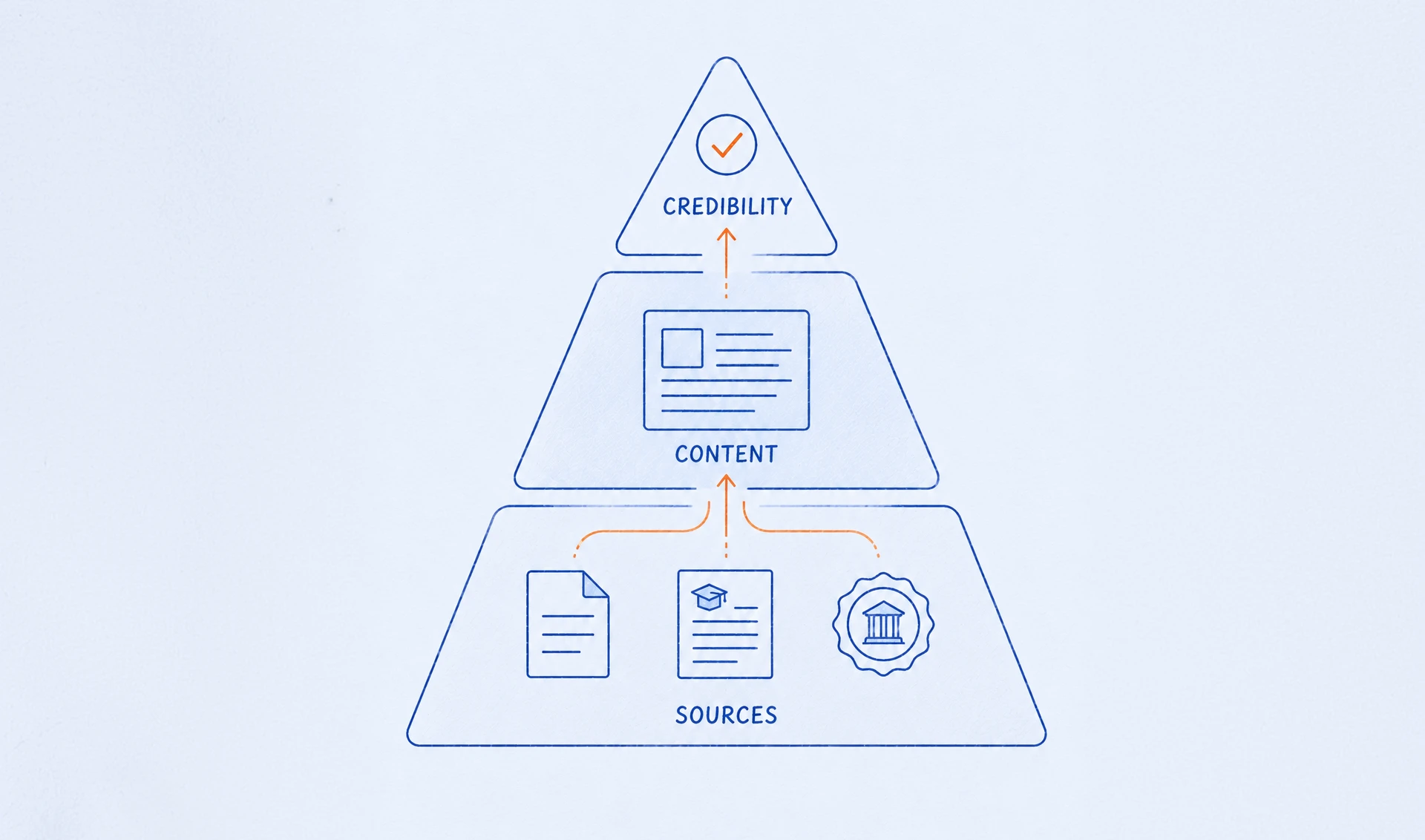
Whenever you state a fact, a statistic, or a technical claim, link to the original, high-authority source. Citing reputable organizations, academic studies, or official documentation demonstrates that your expertise is grounded in reality and that you value accuracy over convenience.
Avoid circular linking by citing only your own previous blog posts. Instead, look for peer-reviewed data that adds an objective layer to your arguments. This practice shows that you are part of a broader professional discourse and that your insights are grounded in verified information.
Maintain a сonsistent, authentic brand voice
Consistency across your blog, social media, and newsletters helps build a recognizable brand that users can rely on. Avoid shifting tones — from overly formal to jarringly casual — or using contradictory information across different pages. A stable voice suggests a stable, professional organization that possesses a clear philosophy and deep internal knowledge.
If you use multiple writers or external contributors, ensure they follow a central style guide that preserves the core identity and ethical standards of your company. This uniformity ensures that every touchpoint reinforces your brand’s authority.
Earn backlinks and mentions from reputable sites
The best way to prove authoritativeness is to have other authorities vouch for you through mentions and links. Guest posting on top-tier industry blogs, being interviewed on podcasts, or having your original data cited by major publications are all powerful signals of external validation.
These “votes of confidence” tell the algorithm that you are a respected member of the professional community whose voice carries weight. Even if a third-party website doesn’t link directly to your site, brand mentions across reputable external sources can still help strengthen your authority, credibility, and topical relevance in the eyes of search engines.
Collect reviews and testimonials for social proof
External validation from real clients is a key part of building EEAT and convincing new visitors of your reliability. Encourage clients to leave detailed reviews on third-party platforms like Clutch, Google Business, or G2.
Displaying these testimonials prominently on your site provides immediate evidence of trustworthiness and real-world success. Verified reviews from established companies carry significantly more weight than anonymous praise, serving as a public record of your ability to deliver results.
Implement schema for authors, reviews, and content types
Structured data (Schema) is the language that helps the search engine understand the relationships between different entities on your site. Use the “Author” schema to link a writer to their social profiles and the “Review” schema to make your social proof readable and eligible for rich snippets in the results.
This technical layer ensures that your hard-earned reputation is correctly indexed and that the algorithm can “connect the dots” between your expertise and your published work. Without a proper schema, you are leaving your reputation up to the algorithm’s guesswork.
Keep pages and data updated regularly
In the tech world, information decays at an incredible speed, making “freshness” a vital component of trust. A guide from two years ago that references deprecated frameworks is likely obsolete and can even be dangerous if followed. Regularly auditing your old content to refresh statistics, update screenshots, and refine advice shows that you are an active, reliable source of current information.
Adding “Last Updated” dates and maintaining a revision history provide transparency and reassure readers that the advice they are reading is still valid.

Be open about AI use and show human oversight
If you use AI to help draft outlines, brainstorm ideas, or clean up code, be transparent about it with your audience. However, always emphasize the human editing and verification process that follows. Adding a “Fact-checked by [Expert Name]” or “Verified for Technical Accuracy” note can help maintain trust even when using modern automation tools.
The goal is to show that a human mind — with real-world accountability — is ultimately responsible for the advice given. Transparency about your process is a powerful way to build a bridge of trust with skeptical users.
Optimize for entity signals and semantic connections
Google no longer just looks at strings of text; it looks at entities (people, organizations, and concepts) and their relationships. Ensure your brand is associated with relevant “nodes” in the knowledge graph by staying active in your specific topic and participating in community discussions.
It requires digital PR, speaking at conferences, and being listed in authoritative professional directories. When the algorithm sees your name frequently mentioned alongside other established experts, your authoritativeness grows exponentially.
Strengthen technical foundations that support trust
A site that feels broken, slow, or insecure creates immediate friction and erodes the perception of quality. To demonstrate trustworthiness, your technical infrastructure must be as professional as your content:
- Implement HTTPS security and reliable hosting: An insecure connection is an immediate red flag that triggers browser warnings and scares away visitors. Reliable hosting ensures your site is available when users need it, preventing the “404” or “Server Timeout” errors that signal a lack of site maintenance.
- Maintain fast load speed and mobile responsiveness: A slow website makes the experience feel neglected and can quickly weaken user confidence. Mobile responsiveness is no longer optional; if your site is difficult to navigate on a phone, you create friction for a large part of your audience before they even reach your content.
- Ensure сlean site architecture and easy navigation: Users should be able to find what they need without friction or confusion. A logical hierarchy and a functional search bar suggest that you have nothing to hide and that you value transparency.
- Fix broken links and structured data errors: These small technical flaws erode the perception of quality over time. Broken links suggest that your site is abandoned, while schema errors can prevent search engines from correctly identifying your authors and expertise.
By treating these technical requirements as the baseline for your digital presence, you create a stable foundation for your reputation. When a site is fast, secure, and easy to use, the user is more likely to trust the words on the page. Technical excellence is the silent partner of content authority.
{{banner-2}}
Common EEAT mistakes to avoid
Even well-meaning brands can stumble by taking shortcuts or failing to look at their site through the lens of a skeptic. The cost of these errors has shifted from a temporary dip in traffic to a permanent classification as an unreliable source. Below are the most frequent pitfalls that erode trustworthiness and lead to algorithmic suppression — along with the strategies to rectify them.
Writing for SEO, not for people
The biggest mistake is over-optimizing for robots at the expense of the user experience. When text feels repetitive, forced, or follows a rigid keyword density that ignores natural flow, it loses its brand appeal and fails the “Helpful Content” test. Search engines prioritize the “utility” of a page. If a reader leaves the site to find a simpler explanation elsewhere, your bounce rate sends a signal that you are not an authority.
High rankings come to those who provide the best answer, not those who use the keyword the most. This means prioritizing clarity, formatting for scannability, and ensuring that every paragraph adds value rather than just taking up space to satisfy a word count.
Letting content go out of date
Publishing an article and forgetting about it is a recipe for losing visibility. In technical fields like IT and software development, information decays at an accelerated rate. If a user finds a solution on your site that no longer works — such as outdated code snippets, deprecated API links, or security protocols that have since been patched — their trust in your expertise vanishes instantly.
Search engines now look for “freshness” in evergreen content. A failure to update your high-performing pages signals to the algorithm that your information is no longer relevant to the current year, leading to a steady decline in your entire domain’s rankings. You must treat your blog as a living documentation of your skills, not a static archive.

Ignoring what people think about your brand
Your EEAT score is heavily influenced by your off-site reputation and what evaluators find when they search for your brand name outside of your own domain. If you have unanswered complaints on professional forums and review platforms, it will eventually impact how the algorithm views your authoritativeness.
Monitoring your brand mentions is crucial for maintaining a clean digital record. “Sentiment Analysis” is used to gauge whether a brand is helpful or predatory. Ignoring negative feedback or failing to engage with your community suggests a lack of accountability, which is a major red flag for trustworthiness. Active reputation management is a core component of your technical discovery strategy.
If your brand looks credible on your website but careless everywhere else, trust breaks before the first click.
The future of EEAT: AI, authenticity, and trust
The intersection of human intelligence and algorithmic filtering will become even more complex. Automated tools can now mimic professional formatting and basic logic, forcing search engines to change how they validate the origin of an idea. Below are the shifts defining the next era of digital credibility — and how to ensure your brand remains on the right side of the algorithmic divide.
How Google’s AI weighs real experience
Search engines are becoming adept at identifying “hallucinations” and generic patterns found in synthetic text. They are looking for the markers of genuine human experience — the subjective opinions, the unique anecdotes, and the emotional resonance that only a person with real experience can provide. This shift has turned personal storytelling into a high-performance SEO tool.
An article about project management is judged by whether it mentions specific, unscripted challenges, such as a localized server outage or a unique client negotiation. Systems now prioritize “primary-source” data, meaning content containing original photos, proprietary charts, or recorded interviews gains a significant advantage over rehashed summaries.
Why human insight still beats algorithms
Algorithms excel at synthesizing existing data, but they cannot innovate or offer a “hot take” based on years of trial and error. Your unique perspective is your most valuable asset in an automated world. While a bot can list the technical steps for a cloud migration, it cannot describe the nuanced cultural resistance a team might face during the transition.
The ability to predict trends based on real-time client interactions is something a bot cannot replicate. The most successful content pieces are those that challenge the status quo or provide a considered perspective based on years of direct experience. Human insight provides the “edge” that makes a piece of content worth a user’s limited time.
Future-proofing your brand’s EEAT
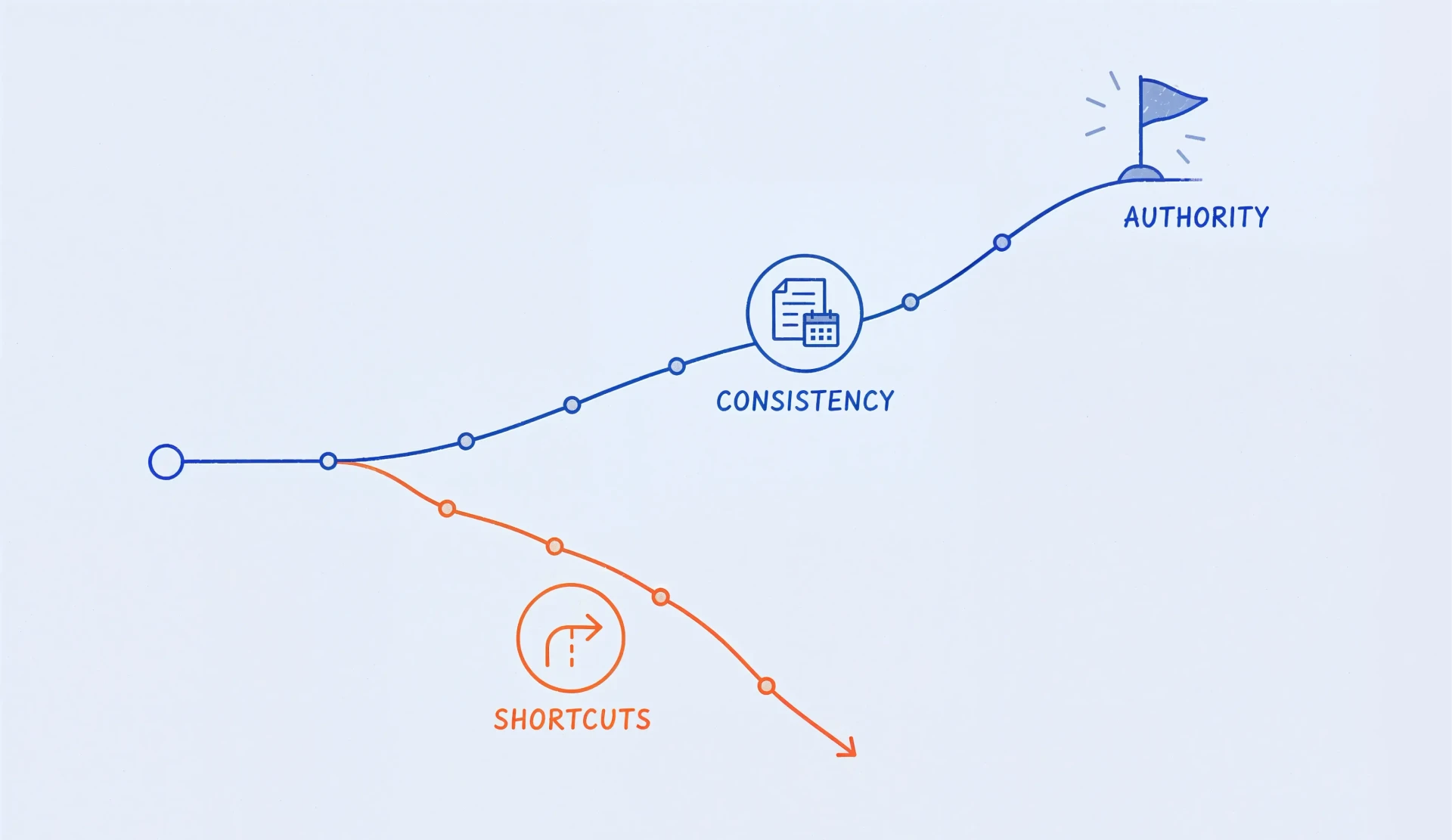
To stay ahead, stop trying to find a shortcut to authority. Instead, focus on becoming a legitimate source of truth in your field. Invest in your team’s personal brands by encouraging them to publish under their own names and link their professional social profiles. Produce original research that forces others in your industry to cite your findings, thereby increasing your authoritativeness naturally.
Prioritize the user’s safety by being transparent about data usage and avoiding deceptive marketing tactics. Brands that act as reliable partners and provide a clear point of contact will always outperform content farms that hide behind anonymity. By the time the next core update rolls around, your historical record of transparency will be your strongest ranking signal.
In an era of infinite information, trust is the signal that makes your brand worth choosing.
Final thoughts
Mastering EEAT for SEO is no longer an optional task for those who want to rank on the first page. It is a fundamental requirement for anyone operating a professional digital presence. By focusing on the four pillars — Experience, Expertise, Authoritativeness, and Trust — you create a resilient strategy that survives algorithm shifts. The goal is to be the most reliable, helpful, and transparent source in your niche. When you achieve that, the rankings naturally follow.
{{banner-3}}
FAQ
Is EEAT a direct Google ranking factor?
Technically, no. There is no single “score” in the database. However, Google uses dozens of individual signals that, when combined, represent the concepts of expertise and trust. It is a framework that guides the algorithm’s understanding of quality content.
Can small or new websites compete with big brands on EEAT?
Yes, by going narrow. A small website can become a “Very High” authority on a very specific topic, whereas a massive generalist site might only have “Medium” expertise. Deep, niche knowledge and local relevance are the great equalizers.
How can I tell if my site demonstrates strong EEAT?
Audit your site using the Search Quality Rater Guidelines. Ask yourself: “If I were a stranger, would I trust this site with my credit card or my health?” Look at your author bios, your external mentions, and the accuracy of your citations. Check if your content solves the user’s problem completely.
Can AI-generated content still meet EEAT standards?
Only if it is heavily edited and augmented by a human expert. AI can provide the structure and initial draft, but a person must provide the experience, the nuance, and the fact-checking to ensure the content is trustworthy and original.
How long does EEAT improvement take to show?
Building authority and trust requires patience. Usually, it takes several months of consistent, high-quality publishing and reputation efforts outside your site to notice a meaningful change in how the algorithm perceives your site.
Does EEAT matter for non-YMYL content?
Yes. While the standards are highest for healthcare or finance topics, Google has stated that they look for these signals across all types of content to ensure a better user experience. Even a design or lifestyle blog benefits from showing expertise and first-hand experience.