




Learn the truth about LSI keywords in SEO — why they're a myth, what actually drives rankings in 2026, and how to build topical authority with semantic SEO instead.


To rank highly today, you need to write high-quality content, ensure strategic keyword incorporation, and make ample, correct use of headings, meta tags, and so much more. However, even for seasoned SEOs, there's one concept that remains a source of confusion: Latent Semantic Indexing (LSI).
According to the LSI theory, Google rewards pages that use a "secret code" of conceptually related words. It's a compelling idea, but the reality is much more complex than simple word association. If you're in the SEO game, this article is a must-read for you. It explains common myths about LSI keywords, whether they're worth using in 2026, and how to include them properly.
What are LSI keywords?
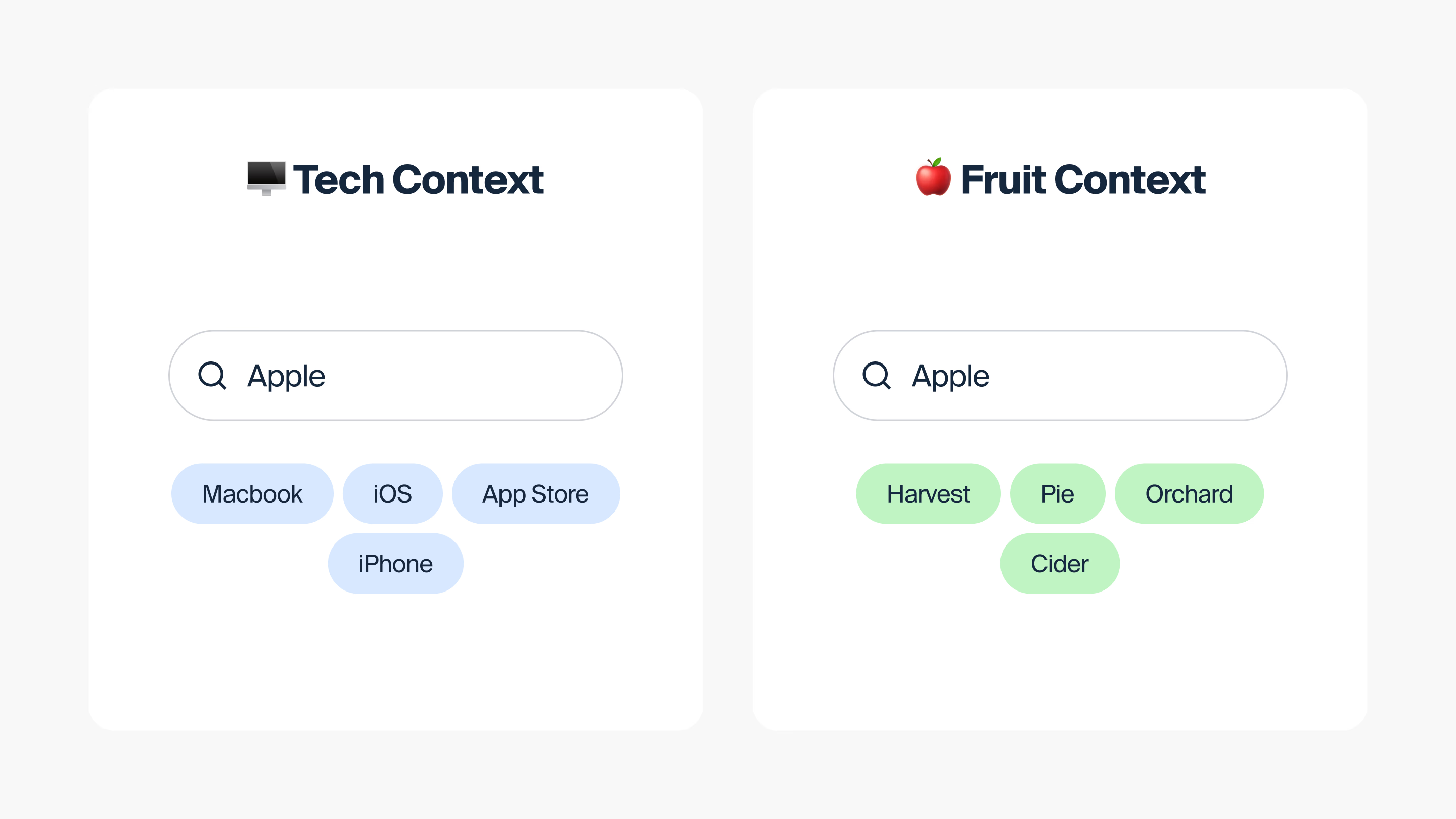
Generally, the industry defines LSI keywords as words semantically linked to a primary topic. For example, "Apple" coupled with "iPhone" signals the tech company, whereas words like "pie" and "orchard" signal the fruit. These supporting terms help search engines distinguish between different meanings, providing the necessary context.
Why SEOs started using the term
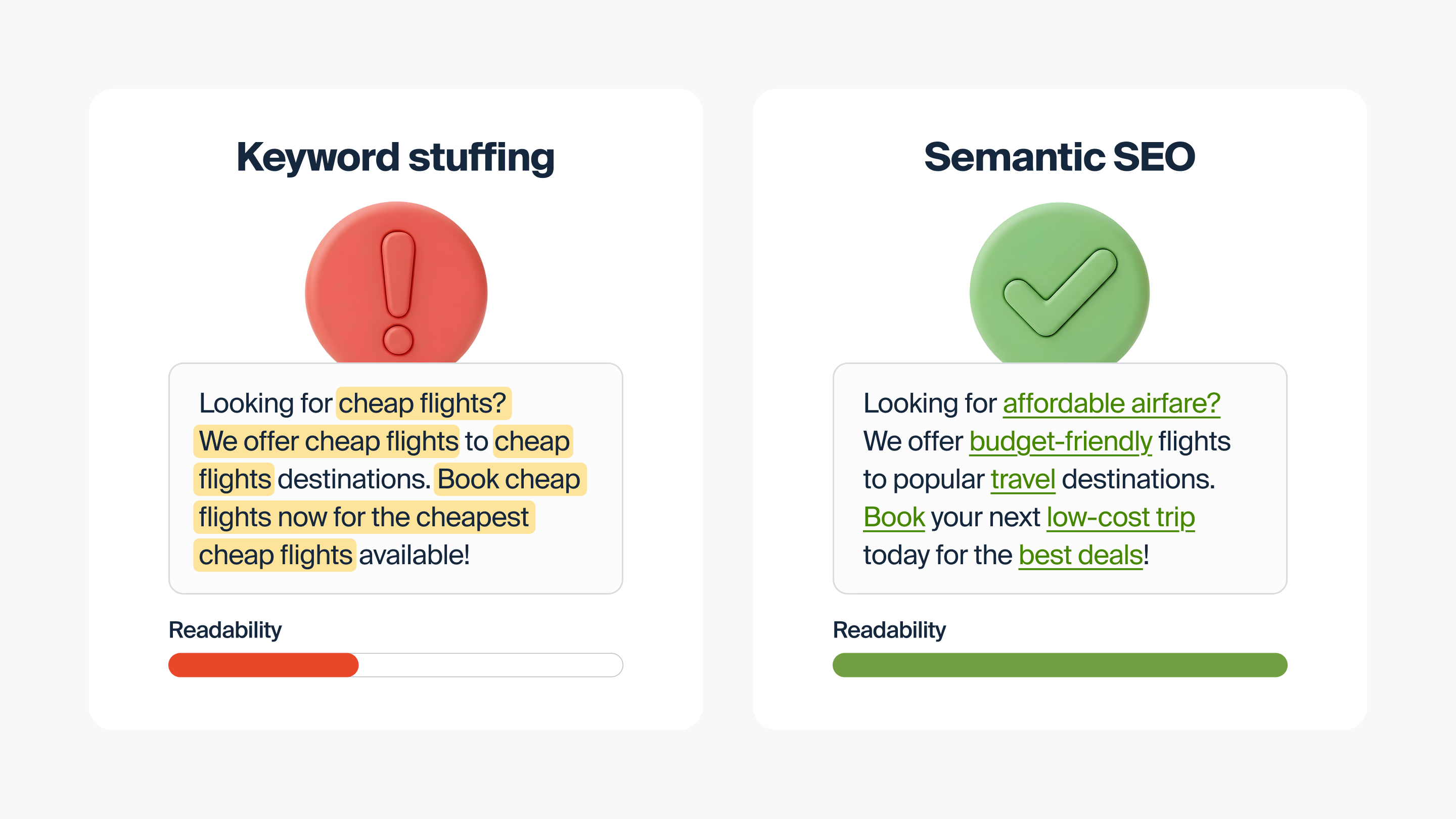
During the early 2000s, keyword stuffing was the SEO trend — you could rank on the first page of Google by repeating the target keyword more than 50 times. However, this led to mediocre content being prioritized over relevant, high-quality content. As such, Google updated its algorithm to penalize this spammy behavior, prompting SEOs to devise new ways to prove relevance without the penalty. This led to the emergence of LSI SEO.
How SEOs use "LSI keywords" in practice
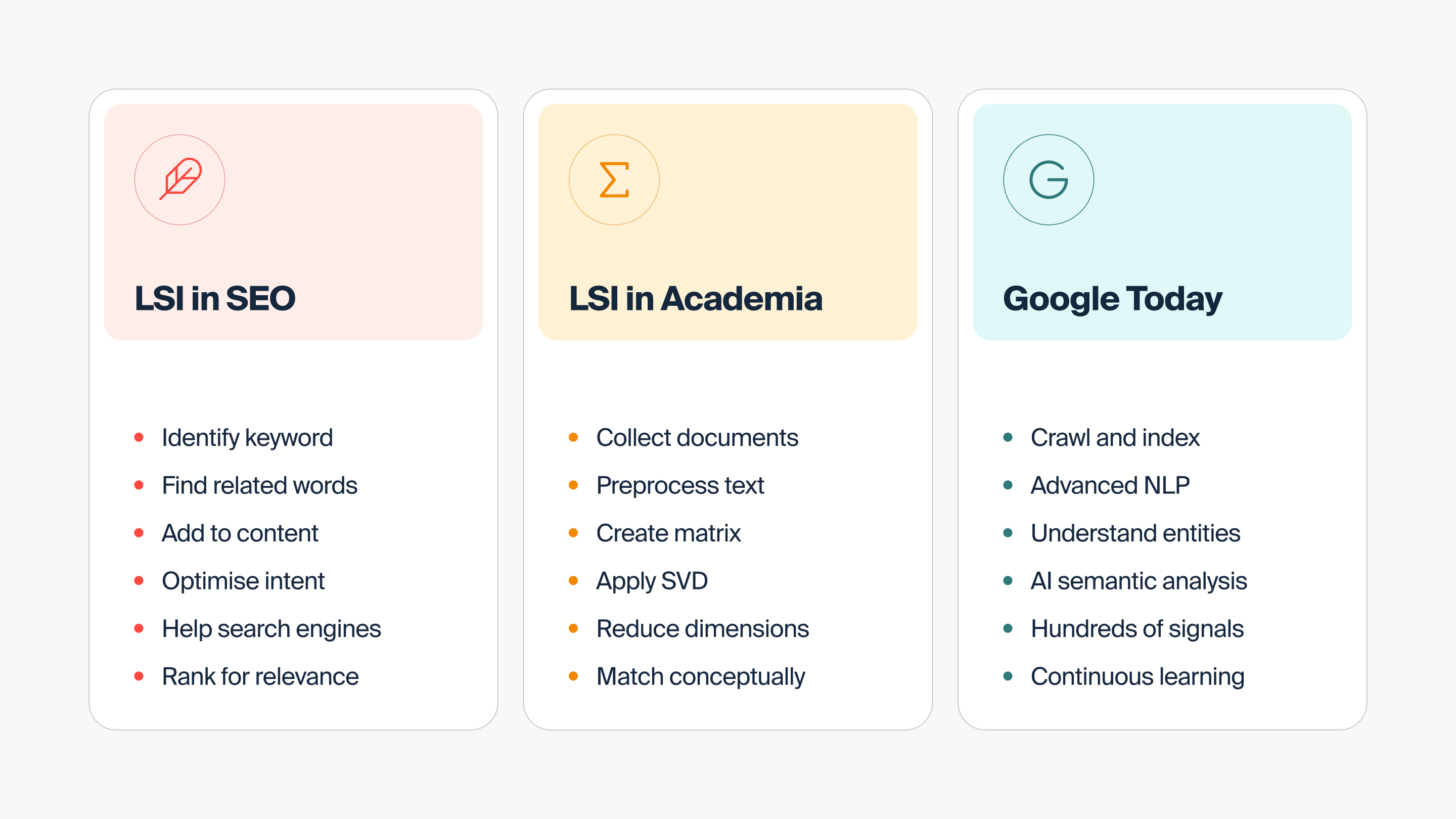
Many marketers use specialized software (Surfer SEO, Ahrefs, Semrush, etc.) to scan the top-ranking pages for target keywords and compile a comprehensive list of LSI keywords. After that, they naturally incorporate these terms alongside the main keywords in headings, paragraphs, image alt text, and meta tags.
{{banner}}
What is Latent Semantic Indexing (LSI)?
In SEO, LSI is a synonym for "related keywords." The actual technology, however, is a mathematical method developed in the late 1980s. Designed for small, static databases, LSI solved a key problem of computers struggling with context. By analyzing word patterns in fixed document sets, the system learned that "car" and "automobile" were synonyms. Basically, it helped computers match topics rather than just match words.
How LSI processes words and context
LSI converts words and documents into a mathematical grid. It examines how often words occur together to establish "semantic distance" between them. For instance, if "doctor" and "hospital" appear together frequently across many documents, the system learns they are related. This lets searches return documents that use different but related terms, which is helpful when the vocabulary varies across sources.
Why "LSI keywords" misinterpret the concept
The SEO industry borrowed the term "LSI" for a different purpose. True LSI requires a static database, but the Internet is dynamic, with billions of pages updated constantly. Running real LSI across the entire web would be impossible. When SEO tools generate "LSI keywords," they are simply finding related words or synonyms. These words can help with writing, but calling them "LSI" is misleading.
Does Google use LSI keywords?
This is the million-dollar question. For many years, SEO gurus have sold courses and tools based on the premise that Google relies on LSI to rank pages. However, the evidence points in a different direction.
Myths about LSI-based search engine optimization
There is a pervasive myth that Google uses LSI to determine the quality of a page. In fact, some SEOs even claim that if you don't reach a certain "LSI density," your page will be ignored. This led many content creators to force awkward phrases into sentences as part of their LSI keyword strategy.
Google's official stance on LSI keywords
Google has been surprisingly transparent about this topic. John Mueller, a Senior Webmaster Trends Analyst at Google, has explicitly stated:
"There is no such thing as LSI keywords in Google's algorithm. Focusing on them distracts from the real goal: creating comprehensive, high-quality content that answers user questions."
The search giant has moved far beyond 1980s technology. Google now uses advanced AI models like RankBrain, BERT, and Neural Matching. These systems are far more capable of understanding intent than the rigid LSI model ever was.
Can related words, phrases, and entities boost rankings?
Now, you're aware that LSI technology isn't powering Google. The underlying principle that context matters is more important than ever.
Benefits of using synonyms and semantic variations
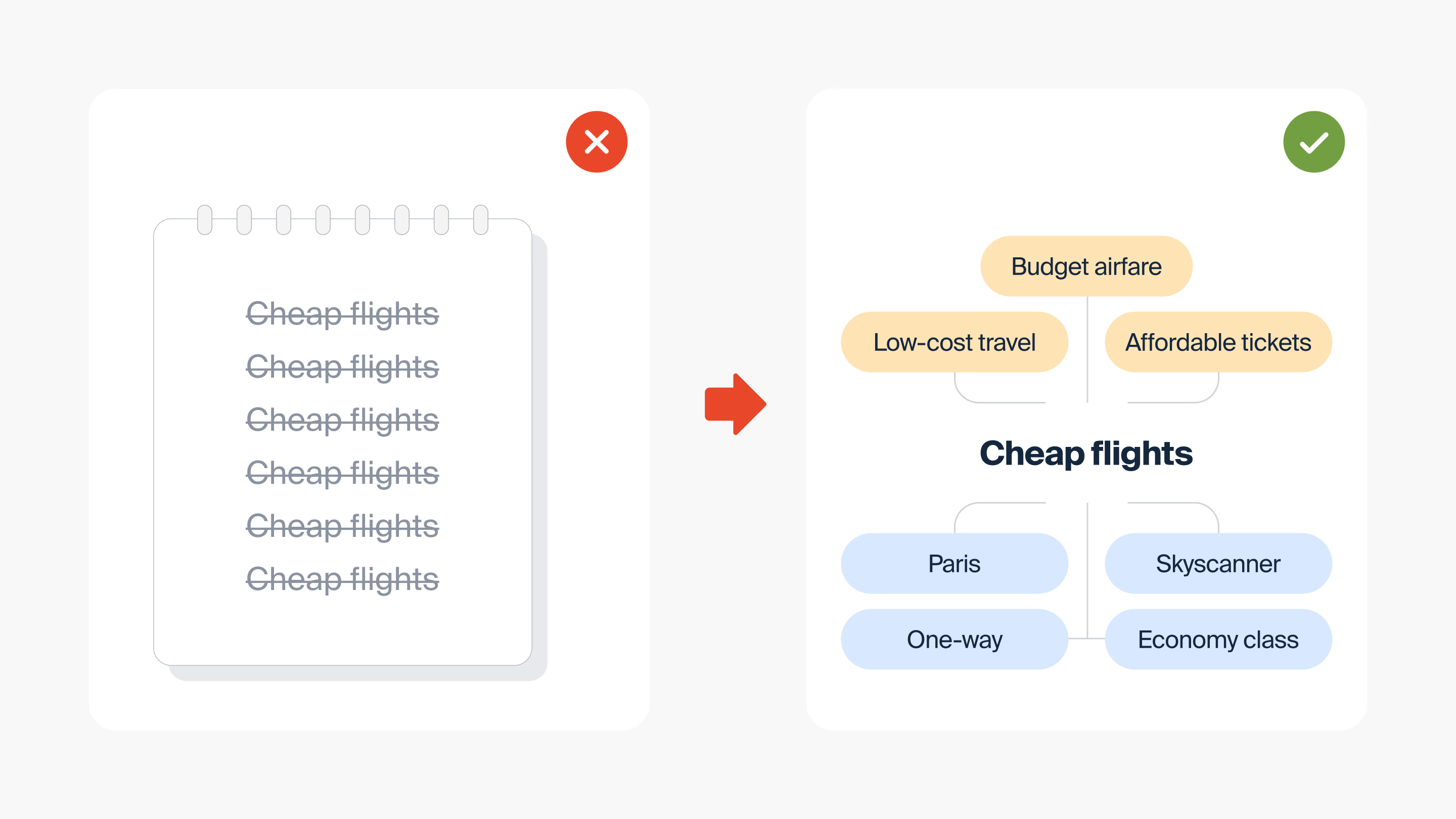
These days, you don't need to repeat the same keyword until all meaning is lost. Instead, you must use semantic variations to create content that's easily understandable to human readers while simultaneously satisfying search algorithms.
This also broadens your reach, since different users search for the same thing using different terms. When you diversify your vocabulary, you naturally reach a broader audience and capture long-tail queries.
Entities and their role in modern SEO
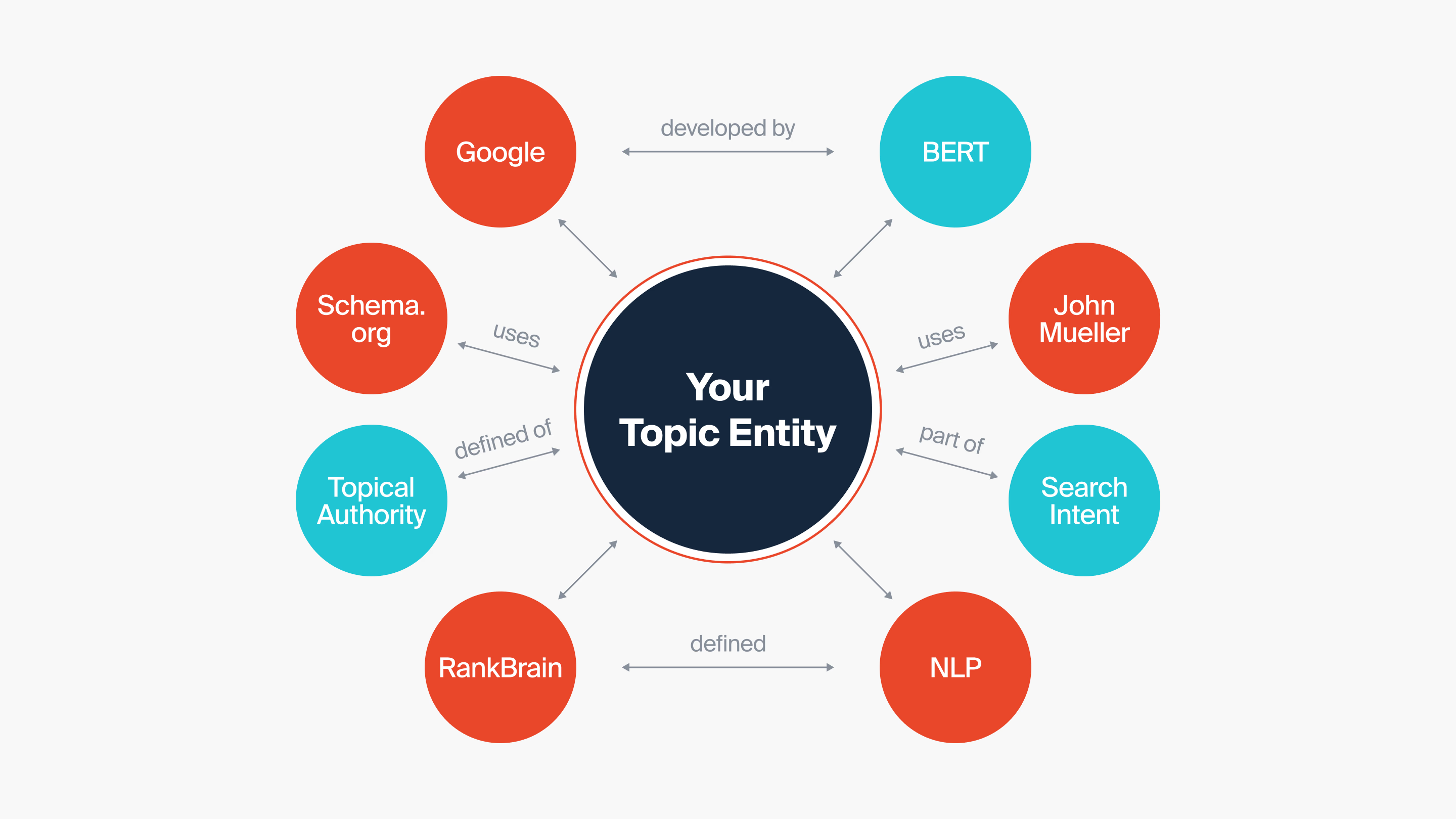
Google has progressed from a "strings" approach (matching exact text) to a "things" approach (understanding entities). An entity is a singular, well-defined concept that the search engine understands independently of the language used to describe it. It could be a person, place, or brand. To rank well, your article must include the entities that Google expects to see associated with your topic.
Getting this balance right is the difference between content that ranks and content that stalls. Our content marketing services build topical authority that compounds over time — not just single pages that plateau.
How semantic SEO replaces "LSI keywords"
The industry is shifting from LSI SEO toward semantic SEO, an approach that focuses on topical depth rather than keyword density. Instead of asking, "Did I use the word 'finance' enough times?" Semantic SEO asks, "Did I answer all the questions a user might have about finance?" This strategy aligns perfectly with Google's goal of organizing the world's information.
This is also where topical authority comes in. Google doesn't just evaluate individual pages in isolation — it looks at the breadth and depth of coverage across your entire site. A website that has thoroughly covered every angle of a subject (definitions, how-tos, comparisons, case studies, FAQs) signals genuine expertise to the algorithm. This means the most effective semantic SEO strategy isn't optimizing one page in isolation, but building a cluster of interlinked content that collectively owns a topic. Each supporting article reinforces the authority of the others, and Google rewards the site as a whole.
How to find related words and phrases
Some of the best tools for finding keywords for your content are free and right in front of you.
Rely on intuition and context
Pay attention to the words and industry terms your peers, colleagues, and customers use. For instance, a barista talks about "extraction" and "crema," not just "making coffee." Remember to use the words that come naturally to you. If you try to force in keywords that don't make sense, your writing will sound robotic. And this will annoy your users and lead to poor engagement metrics, such as a high bounce rate.
Explore Google autocomplete suggestions
When you type in your main keyword, Google's autocomplete predictions will reveal the most commonly associated queries related to your term. These suggestions are goldmines for research, as they represent real-time data on your audience's actual search intent.
Analyze related searches and specialized keyword tools
You can also scroll to the bottom of the search results page (SERP) to find the "Related searches" section. These are topics that Google explicitly links to your query.
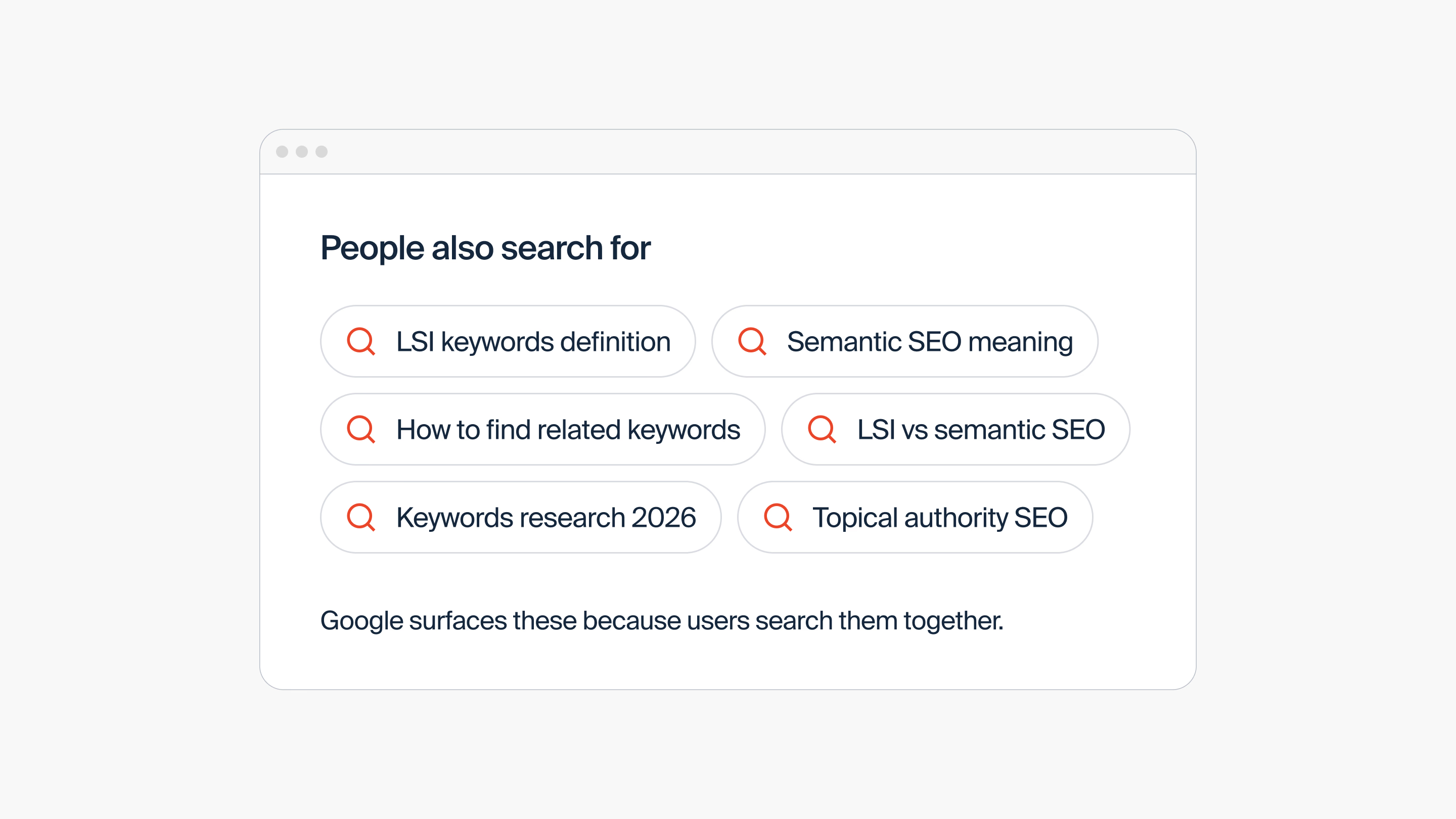
Additionally, you can conduct a deeper analysis using professional SEO software (Semrush, Ahrefs), which often aggregates "people also ask" data and competitor keywords into actionable lists.
Research terms ranking on top-performing pages
Another method is to scan and include the terms that your competitors are already incorporating into their content. For this, search for your main keyword on Google, scan the headers and subheaders of the top 5 pages, and look for recurring themes and vocabulary. If every top-ranking page mentions a specific tool or regulation, it's very likely that Google considers that element relevant to the user's intent.
Apply TF-IDF checks and consult knowledge bases
For a more technical approach, you can use TF-IDF tools, such as Ryte TF-IDF Tool, Seobility TF-IDF Analyzer, TextCortex TF-IDF Checker, and OnPage.org. They will help you compare your writing against top competitors and spot important words you might have missed.
You can also just look at the Wikipedia page for your topic. Since Wikipedia is well-organized, it serves as a cheat sheet for finding the right technical terms and structures.
Map connections from the knowledge graph
Think of the Knowledge Graph as Google's brain. When you search for a famous person or brand, you'll see an information box on the right side of the screen. This box lists related people and topics that Google knows are connected.
If you include these specific connections in your own writing, you're replicating how Google understands the world. It helps search engines trust your content and makes other websites more likely to link to you as a reliable source.
Use Google Natural Language API for entity extraction
For more advanced solutions, you can use Google's Cloud Natural Language API, which offers a demo tool where you can paste text to see how its AI interprets it. It breaks your content down into clear lists — identifying the specific people, places, and topics it finds.
Translating these signals into a ranking strategy is challenging for most teams. Through SEO keyword research, you get a full entity map and semantic gap report, so you know which topics to cover before your competitors do.
Not sure which entities your pages are missing now? Start with our SEO keywords guide. It covers how to build a semantic keyword cluster around any topic, the same foundation we use before every content audit.
How to use semantic & related keywords in SEO content
Once you've compiled your list of semantic keywords, the goal is to make it easy to read for humans and understandable for search engines. Here's what this looks like in practice.
Suppose you're writing an article targeting "project management software." A keyword-stuffed version reads: "Project management software helps teams use project management features. The best project management software has project management tools." A semantically rich version covers the same topic naturally: "Modern team collaboration tools have moved beyond simple task lists. Features like dependency mapping, resource allocation, and automated status reports address the real friction points that slow distributed teams down."
The second version never repeats the primary phrase, but it covers entities (dependency mapping, resource allocation, distributed teams) that Google associates with the topic and addresses the implicit intent behind the search. To make entity signals work in practice:
- add Schema.org markup (Article, FAQPage, or HowTo, depending on content format);
- mention the people, tools, and organizations that Google's Knowledge Graph links to your topic;
- use your key entities consistently across the title tag, H2 headings, image alt text, and meta description.
LSI keywords: myths, mistakes, and their role in SEO 2026
As we move further into the AI era, you must have a thorough understanding of the myths, common mistakes, and their role in modern SEO strategies.
Common pitfalls when using "LSI keywords"
The biggest mistake marketers make is treating LSI as a checklist. They focus so much on hitting a specific word count for "related terms" that they neglect the flow of the article. This often leads to "Frankenstein content" — articles that look like they were stitched together by a robot. As a result, important factors such as user experience (UX), site speed, and content quality are ignored, which leads to lower rankings, traffic, and poor user engagement.
Evolution of Google's algorithm and NLP
The introduction of BERT and MUM has taken Google's capabilities to the next level. These technologies allow the search engine to understand nuance, sentiment, and even the relationship between words in a complex sentence. Search engines have moved past simple word matching; they now reward the pages that provide the most helpful answers. Understanding the history of search algorithms is only the first step; applying these modern standards in your SEO content strategy is where the actual work begins.
The real role of context and search intent
Today, if a user searches for "how to tie a tie," they want a video or a step-by-step diagram, not a 2,000-word essay stuffed with the history of neckwear. Modern SEO is about determining the intent behind the query — informational, transactional, or navigational — and providing the exact format and depth of content that satisfies it.
"Don't write for the algorithm of yesterday. Write for the user of today, and the algorithm will follow."
Even the best content fails to rank if crawl errors, slow Core Web Vitals, or broken internal linking bury it before Google can evaluate it. If you suspect your infrastructure is holding back otherwise solid content, our technical SEO services identify and fix the issues.
From platform dependence to organic independence: SEO case study
The idea of "LSI keywords" suggests that adding related terms improves rankings — but in practice, performance comes from entity-based, intent-driven content. One of our clients — a top marketplace seller generating less than 5% of revenue from their own website — came to Halo Lab with a clear problem: rising platform commissions and zero control over customer relationships.
We started by fixing the technical foundation: resolving indexing gaps, correcting redirect chains, and updating meta tag templates to reflect purchase intent rather than generic descriptions. Then we rebuilt the product page content around the entities and vocabulary that Google associates with each product category. Category pages were restructured to capture broader commercial queries and funnel that traffic into product pages through deliberate internal linking. Link building ran in parallel, focused on pushing pages that had already reached the top ten into the top three.
The results compounded over 12 months. Website orders grew 10x. Organic search went from generating less than 5% of sales to nearly 50% of total revenue. During peak months, the site matched marketplace order volume outright without paying a single commission. You can read the full step-by-step breakdown of this e-commerce SEO case study on our website.
Rethink your approach to SEO
The term "LSI keywords" is a ghost from the past that continues to haunt the SEO industry. Stop looking for a magic list of LSI words. Instead, focus on entities, user intent, and comprehensive topic coverage. By shifting your mindset from "keyword matching" to "knowledge building," you align your site with the future of search, ensuring sustainable growth and visibility.
Wondering if your content is optimized or stuck on keyword stuffing?
Get a free SEO audit and see how your content compares to top-ranking pages.
Request a free SEO audit
FAQ
What are LSI keywords in simple terms?
They are conceptually related words and phrases that help search engines understand a page's context.
Did Google ever confirm using LSI in its algorithm?
No. Google representatives have explicitly stated that they do not use LSI technology for ranking.
How can I find relevant keywords without relying on LSI?
Use Google's own tools: look at autocomplete predictions, the "Related searches" section at the bottom of the SERP, and analyze the vocabulary used on top-ranking competitor pages.
Are semantic keywords and LSI keywords the same thing?
In common SEO usage, yes, they are often used interchangeably. However, technically, "semantic keywords" is the more accurate term for modern SEO, while "LSI" refers to a specific, outdated mathematical model.
What's the best SEO strategy in 2026 for keyword optimization?
Focus on satisfying user intent and building topical authority. Use natural language, cover entities related to your subject, and ensure your content answers the user's query more comprehensively than anyone else.
How long does it take to see results from semantic SEO changes?
Results vary, but most pages show movement within 4–8 weeks of on-page optimization if indexing is healthy. Stronger results typically build over 3–6 months, with full impact, like in the e-commerce example, accumulating over a year.
What tools can check my entity coverage?
Google's Natural Language API (free demo) shows how it interprets your content by identifying entities and confidence levels. For gaps, tools like InLinks, Ryte, or Surfer SEO highlight what competitors cover that you don't, while Screaming Frog, plus a quick review of competitor headings, reveals broader topic gaps.