




Your products are selling well on marketplaces. You’re a top performer in your niche. But here’s the problem: marketplaces bring rising commissions, algorithm changes, and zero control over your customer relationships. Is it possible to move from complete marketplace dependence to a balanced, controlled sales strategy? Our numbers say “yes.”


E-commerce businesses are generating revenue on marketplaces, but if your own website isn’t ranking in Google, you’re missing the opportunity to build a sustainable, controlled sales channel. In competitive niches, organic search can be a game-changer, yet many sellers treat their website as just a digital catalog.
Our client was a top marketplace seller generating less than 5% of revenue from their own site. Rising platform fees and a lack of control pushed them to invest in SEO with a clear goal: reduce their dependence on the marketplace and increase sales through their own website.
To give you a preview, here’s what we’ve achieved during this project:
- 10x increase in website orders.
- Nearly 50% of sales coming from Google.
- Website matched marketplace order volume during peak months.
This isn’t about viral growth hacks — it’s about systematic SEO that builds a real business asset, and we are ready to show you this step-by-step.
The situation at launch
When we started, our client’s website had potential but wasn’t gaining traction in search results. The initial situation was as follows:
- Established categories and a broad enough product range to meet demand.
- Strong marketplace presence — the client was a top seller in their niche.
- Template-based meta tag optimization, which included basic title/description tags without a commercial focus or precise query targeting.
What was blocking sales growth from the website
The problem wasn’t an absence of SEO but rather that the website couldn’t effectively capture demand from Google. Even though there were product pages and categories, some of them weren’t indexed or were indexed inconsistently. Being successful in their niche, the client didn’t pay enough attention to the priority products. Namely, they lacked sufficient content and structure to compete in search results. The last obstacle to sales growth was the fact that pages often “stalled” on pages 2–3 of Google, never reaching the sales zone (top 10 or top 3).
Project goals
The client didn’t expect an instant sales “explosion.” The goal was strategic — prepare the website for the fall-winter season and transform it into a full-fledged sales channel. To get there, we identified five key objectives:
- Stabilizing product and category indexing.
- Getting priority products into the top 10, then the top 3 of Google.
- Increasing organic traffic from commercial queries.
- Growing the share of sales from Google.
- Reducing marketplace dependence during peak season.
Strategy: how we built growth
With the project goals in mind, we immediately rejected the “2 months of analysis, then work” approach. The strategy was designed so that initial progress would be visible in the first month, not after completing all audits. For anyone who wants to learn from our approach or gain insights, here’s a breakdown of our strategy.
Stage 1. Restoring the technical foundation and indexing
In the first month, we focused not only on analyzing the site, niche, and competitors but also immediately began optimizing priority product pages (those with the highest cumulative demand). This allowed us to avoid wasting time on audits alone and lay the groundwork for growth from the start.
During a detailed technical audit, we discovered that some product pages, including priority ones, weren’t being indexed by Google. The main reasons were missing redirects from the old domain, filtering blocks, and issues with the site’s language functionality.
“You can’t optimize what Google can’t see. Thus, technical foundation is the prerequisite for everything else.”
Key actions
In order to improve the technical foundation and search indexing, we:
- Identified and eliminated reasons for non-indexing of products and categories.
- Returned pages to the index that were in the Sitemap but not appearing in Google.
- Fixed errors with filtration and outdated URLs.
- Updated title and description templates with a focus on purchase intent.
Results
After eliminating technical issues and updating meta tag templates, the site began rapidly expanding its search presence. Within the first full month after work began, Google impressions increased from 11.8k to 17k (+44%).
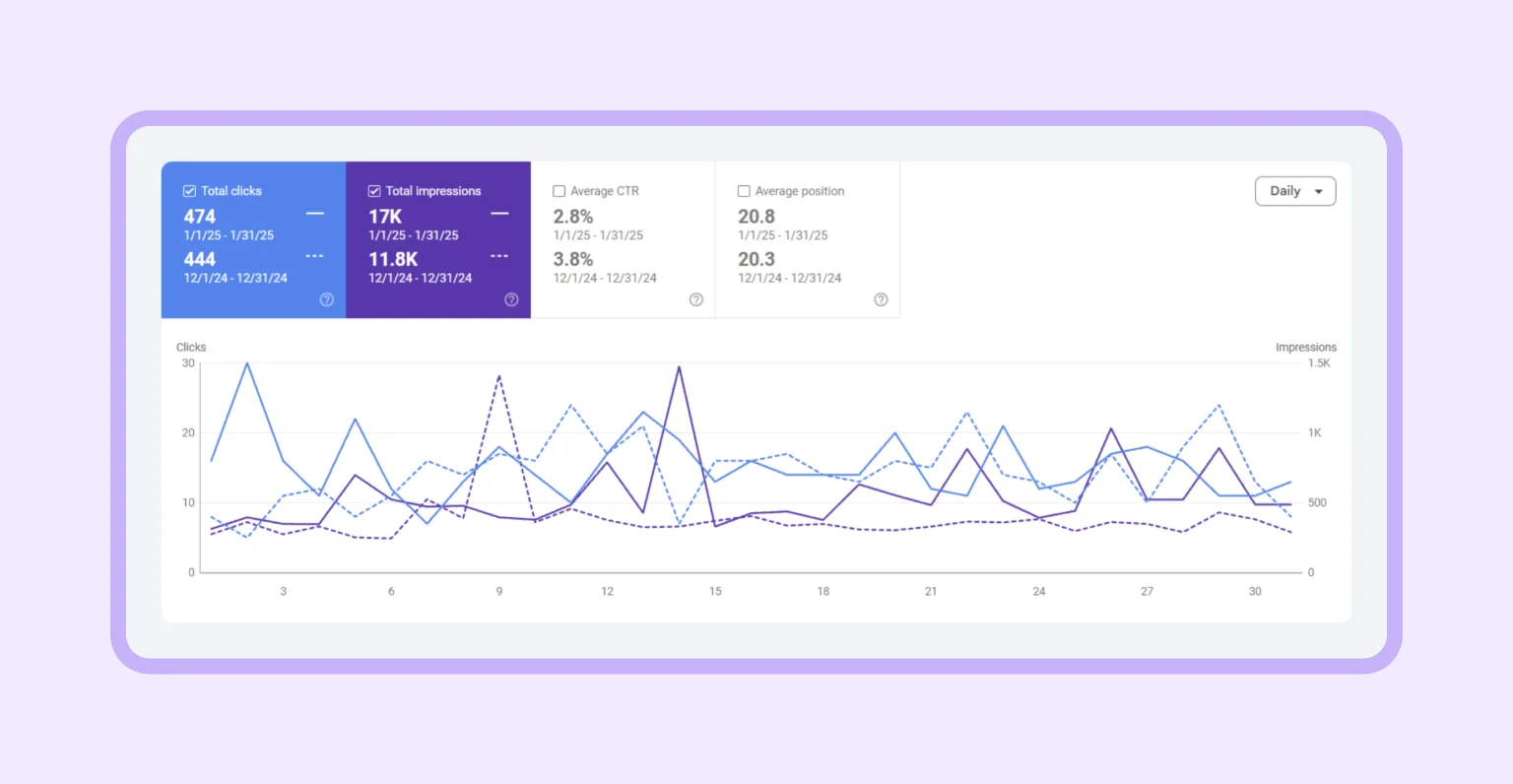
This stage was critical: before optimization, a significant portion of pages weren’t actually participating in search competition. After technical fixes and title/description template changes, the site began consistently appearing in results and accumulating visibility.
Key takeaway: At this stage, we deliberately didn’t chase CTR. The main task was to return pages to the index and expand query coverage. This became the foundation for subsequent traffic and sales growth.
Stage 2. Priority products as the growth point for sales
After restoring indexing, we didn’t start optimizing the entire catalog, quickly pushing everything to the top. Instead, we focused on the client’s priority products that already had demand in the niche and were selling on marketplaces. Our logic was simple: if these products are purchased from competitors and marketplaces, they can and should be sold directly on the website.
At this stage, we defined three main steps:
- Testing which products Google was ready to rank faster.
- Understanding which pages had the greatest growth potential.
- Preparing the foundation for scaling through categories and links.
This approach allowed us to avoid wasting resources on pages with no demand and to focus on those that actually impact sales.
Key actions
For each priority product, we worked individually, not using templates, and these are the things we completed:
- Collected semantics for specific models, not general categories.
- Rewrote descriptions for real user queries (no copy-paste from marketplaces).
- Optimized title, description, H1, images, and alt attributes.
- Added internal text links from relevant pages.
- Regularly submitted pages for re-indexing and tracked dynamics.
Results
Even without aggressive link building, optimized pages began to come alive. Google impressions appeared for high-frequency commercial queries. Pages started appearing on pages 2–3 of Google, even in competitive niches. For some products, the first organic traffic began.
Below is an example of how, after on-page optimization, an individual product page gradually gained visibility on Google.
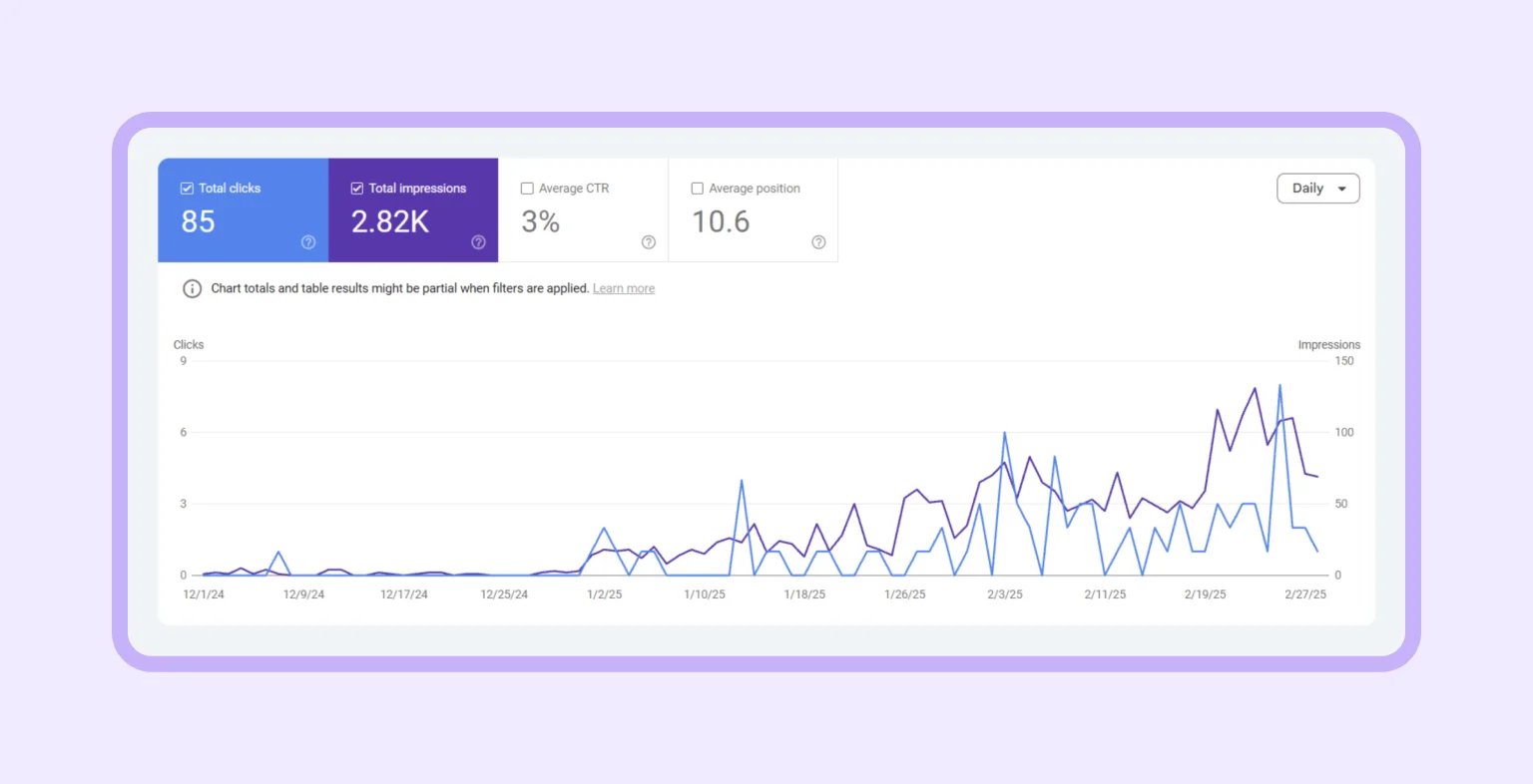
Alongside the increase in impressions and clicks, we monitored how this page ranked for key commercial queries. After on-page optimization and internal linking, key queries began rising by dozens of positions. Some of them even moved from deep in the results (beyond the top 50) to the top 30/40.
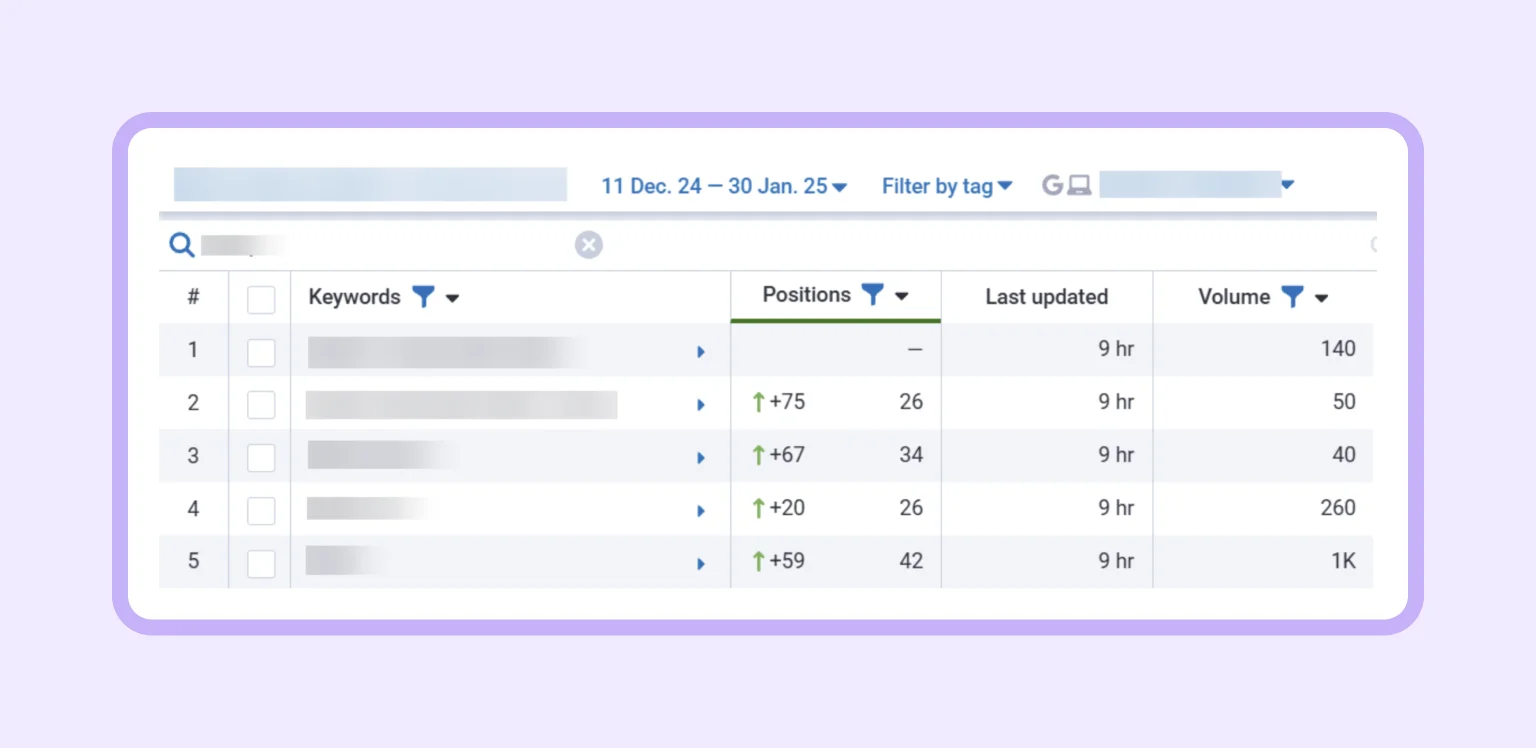
Key takeaway: In most cases, basic uniquification and correct meta tags were sufficient for a page to emerge from “beyond visibility zone” and start competing in results. Then we pushed these pages further with internal and external links.
Stage 3. Categories as a tool for scaling demand
When priority product pages began steadily moving up in results, the next step was scaling demand across categories. Before we started work, most categories had minimal content and were indexed inconsistently. As a result, they couldn’t fully compete for general commercial queries.
In fact, well-designed categories allow you to capture broader, more general queries and systematically grow organic traffic. For us, working with categories met several business objectives at once:
- Capturing more “cold” demand — users who haven’t decided on a specific product yet.
- Creating additional entry points to the site.
- Strengthening product pages through internal structure.
Key actions
We didn’t just add texts but systematically worked through the category structure:
- Included short texts above listings and expanded ones below products to avoid harming UX.
- Optimized title, description, and H1 for commercial queries.
- Reviewed structure and created subcategories for complex product groups.
- Established internal linking between categories and priority products.
“Well-structured categories turn scattered traffic into systematic growth.”
Results
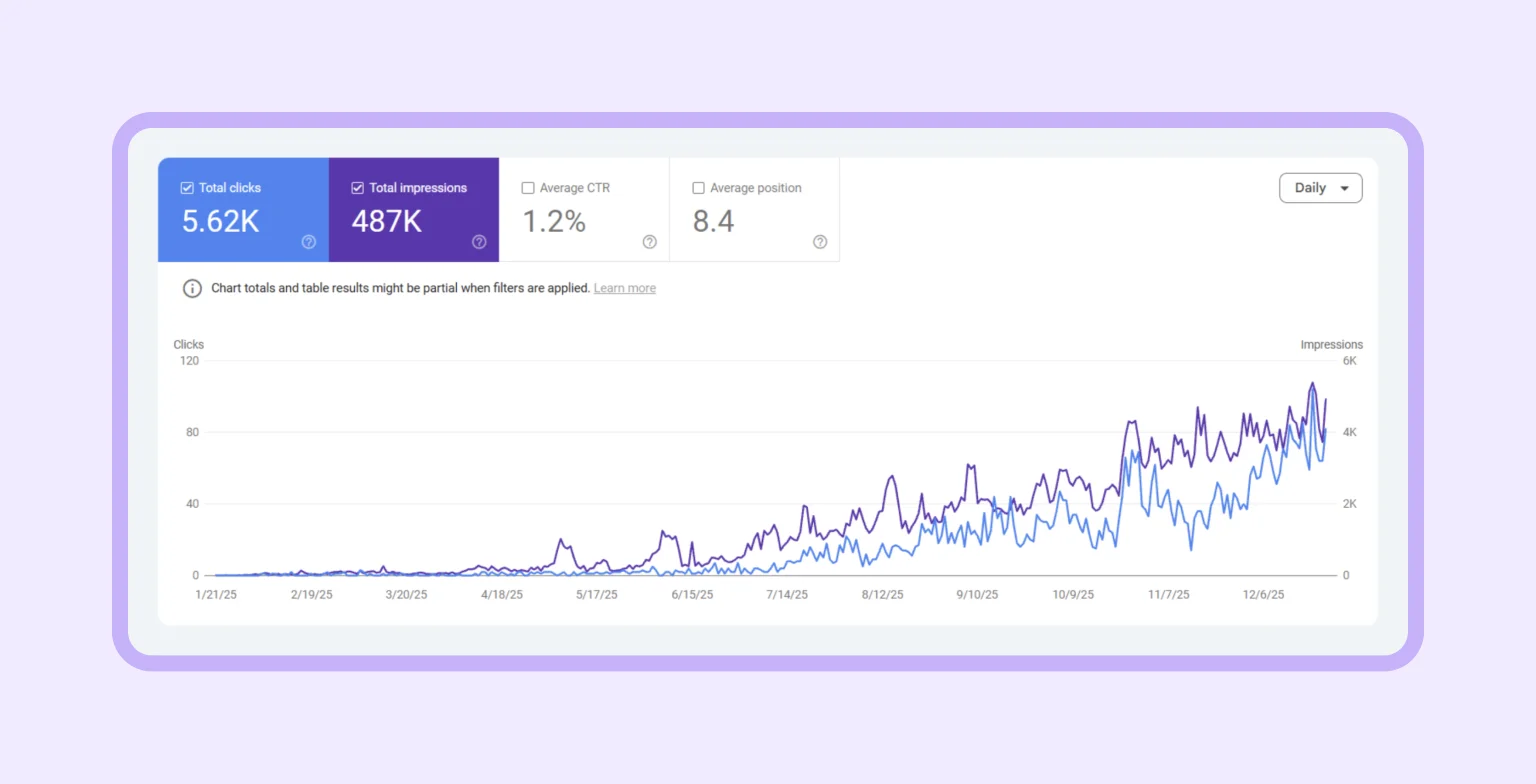
Following optimization, the categories began to fulfil their key role. They were consistently indexed and visible in search results, capturing traffic for broad commercial queries and attracting users at the selection stage rather than just browsing. Crucially, category optimization did not steal traffic from products but rather strengthened them through proper internal linking, as shown in the graph below.
Stage 4. Links as a tool for acceleration and pushing growth
Our link-building efforts didn’t begin after dealing with the categories; it was done in parallel to technical optimization and on-page work. However, at different project stages, links served different purposes.
Initially, they helped pages get reindexed faster, provided search engines with additional trust signals, and kick-started early ranking movement. As product pages and categories gained strength in search results, the role of links shifted — they became a tool for pushing competitive pages into the top 3.
Key actions
We didn’t use aggressive or mass-linking strategies. Instead, we:
- Analyzed the link profile of the main competitors.
- Determined which types of pages (products or categories) needed strengthening at each stage.
- Distributed links gradually, without sharp jumps.
- Controlled anchor text and avoided spam.
- Combined guest publications and crowd links.
Results
When pages were technically clean, had optimized content, and were established in the top 10 or close to it, links began delivering maximum effect. Pages transitioned from top 10 to top 3. Positions stabilized and became less sensitive to updates. This was when SEO began directly impacting sales volume, not just visibility.
“Link-building works best when aligned with technical and on-page foundations, supporting both indexing and early ranking growth.”
Stage 5. Shopping ads as an additional growth channel
When the SEO channel began growing steadily, we launched Google Shopping not as a replacement for organic but as an additional channel to scale sales and as a source of demand data.
At this point, advertising served practical purposes:
- speeding up sales for products with validated demand.
- testing which models convert best into purchases.
- generating data on seasonality, profitability, and demand dynamics.
Key actions
The ad launch wasn’t limited to standard “turn it on and wait for results.” We carefully curated the process by:
- Collecting and optimizing product feed.
- Segmenting products by performance and profitability.
- Regularly cleaning search queries of irrelevant and general terms.
- Disabling products that weren’t profitable.
- Adjusting bids and campaign structure based on results.
Advertising was constantly refined — sometimes daily, especially during peak periods.
Results
Google Shopping quickly became a stable second sales channel, with ads bringing new customers who hadn’t previously purchased from the site. Over time, the variety of products purchased from ads grew. Finally, the campaign provided a clear understanding of which products to scale through SEO and which not to. Notably, advertising didn’t take over all attention but worked in tandem with SEO, improving feed quality and helping monetize demand faster.
Key takeaway: We avoided uncontrolled ad scaling, paused low-return products, excluded irrelevant queries, and increased budgets only where viable, keeping campaigns manageable during peak seasons. Advertising became a stable secondary channel, while the focus stayed on organic growth.
Business results
Within one year, the client’s website saw strong gains, with consistent increases in traffic and conversions. Let’s now take a closer look at these results.
Website sales growth (year-over-year)
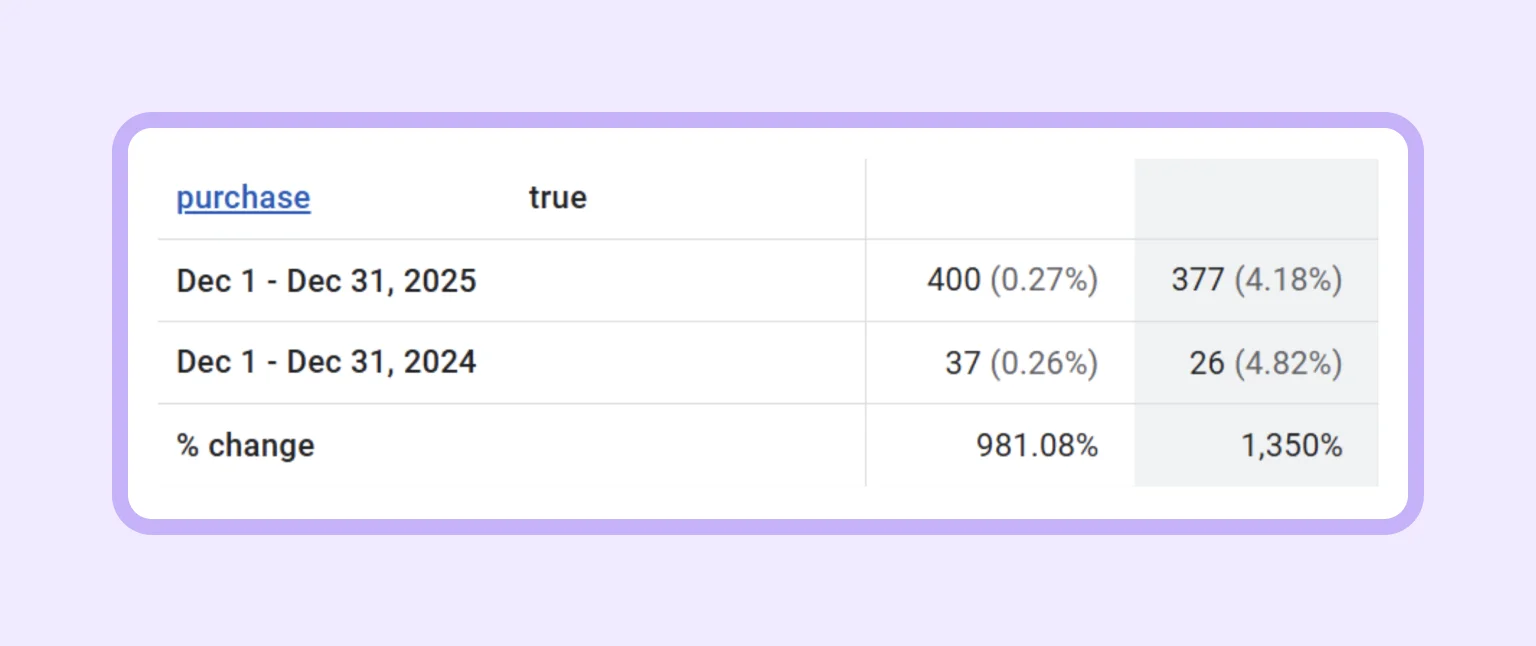
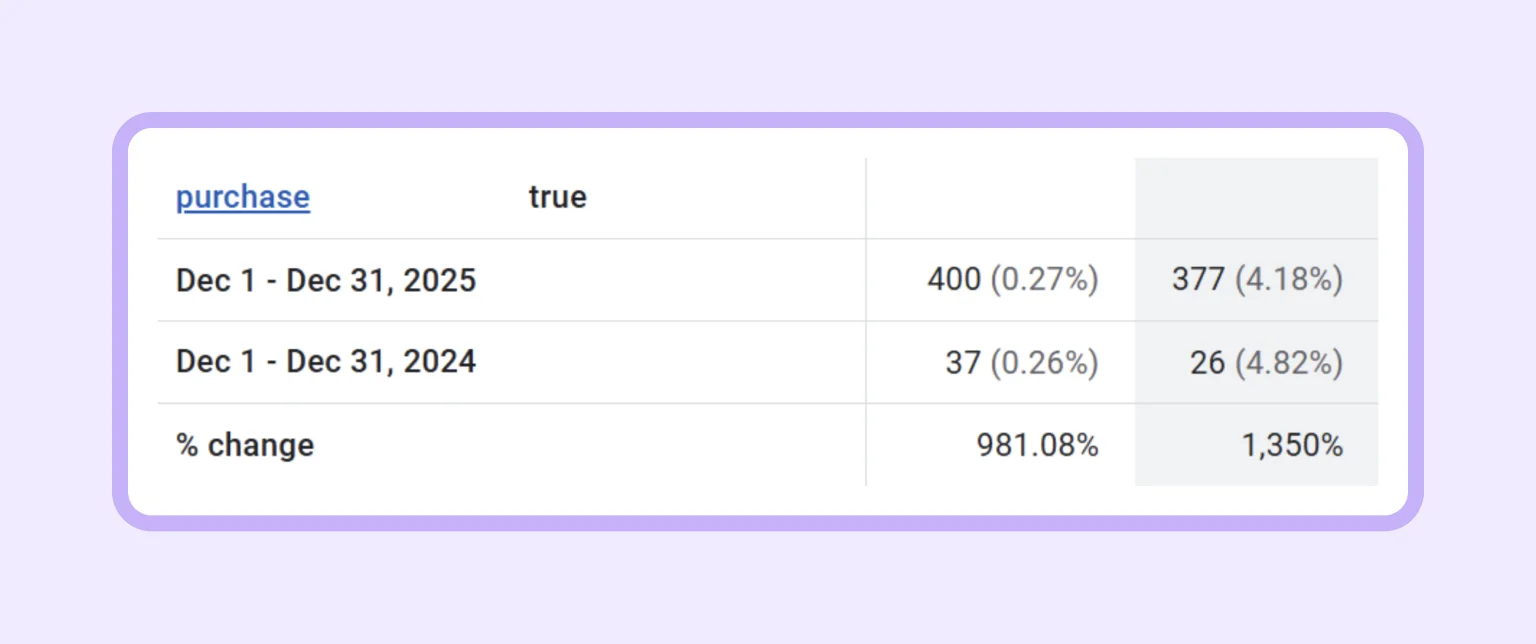
The key achievement was that the website moved from an auxiliary channel to a primary sales driver. The percentage of sales in December 2025 compared to December 2024 (project start) increased significantly, as shown in the table below.
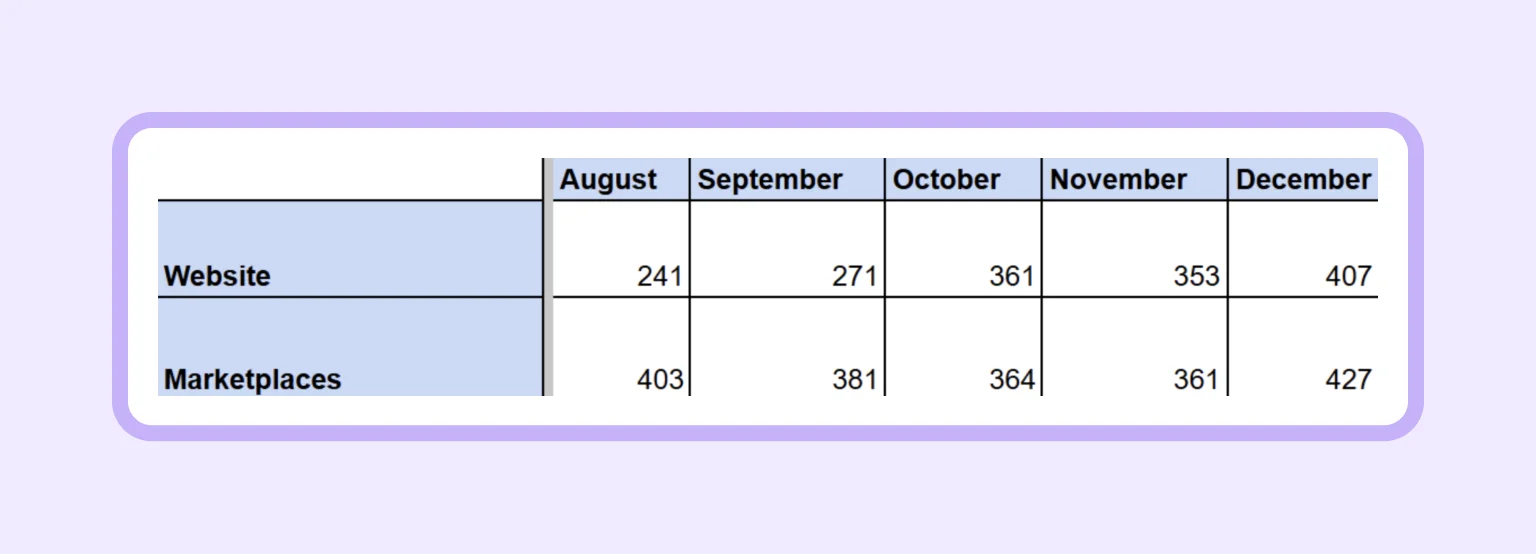
At the project’s start, the website accounted for less than 5% of total sales volume, while the main revenue came from marketplaces. In the second half of the year, the situation changed:
- The number of website orders grew steadily month over month.
- During peak months, the website practically matched marketplaces in sales volume.
- Share of sales through the website grew without increased commissions or dependence on external platforms.
All in all, the business gained a controlled sales channel independent of marketplace rule changes.
The website became a niche leader
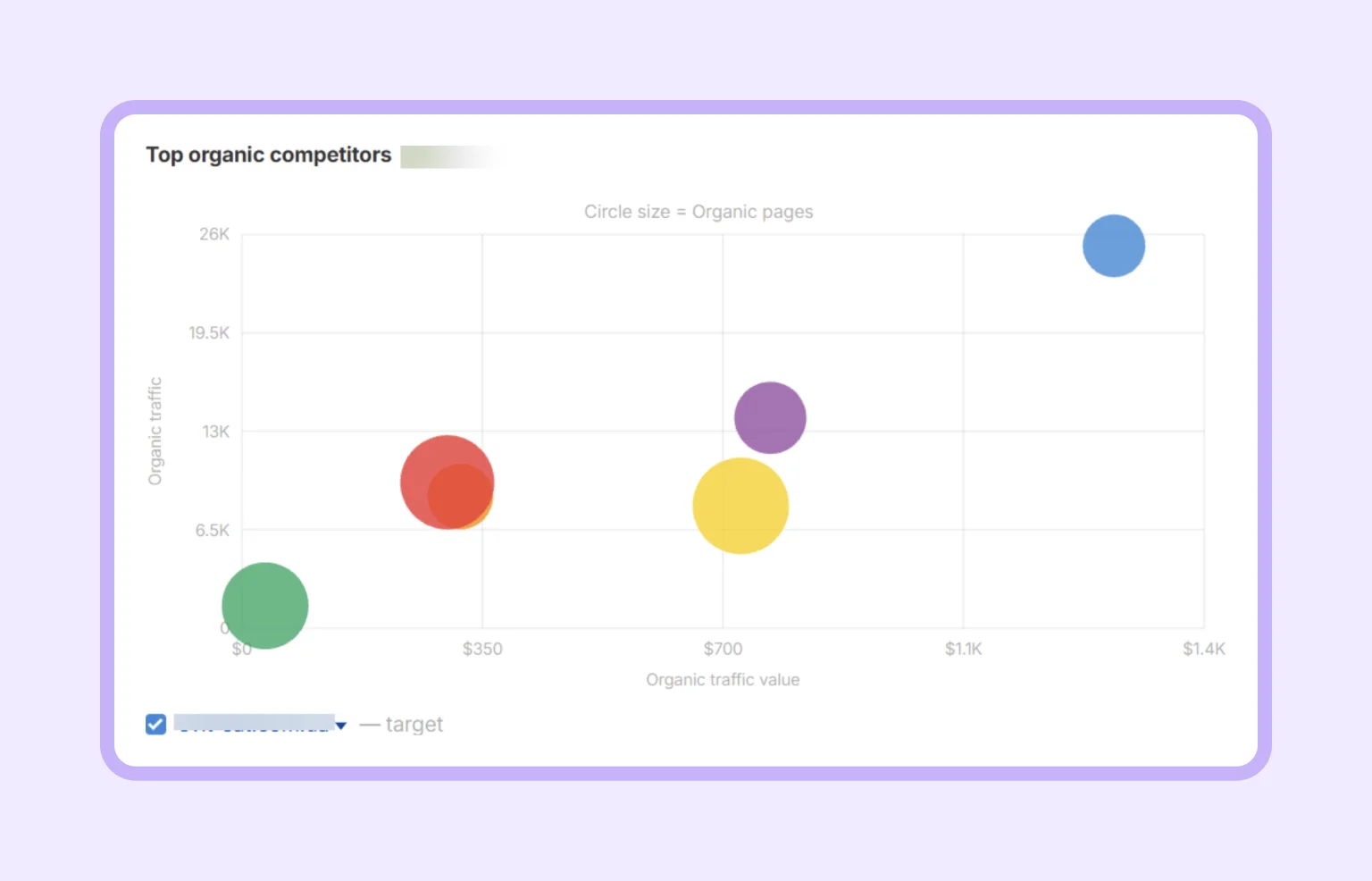
The second positive outcome of our SEO and content work is that our client’s website established itself as a top player in its segment. It reached the top for key commercial queries and began competing with major market players. Thanks to our efforts, not only did traffic increase, but the value of organic traffic grew as well. In a niche where most sales historically occurred on marketplaces, the website took a prominent position in Google search results and began capturing demand directly.
Systematic organic traffic growth throughout the year
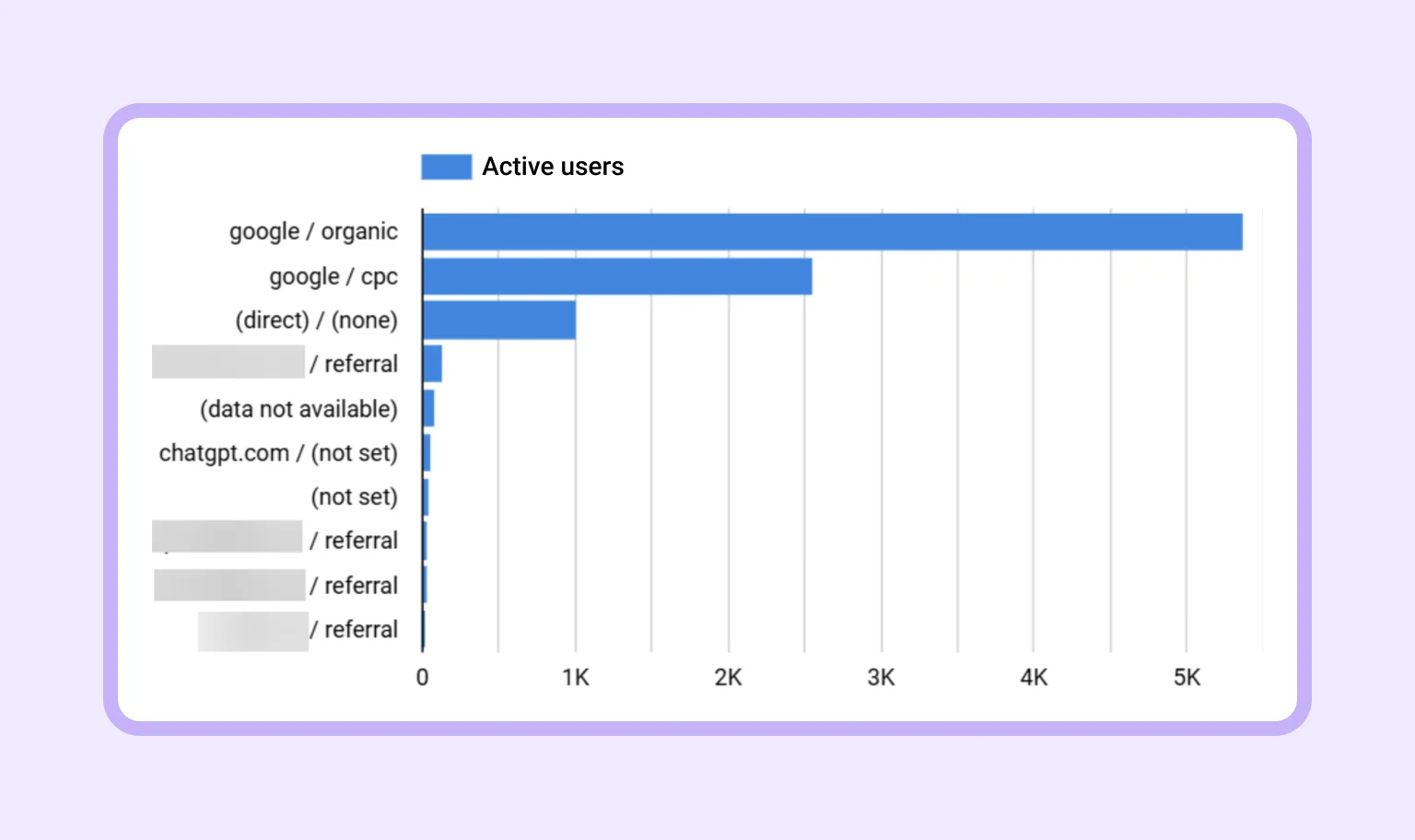
To demonstrate that the results were neither random nor seasonal, we also analyzed the dynamics of active users from Google organic. From spring onward, organic traffic increased consistently without sharp declines
- Spring — the site just began gaining visibility.
- Summer — a stable core of commercial traffic appeared.
- Fall — sharp increase due to pages entering the top 3.
- December — peak organic traffic for the entire work period.
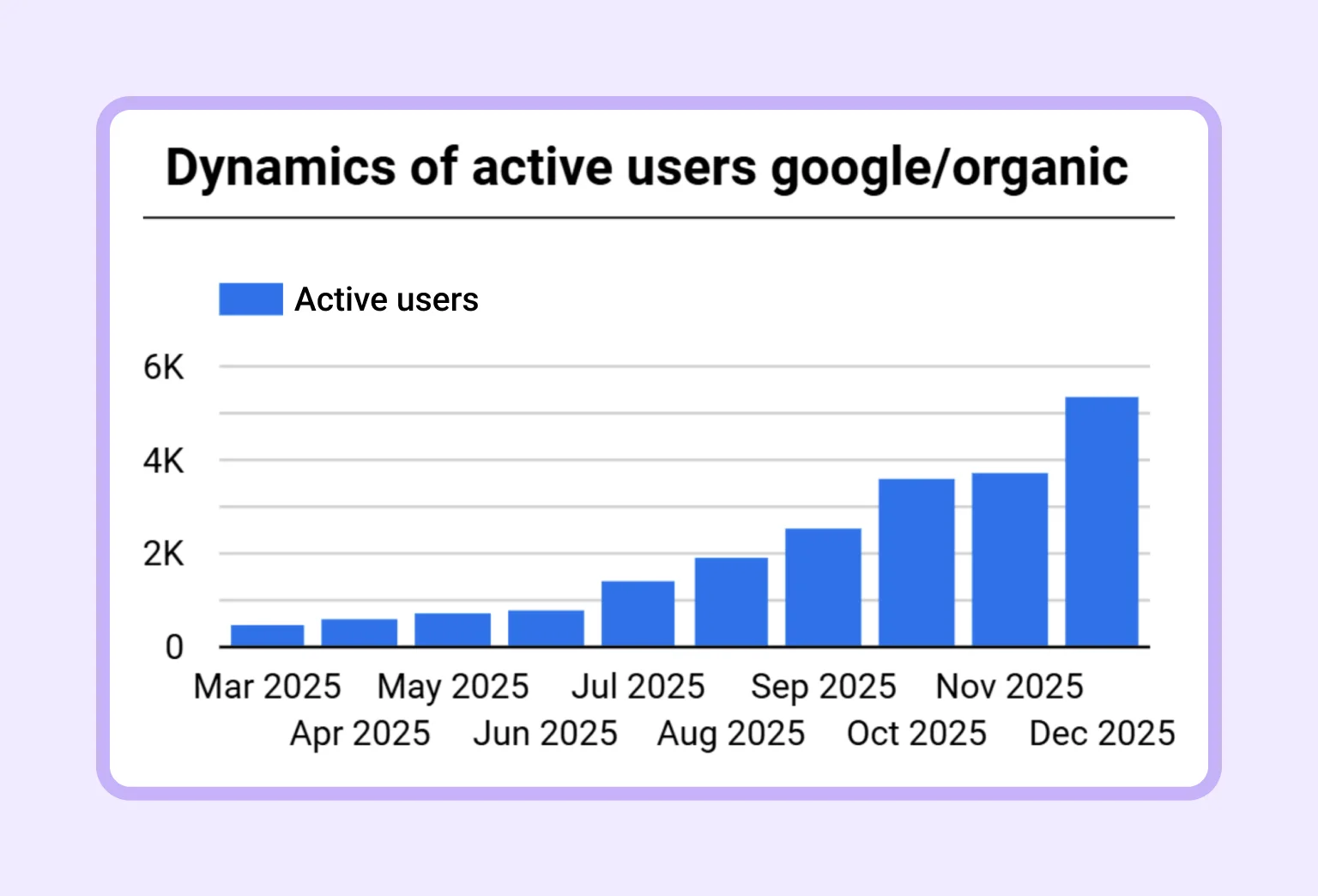
In December, the number of active users from Google exceeded 5,000+ per month, several times more than at the start of the active growth phase. This confirms that the SEO result was cumulative and directly related to completed work, not just seasonal demand.
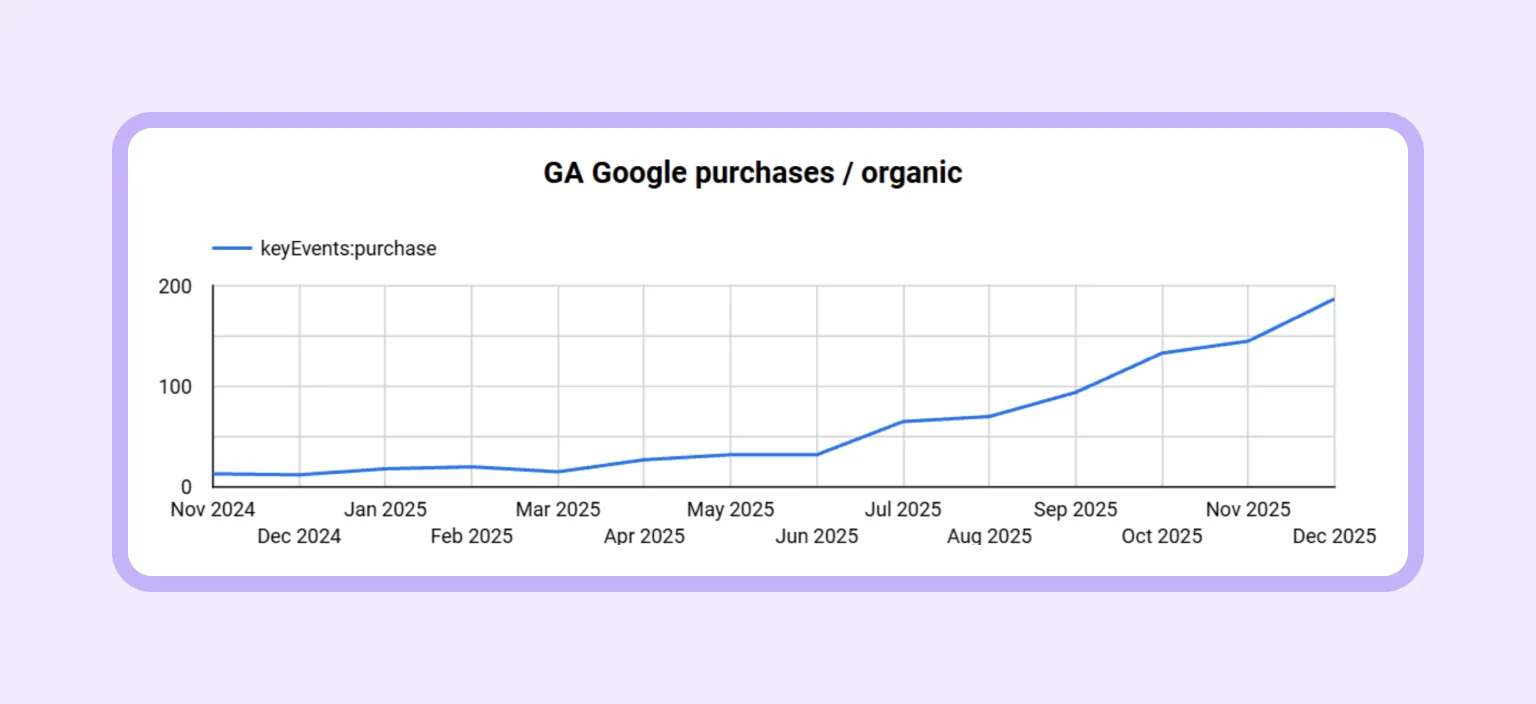
With growing visibility and positions, organic traffic began steadily converting to orders. The chart below displays Google organic purchases from Nov 2024 to Dec 2025, growing steadily from 10–20 per month to nearly 200 by December, with rapid acceleration from mid-2025.
Results we continue to scale
Within one year, the client’s website evolved from a supporting channel into a full-fledged sales driver: +981% growth in orders, nearly 50% of total sales generated through the website, and top positions among niche leaders — without full dependence on marketplaces.
At the time of summarizing the results, the website has a strong and stable organic foundation. SEO continues to generate new sales without budget increases, while providing clear direction on which products and categories to scale next. The project has now entered a maintenance and growth phase, focused on strengthening top 1–3 positions, expanding new and seasonal product categories, and further reducing reliance on marketplaces.
This approach works best when SEO is treated as a long-term growth system. If that’s the direction you’re considering, you can reach out via our contact form to explore how it could work for your business.