



A great product has little value if nobody can find it. In 2026, appearing beyond the first page of Google often means missing the best opportunities for organic growth. This is where strategic search engine optimization can become a competitive advantage. But what industries need SEO the most? The answer depends on where and how customers look for products and solutions.


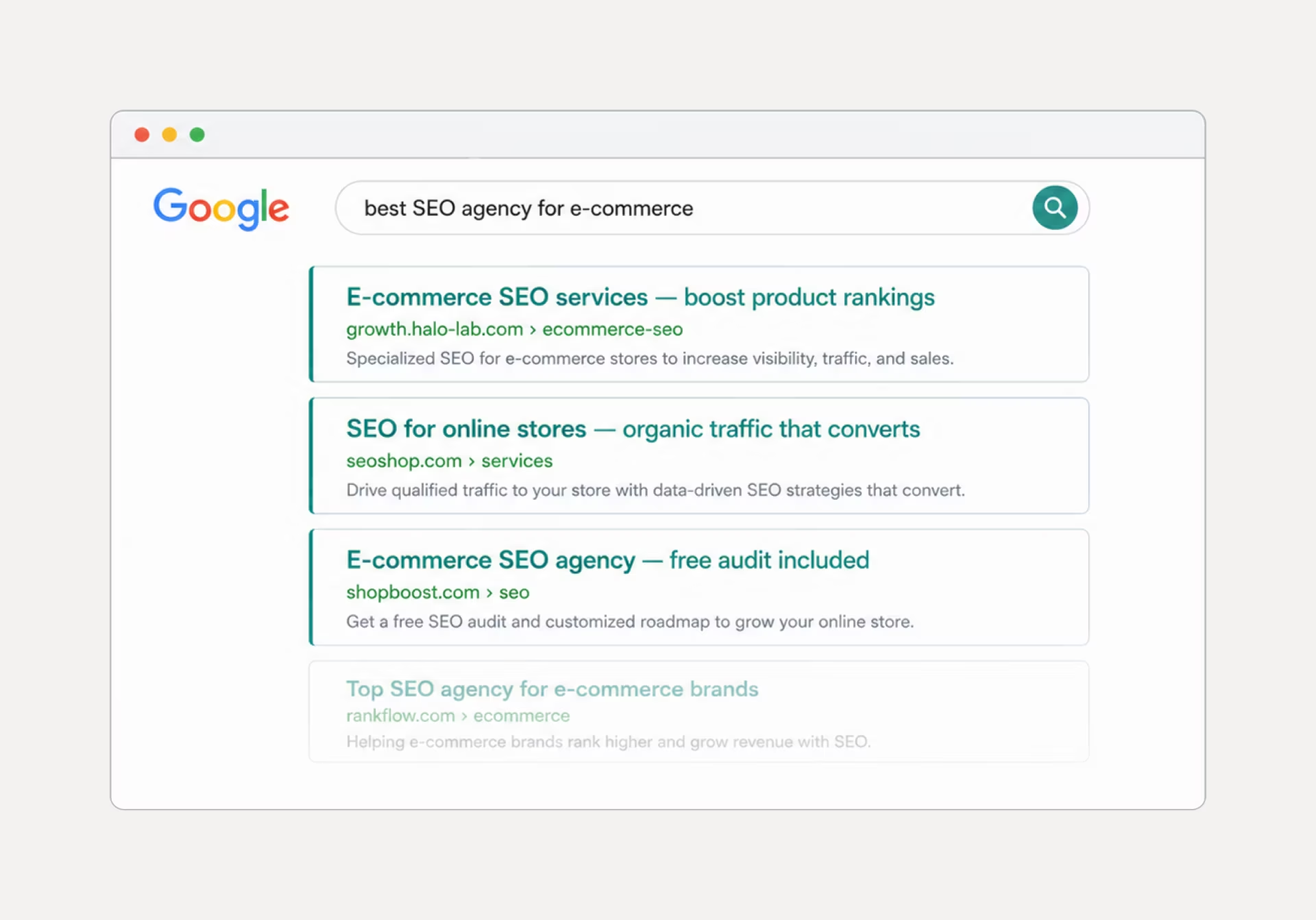
Search results are the primary lens through which people see today’s market. Instead of relying solely on advertising, consumers hunt for their own answers — and usually land on whatever credible source ranks highest.
This trend has changed how companies grow, and for some, search has become indispensable. In this article, we’ll look at where SEO makes the biggest difference, why some industries depend on search more heavily than others, and how to tell which priorities matter most for your business.
{{banner}}
Why are some companies looking for SEO services especially hard?
Demand for search visibility doesn’t hit every industry the same way. Some businesses lean more heavily on SEO because their revenue depends directly on being the first result customers see.
Several factors drive this reliance:
- Capturing existing intent. People already have their credit cards out or a problem to solve, so they’re actively looking for solutions. Ranking well puts a business in front of them at the right moment.
- The search result bottleneck. In saturated markets, visibility often determines who stays in the game. If you aren’t discoverable, you may never make a customer’s shortlist.
- The high cost of ads. Paid traffic is a treadmill that keeps getting faster and more expensive. Many companies are pivoting toward organic search as a way to build a foundation that doesn’t disappear the moment the ad budget runs dry.
- The authority bias. Users often associate high rankings with quality. That perception makes them more likely to click and buy from those businesses.
At its core, search is where buying decisions begin. This is reflected in the numbers: research shows that the first and second Google results receive average CTRs of 9.28% and 5.82%, respectively, with click-through rates declining further down the results page.
Understanding which industries depend most heavily on that visibility can help businesses decide where SEO deserves greater strategic weight. And if you’re still getting familiar with the concept itself, our article on what SEO services are covers the fundamentals.
Top businesses that need SEO services
Identifying the best businesses to target for SEO requires looking at how users behave when they’re searching for a solution. High-stakes niches, where the target audience performs deep research or acts on immediate urgency, see the highest return on investment. At the same time, those with lower competition or strong customer loyalty often see SEO as a nice-to-have rather than a necessity.
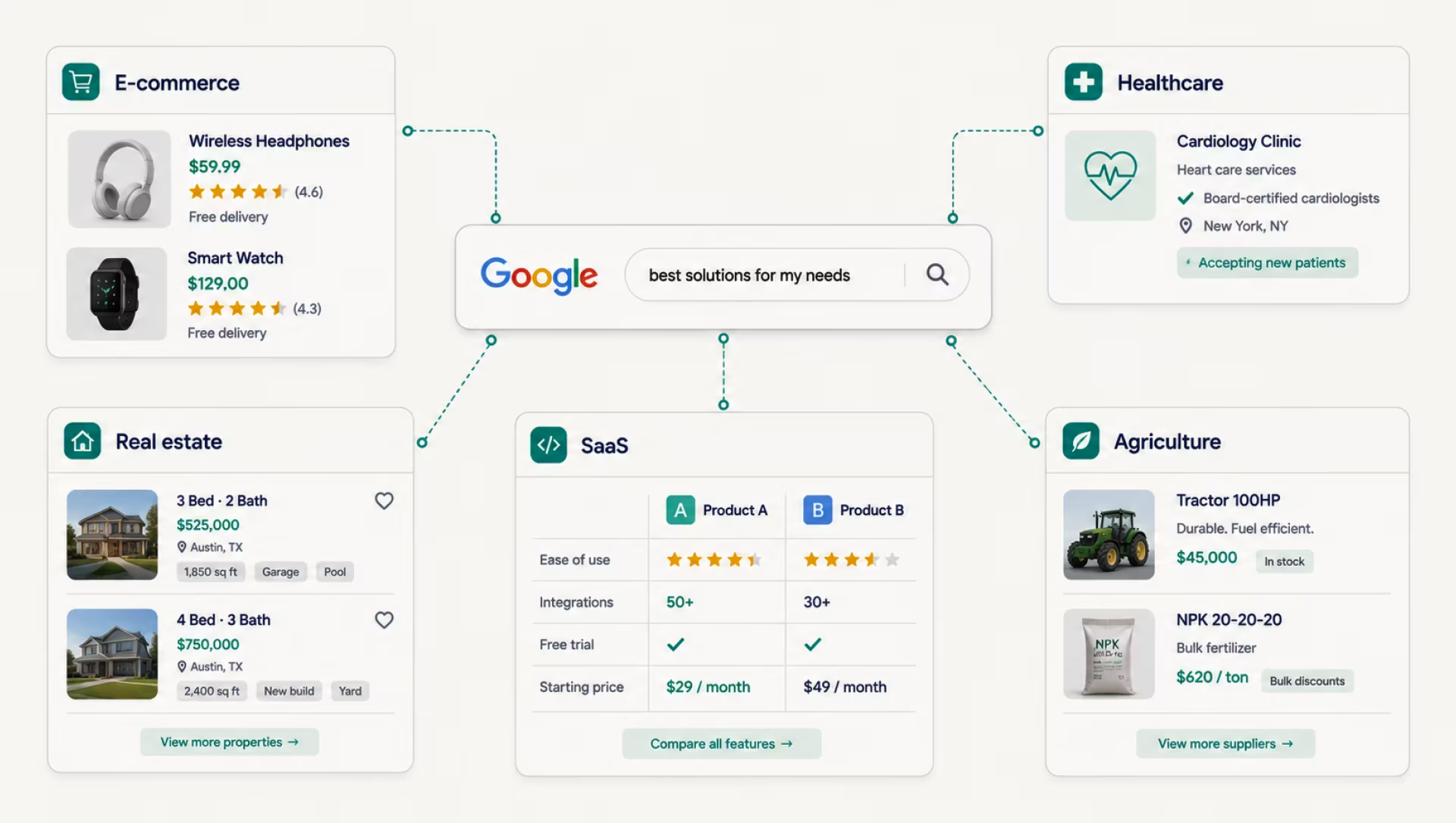
Below is a breakdown of the industries where search visibility plays the biggest role in how customers discover and choose a business.
E-commerce
Digital storefronts operate in one of the most competitive marketing environments, where profit margins depend on lowering acquisition costs. Customers compare specific product specs, SKU-level pricing, and shipping speeds before clicking “buy.” The real challenge is technical: large catalogs need careful design and faceted navigation to stay organized without creating duplicate content across thousands of near-identical product pages. To manage this at scale, many brands turn to e-commerce SEO services, making sure their traffic reaches the right checkout page instead of a dead-end “out of stock” link.
Local businesses
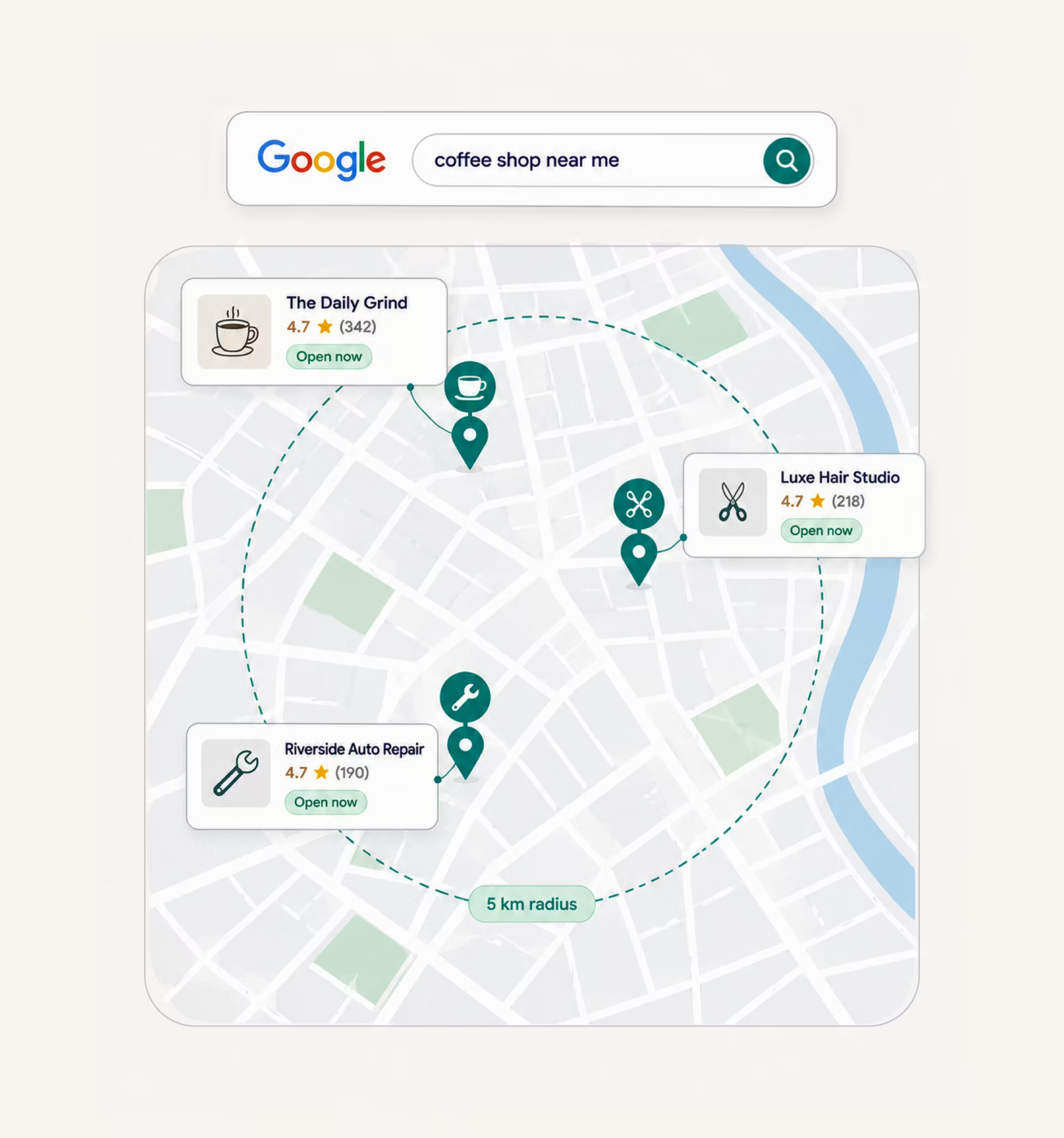
Local visibility relies on hyper-specific timing and proximity data. When someone searches for an “emergency plumber” or “dentist near me,” the top three Google Maps results typically earn the bulk of the attention. This is where intent meets geographical urgency for repair shops and clinics. Local SEO services can optimize your brand for localized search queries, managing high-quality reviews and NAP consistency. That way, you appear exactly when a customer is ready to walk through your physical doors.
Healthcare
Health-related decisions usually start with searches for specific symptoms, recovery times, and local providers. Patients have high expectations for accuracy, and search engines hold clinical sites to strict E-E-A-T standards (experience, expertise, authoritativeness, and trustworthiness). Medical practices that book healthcare SEO services and invest in evidence-based content build patient confidence long before the first consultation. By focusing on high-intent queries like “robotic surgery” rather than broad terms, clinics can secure a ranking that attracts patients looking for specialized expertise in a sensitive digital landscape.
SaaS
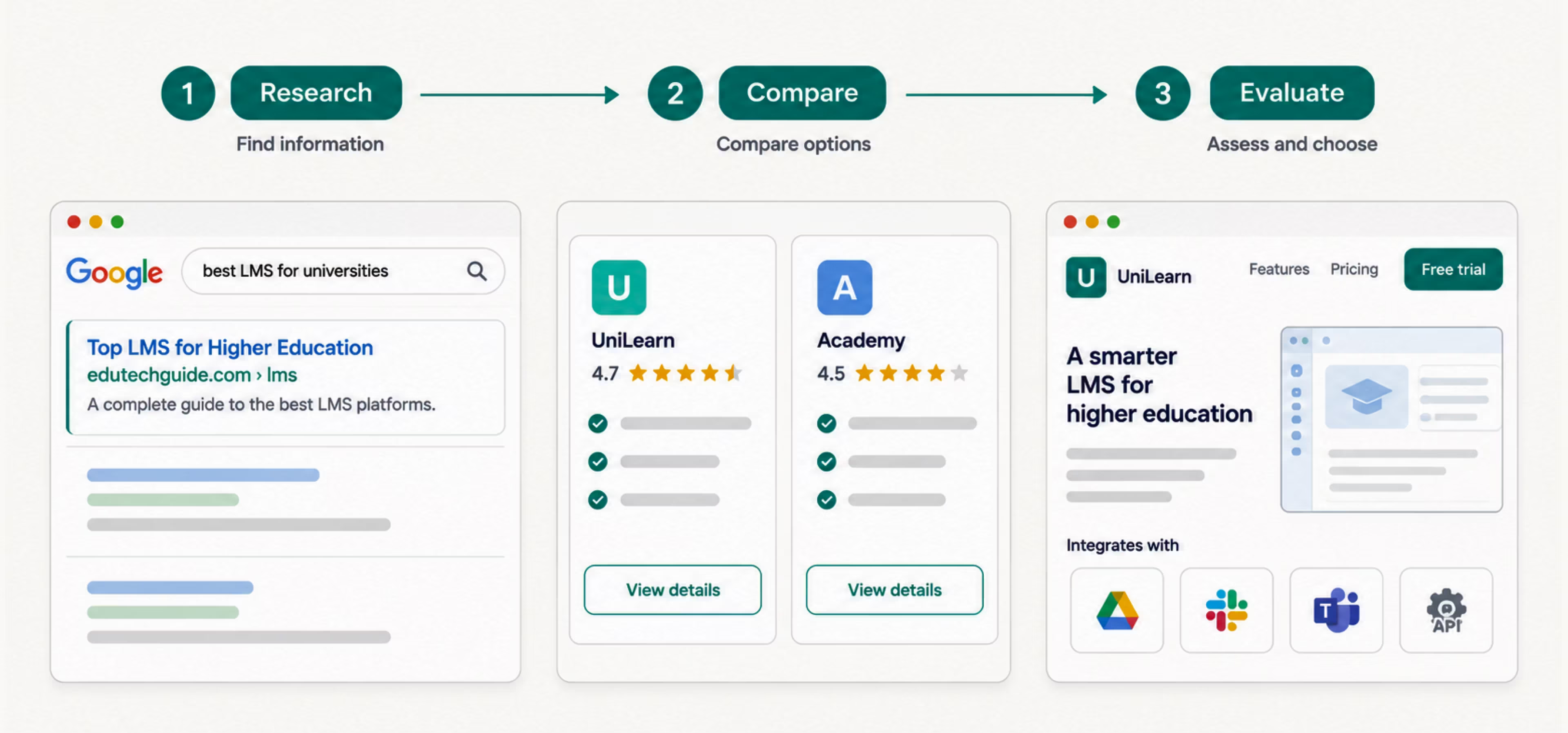
Software buyers are professional researchers who rarely convert on the first visit. They evaluate API integrations, read social proof from peers, and download technical whitepapers. Specialized companies apply for SaaS SEO services to guide this target audience through a multi-stage funnel using educational guides and “alternative to” comparison pages. This approach turns high-volume informational search queries into low-cost trials, helping the brand scale without solely relying on a massive digital ad spend.
Real estate
The property hunt begins with localized map searches and neighborhood-specific research. Buyers scout school districts, historical price trends, and active listings before ever picking up the phone. Real estate SEO helps agencies stay visible throughout this research phase. Ranking for street names or residential complex titles allows agents to become the primary organic authority in their neighborhood.
Legal
The legal niche is a high-stakes battlefield for expensive, competitive keywords. Because ranking positions directly impact the volume of high-settlement cases, law firms pour resources into massive domain authority through localized citations and case study content. Practices looking to dominate specific areas like personal injury, medical malpractice, or family law often request law firm SEO services to win visibility in a crowded search space.
Financial & insurance services
Finance-related searches signal immediate intent and a need for extreme security. Users compare mortgage rates, insurance premiums, and investment providers with a critical eye. A solid SEO presence cuts down on the need for aggressive, expensive marketing campaigns while building the enduring credibility required to handle sensitive assets. By ranking for complex queries like “tax-efficient wealth management,” firms attract a high-net-worth target audience that values expertise and discretion.
Technology and IT
For enterprise tech companies, industry-specific SEO is essential for communicating complex B2B solutions to specialized IT buyers. Technical content — such as deep-dive documentation, cybersecurity protocols, or cloud migration case studies — supports the sales cycle by demonstrating subject-matter expertise to an informed audience. Such companies predominantly focus on niche organic queries that decision-makers use during the evaluation process. As a result, the brand establishes itself as the preferred choice for high-value infrastructure contracts.
Beauty and wellness
This sector blends high-volume search demand with rapid, viral trend cycles. When a new ingredient or “holy grail” product takes off in the media, brands need to already be visible. Strong digital tactics help a brand capture top-of-funnel interest through ingredient-focused guides and “how-to” tutorials. By staying at the top of search pages, wellness centers and beauty brands keep traffic flowing consistently to their booking platforms, regardless of shifting social media algorithms.
Education and learning
Discovery is a major driver of course enrollment and certification programs. Students search for career-specific training and remote learning options to gain a competitive edge. Institutions that rank for targeted keywords like “accredited data science certificate” can attract a steady stream of prospective learners.
A common challenge in education SEO is that strong course or tutor pages may still struggle without enough supporting content and authority behind them. We saw this firsthand with a tutoring platform where technical fixes, content expansion, and link building helped strengthen its organic visibility. Our SEO for tutoring service case study breaks down the approach in more detail.
Manufacturing and construction
Manufacturing and construction sectors are often overlooked in SEO strategy, yet they benefit enormously from showing up during the procurement phase. To fulfill large-scale contracts, B2B buyers search for exact equipment specs and wholesale materials, often turning to niche queries, such as “heavy machinery rentals” or “bulk steel suppliers.” High visibility here leads to lucrative long-lasting partnerships. When manufacturers optimize for technical part numbers and industrial search terms, they position themselves as the first point of contact for engineers and project managers looking for reliable suppliers.
Transportation and logistics
In logistics, timing and reliability are what win the deal. Clients search for freight solutions or “last-mile delivery services” when they face an immediate supply chain hurdle, and whoever shows up first often gets the call. Supply chain firms focus on ranking for specific routes, cold-chain requirements, and international shipping regulations to capture the attention of businesses needing to move goods across national borders without delays.
Enterprise and B2B services
B2B decision cycles are notoriously long and involve multiple corporate stakeholders. Staying visible during the months-long research and vetting phase is critical for maintaining brand recognition. Large firms use thought leadership and demand generation strategies to stay top of mind throughout that process. The strategy relies on authoritative content, such as whitepapers, ROI calculators, and comparison guides, keeping a brand present at every stage of the buying journey.
{{banner-2}}
Entertainment and media
In the media, speed and relevance are the primary ranking factors. Whether it is a breaking news report, a niche movie review, or a trending video clip, appearing in the “Top Stories” carousel determines total reach and audience engagement. Media platforms use SEO to optimize for high-velocity keywords, ensuring their content gets discovered by news aggregators and social platforms at the height of public interest.
Agriculture and farming
Traditional industries are rapidly digitizing as farmers and suppliers seek precision tools and sustainable solutions. Modern agriculture depends on ranking for specialized equipment like organic fertilizers or smart irrigation systems. When agricultural businesses go digital, they can reduce their reliance on middlemen and reach a wider market. By offering technical content on crop yields and soil health, they establish themselves as progressive leaders in a changing farming landscape.
Do you still doubt your business needs SEO services?
If search plays a meaningful role in how customers discover, compare, or choose businesses in your market, SEO is worth paying attention to. The question is not whether every company needs the same level of investment, but whether poor visibility is already limiting the opportunities you could be capturing.
A simple way to gauge that is to ask yourself three questions:
- Are your competitors consistently outranking you? If competitors repeatedly appear above you for valuable searches, they may be capturing demand your site is currently missing.
- Is your organic traffic predictable or accidental? If your lead flow depends heavily on paid campaigns or changing social algorithms, you may be relying too much on channels you do not fully control.
- Do you show up for “near me” or service-specific queries? If your business is absent when people search for an immediate solution, more visible competitors get the first chance to win that demand.
SEO matters most when search is already part of how your customers make decisions — and your business is not consistently present when those decisions happen.
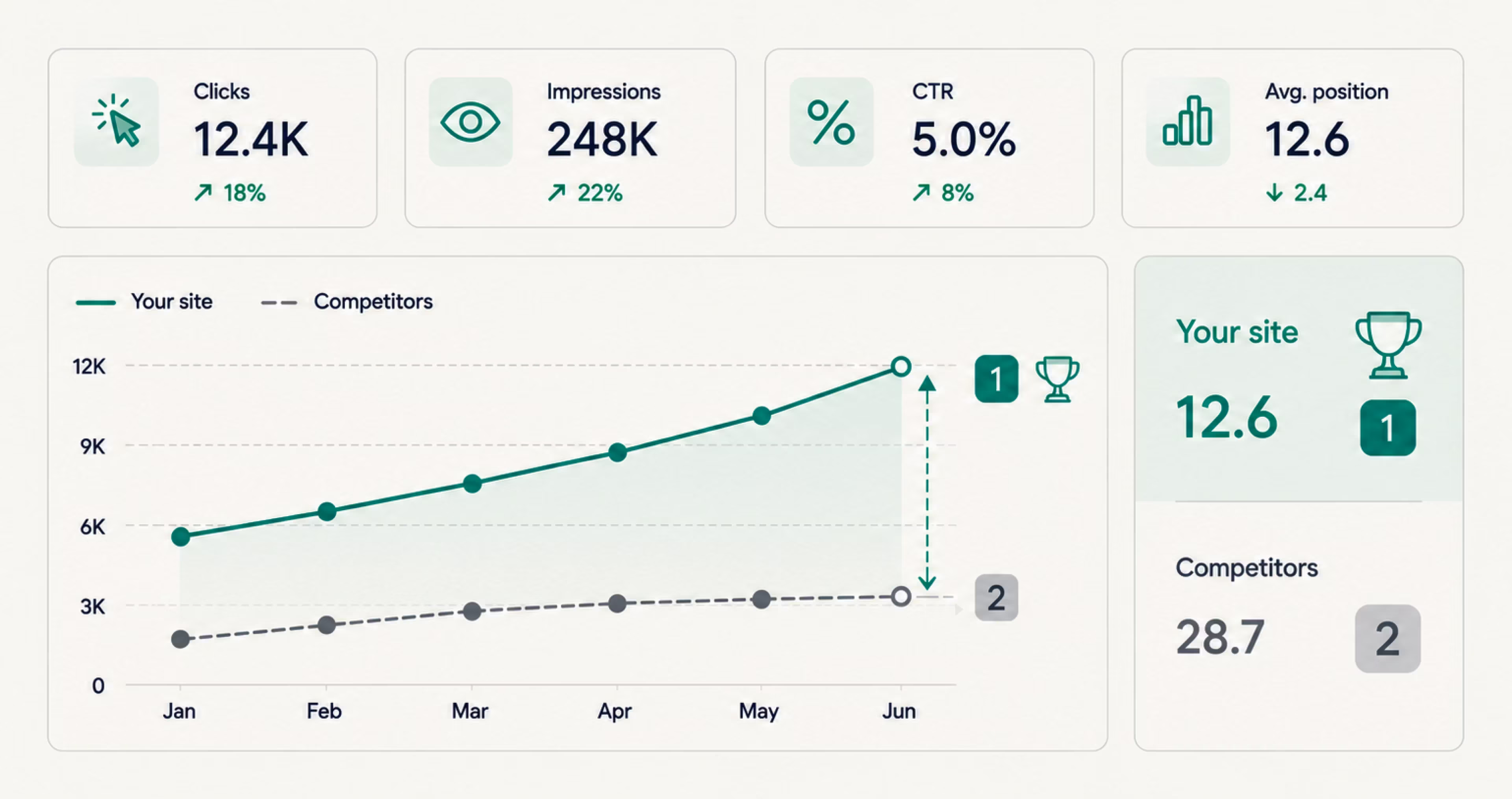
Visibility creates opportunity. Without it, demand doesn’t disappear — it simply goes elsewhere.
The industries differ, but the principle stays the same
Some industries depend on search more heavily than others, but the pattern throughout this list is consistent: SEO matters most when customers use search to discover options, compare providers, or make a decision. That is why e-commerce brands may focus on product discovery and technical structure, local businesses on geographic visibility, and SaaS or B2B companies on staying present throughout a much longer research process.
The question, then, is not simply whether your industry “needs SEO.” It is where search fits into your customers’ journey and what prevents your business from showing up at the right point in it. Once that is clear, SEO becomes less about chasing every possible opportunity and more about being visible where the right customers are already looking.
{{banner-3}}
FAQ
What are the best businesses to target for SEO services?
E-commerce, SaaS, local businesses, legal services, and healthcare providers are among the strongest candidates for SEO. These industries face high search demand and strong competition, making organic visibility a major driver of leads, sales, and sustained growth.
What makes an industry especially dependent on SEO?
SEO tends to matter most when customers actively search before making a decision, compare several providers, or rely on search to find local or specialized services. High competition and expensive paid acquisition can make organic visibility even more valuable.
How does SEO differ by industry or business type?
Each industry has unique search intent, customer behavior, and competitive challenges, which call for different SEO approaches. For instance, an e-commerce strategy focuses on product and category pages, while local businesses prioritize geographic visibility, and B2B companies invest in authority-building to support longer buying journeys.
Who uses SEO and why is it effective for them?
Businesses of all sizes use SEO to increase online visibility, attract qualified organic traffic, and position themselves as a trusted choice in their market. Unlike paid advertising, SEO continues delivering value over time, making it a cost-effective long-term marketing channel.
Is SEO equally important across all industries?
No. Industries with high online competition often depend heavily on SEO as a primary acquisition channel, while others use it to complement paid advertising, referrals, social media, or offline marketing. The right balance depends on business goals and the way people search for related products or services.