



Most sites that struggle to get found have already done the obvious work. The pages exist, the keywords sit where they should, and the traffic still arrives in a trickle. If the work is already there, why is the site still hard to find?


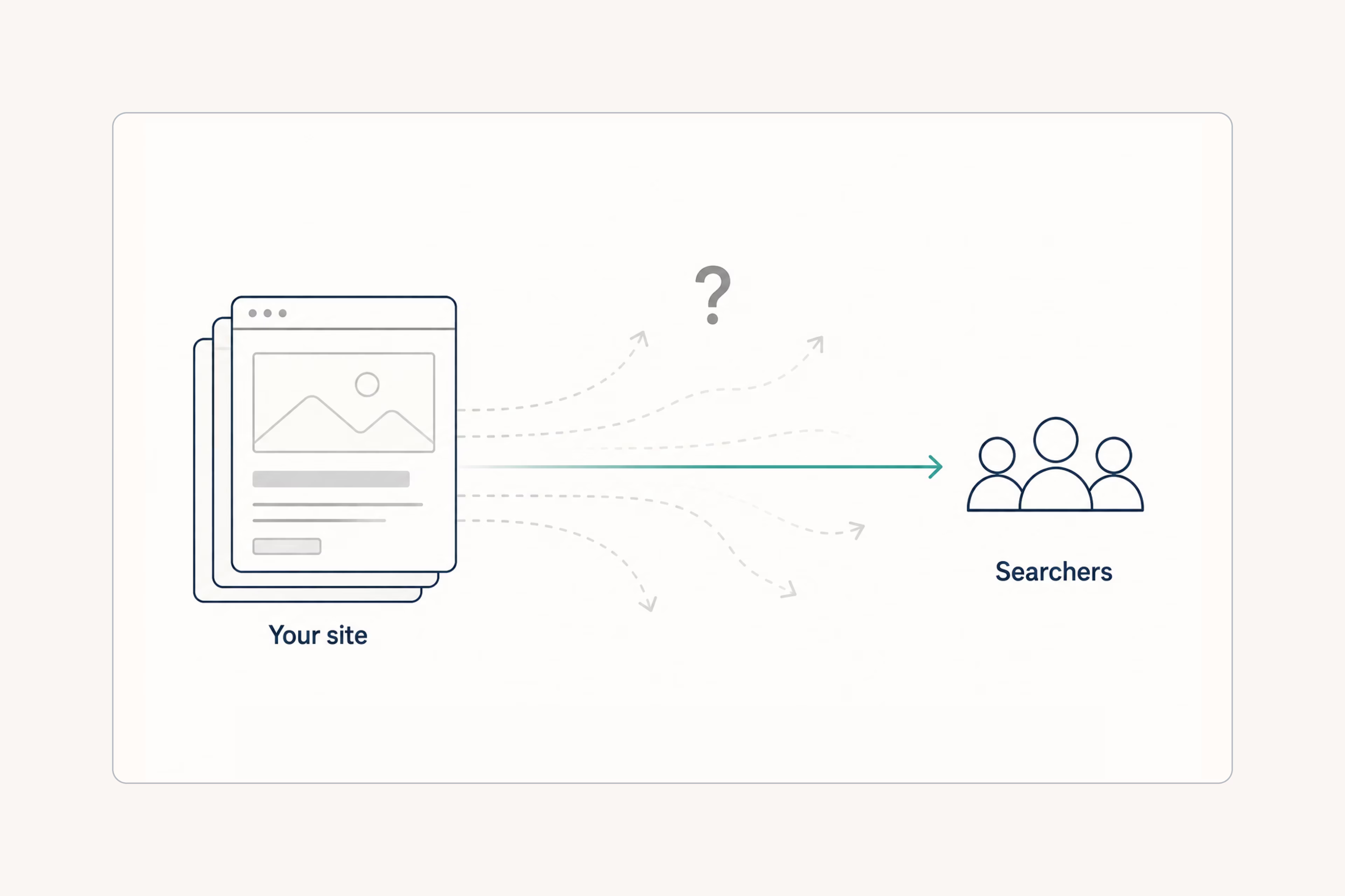
Google visibility is simply how often and how prominently your pages appear when people search for the topics, products, or services that matter to your business. Rankings are part of that picture, but they no longer tell the whole story.
As search results have evolved, more space has gone to AI Overviews, featured answers, maps, video, and other formats that can satisfy a query before a user reaches the traditional organic listings. At the same time, more businesses are competing for the clicks that remain. Improving visibility now means earning a strong position and making your pages useful enough to stand out across a much more crowded search experience.
In this guide, we’ll walk through the changes that can make your site easier to find, from on-page and technical SEO to content, authority, and AI search.
Improve your on-page SEO
On-page SEO is how a page explains itself. Titles, headings, images, URLs, and internal links each describe what the content covers and how it relates to everything around it, and Google reads all of them together when deciding which queries the page deserves to appear for.
Sending those signals clearly can improve visibility for searches your page is already relevant to, while leaving them ambiguous creates a disadvantage that better writing alone rarely overcomes. The five elements below are some of the most direct places to start.
Write compelling title tags and meta descriptions
The title is your headline in the results, doing two jobs at once: telling Google what the page covers and persuading a person to choose it over nine alternatives. Keep it under roughly 60 characters, since Google truncates by pixel width rather than character count, and puts the distinguishing term near the front where it survives any trimming. Vague or padded titles often get rewritten by the search engine entirely.
Meta descriptions carry no ranking weight, which makes them purely persuasive — around 155 characters to name a benefit or answer the question the searcher typed.
{{banner}}
Use headings to organize your content
Headings give a page a structure that both people and search engines rely on. They let readers move through the content at a glance and let crawlers see how the sections relate to one another.
Use one H1 for the page’s primary topic, then H2s for the main subtopics and lower-level headings where needed. A clear hierarchy makes the page easier to navigate and helps search engines interpret its structure.
Add images with descriptive alt text and filenames
Search engines read the code around an image rather than the image itself, which is why the filename and alt text do the describing. A file called IMG_4471.jpg tells them nothing, while waterproof-hiking-boots-muddy-trail.jpg states the subject outright, and alt text does the same in a full phrase.
That description serves two audiences at once. Screen readers depend on it for accessibility, and crawlers use the same text to index the picture, which opens a route into Google Images — a large and frequently overlooked source of traffic.
Keep URLs short, clear, and keyword-focused
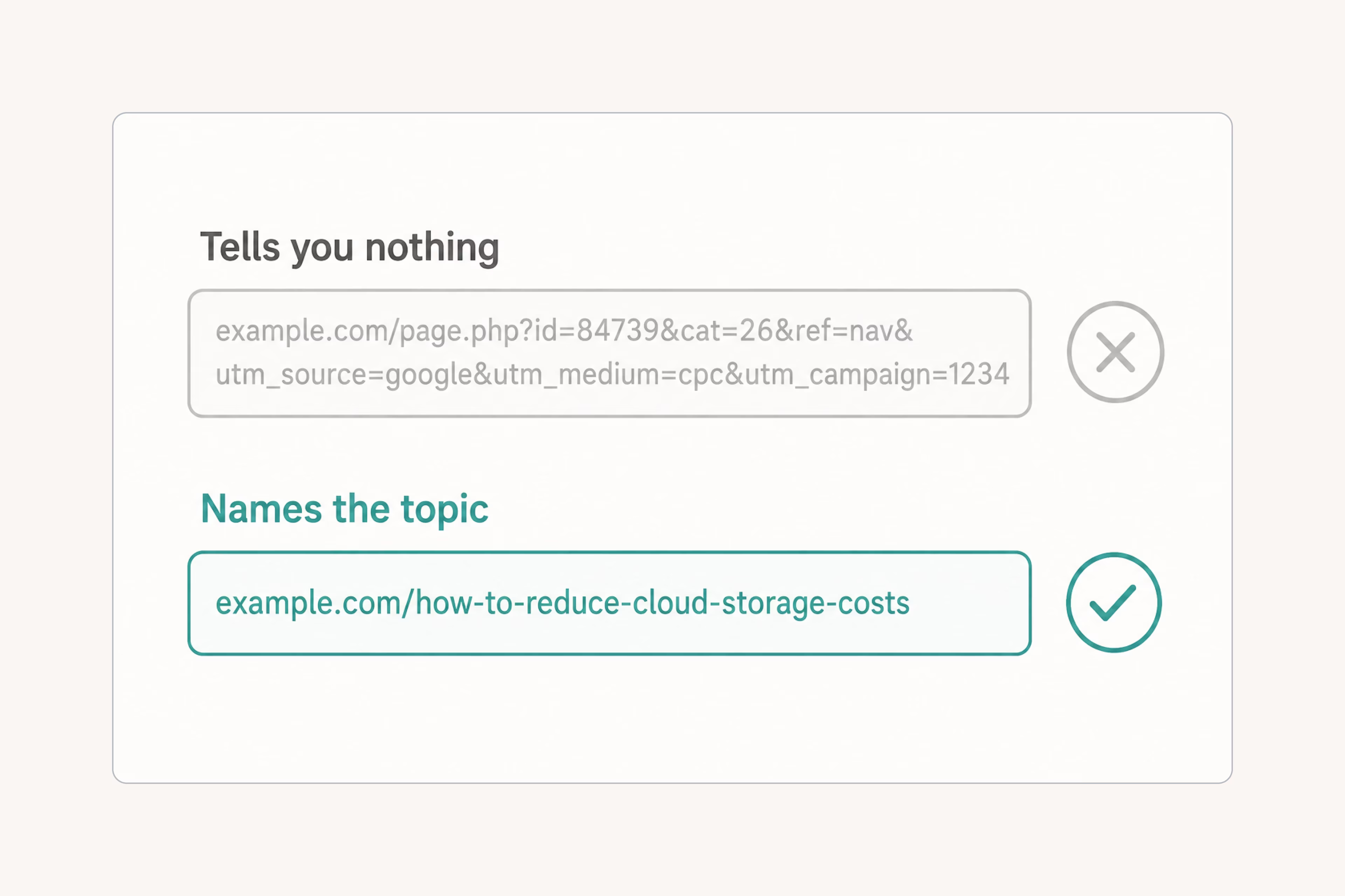
A URL is often the first thing a person reads about a page — it shows in the results beneath the title and again wherever the link gets shared. Something like site.com/?p=145&ref=99 gives little indication of what the page contains. A URL such as site.com/how-to-grow-roses, by contrast, makes the topic clear before the page has even loaded.
The habit worth keeping is one readable slug per page, lowercase, words separated by hyphens, with the defining term included and little else. Once a URL is live, it’s best left alone, since changing it breaks existing links and scatters the ranking signals the old address had already earned — so the time to get the structure right is before publishing.
Use internal links to strengthen page relevance and structure
Internal links do two jobs at once. For readers, they open the obvious next step — the related guide, the deeper explanation — and keep a visit moving through the site rather than ending on one page. For search engines, they map how the pages relate and pass ranking strength between them, which is why a link from an established, high-traffic page gives a newer one a measurable lift.
Point your strongest pages at the ones you most want found, and use anchor text that names the destination rather than a generic “click here,” because that wording is itself a signal of what the linked page covers. It also helps Google find new content faster, since a crawler reaches a fresh page sooner when an existing one already links to it.
Like most SEO improvements, stronger internal linking does not translate into higher visibility overnight. Our guide on how long SEO takes to show results explains what to expect after the changes go live.
Enhance technical SEO
Strong content can still go unseen when the mechanics underneath it get in the way. Technical SEO is the engine room that allows search crawlers to access, read, and index your pages seamlessly. A few recurring faults account for most of the trouble, and each is worth knowing how to spot.
Speed up your website and ensure mobile-friendliness
Because most traffic happens on mobile devices, Google indexes and ranks websites based mainly on their mobile versions. This means the mobile version of your site is the primary one.
Use tools like PageSpeed Insights to identify heavy scripts or uncompressed images that are slowing you down. The report scores each page against Core Web Vitals and lists the specific fixes in priority order, which turns a vague sense of slowness into a short, ranked to-do list.
Fix broken links, redirects, and indexation issues
Broken links (404 errors) create dead ends for both users and crawlers. Excessive redirect chains can likewise disorient search bots and drag down crawl efficiency. Audit the site regularly to confirm that every important page stays indexable and that nothing is quietly blocked from Google through the robots.txt file.
{{banner-2}}
Submit your sitemap to Google Search Console
A sitemap is a roadmap of all the specific pages you want search engines to discover and index. Submitting such an XML file to Google Search Console hands the crawler that map directly, rather than leaving it to find everything by following links. This matters most for new sites with few external links pointing to them and for large ones whose deeper pages sit many clicks from the homepage.
Build authority with backlinks
A backlink is a link from another website to yours, and search engines can read a strong one as a vote of confidence — a sign that someone judged your page worth citing.
Google counts those votes by the trust of the site casting them, and because that trust is hard to accumulate, the authority it builds keeps a page ranking long after it first climbs. The links behind it come down to two habits: earning the ones that count, and avoiding the ones that quietly cost you.
Earn links through outreach, PR, and guest posts
The strongest backlinks are earned rather than bought, and three routes do most of that earning. Outreach is direct: you find sites that have linked to material like yours, then approach their owners with something better or more current as a replacement. PR earns links at scale by giving journalists a reason to cite you — original data, a survey, a point of view worth quoting — so a single story places links across every outlet that covers it.
Guest posts trade your writing for a placement on someone else’s platform, which works when the site is a genuine authority in your field and fails when it exists only to sell links. What ties the three together is having something worth linking to in the first place, whether that’s data, a tool, or a perspective nobody else is offering.
Avoid spammy or irrelevant backlinks
Not every link helps, and some actively hurt — those from link farms, unrelated sites, or low-quality directories can look like manipulation to Google and draw a penalty rather than a boost. The quality matters far more than quantity: a handful of links from relevant, well-trafficked sites in your field will do more for your rankings than hundreds of low-tier ones that read as spam.
Tools like Ahrefs and Semrush help you review your backlink profile and investigate suspicious links. In more serious cases, Google’s disavow tool can be used for manipulative links you cannot get removed, though most sites will never need it.
One relevant link can say more about your authority than dozens of weak ones.
Create high-value content
Search exists to connect people with answers, which puts content at the center of everything a search engine does. To rank well, you have to move beyond generic information and provide something that truly helps the user. Google’s advanced algorithms easily separate superficial fluff from genuine expertise. What follows are the practices that put a page on the expert side of that judgment.
Publish helpful, relevant, and up-to-date resources
Google’s systems look for signals of helpful, trustworthy content, including experience, expertise, authoritativeness, and trustworthiness (E-E-A-T). That means your articles should draw on real knowledge of the subject and stay accurate as the information around them changes.
The hard part is holding that standard at scale. Expertise on the page depends on the writing that carries it, which is what separates real SEO copywriting from filling a page with keywords.
Use visuals, video, and case studies to boost engagement
A dense block of unbroken text asks a lot of a reader, and most decide not to give it. Break them up with custom graphics, embedded videos, or real-world case studies. Video in particular tends to hold attention, giving visitors a reason to stay on the page and engage with what surrounds it.
Update old content to stay competitive
Content loses ground as the world it describes moves on — figures date, tools get replaced, advice stops being current. Refreshing an existing page is often faster than creating a new one and can be especially effective when the page already has rankings, links, or traffic to build on. This approach, as a rule, comes down to four things:
- Update the statistics and any figures that have shifted.
- Add sections covering what’s changed since publication.
- Replace dead links and outdated references.
- Bring the piece back in line with what now ranks for its term.
Choosing which pages to refresh first is where strategy matters. Our guide to building an SEO content strategy explains how to balance updates with new content.
Strengthen local SEO
Companies that rely on customers from a specific city, region, or service area should prioritize local search visibility, where purchase intent is often strongest — a search tied to a place usually means the person intends to act on it, whether that’s visiting, calling, or buying nearby. Capturing that moment comes down to three things, and all of them sit largely outside the website itself.
Claim and optimize your Google Business Profile
Your Google Business Profile (formerly Google My Business) is the single most important asset for local discovery, since it — rather than your website — is what feeds the map pack and the local results beside it.
To enhance your Google Business Profile visibility, the listing has to be genuinely complete: accurate hours, photos of the premises, a clear description of what you offer, and steady posts about updates. The platform reads that completeness and activity as signals that the listing is current and the business real, and both feed directly into how often it surfaces.
{{banner-3}}
Add consistent NAP details
NAP — your business name, address, and phone number — has to be read identically across your website, social profiles, and every local listing. Search engines cross-check those details to confirm a business is genuine, so small mismatches undercut it: “St.” in one place and “Street” in another is enough to make Google unsure which version to trust, and that doubt shows up as lower placement in local results.
Encourage reviews to improve local visibility
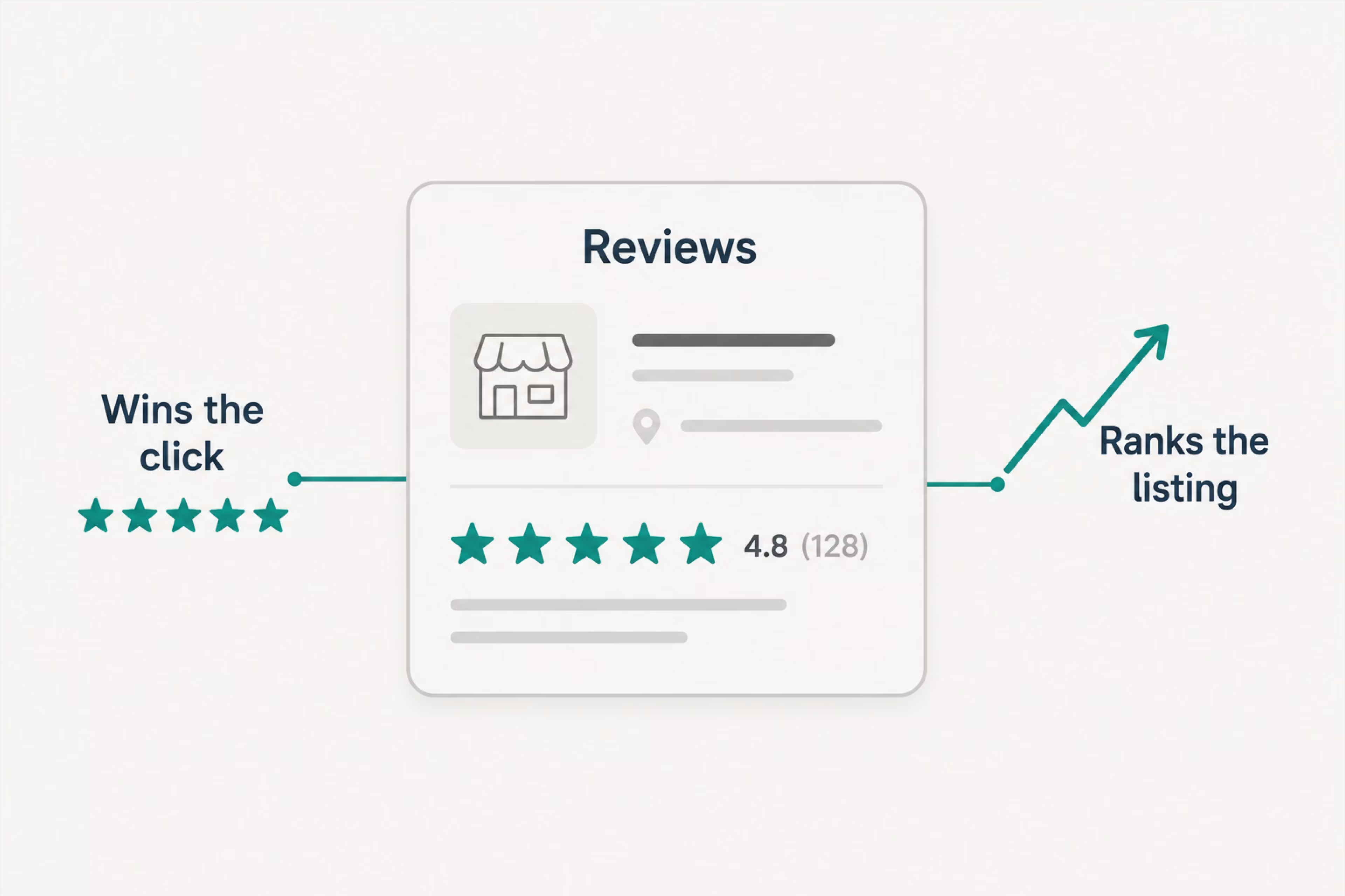
Reviews weigh heavily on local ranking, and they work on two levels at once. A steady stream of recent, detailed ones tells Google the business is active and trusted, while the star rating shapes whether anyone who sees the listing actually chooses it.
Asking is the part most businesses underuse. A satisfied customer will usually leave one when the request is direct, and the link takes a single tap, so the real work is building that ask into the moments when goodwill runs highest — just after a purchase, or a resolved support case.
Use structured data to increase your visibility on Google
Search engines infer a lot about a page — what’s a product, which number is a price, whether a date marks an event — and every inference is a chance to get it wrong. Structured data settles those questions directly, labeling each element in a vocabulary search engines have agreed to read. It starts with the core markup that removes the guesswork, and extends into the specific types that earn richer results.
Implement schema markup for better understanding
Schema markup is what qualifies a page for rich results — the expanded listings that show star ratings, prices, or recipe cook times directly in the results rather than just a title and a description. Those extra details can lift click-through rates noticeably, since a listing carrying a rating or a price stands out against the plain-text links around it and answers part of the searcher’s question before they’ve clicked.
Getting the markup right is partly a development task, since it lives in the page’s code rather than its content. Our article on SEO and web development looks at the other technical decisions that can strengthen or limit search visibility.
Add FAQ, reviews, and other relevant schema types
Google supports structured data for a range of content types, so the priority is to use markup that accurately matches what is actually on the page:
- Product for individual product pages.
- Review or AggregateRating where the reviewed item is eligible for review snippets.
- Event for events tied to a date and location.
- Organization to provide information about a company or brand.
- Recipe, Course, or JobPosting where the content matches those formats.
FAQPage markup is worth a specific note because its role in Google Search has changed. Since 2023, FAQ rich results have generally been limited to well-known government and health websites. Other sites can keep valid FAQ markup in place, but it no longer provides a regular rich-result opportunity in Google Search.
Optimize your website for voice search
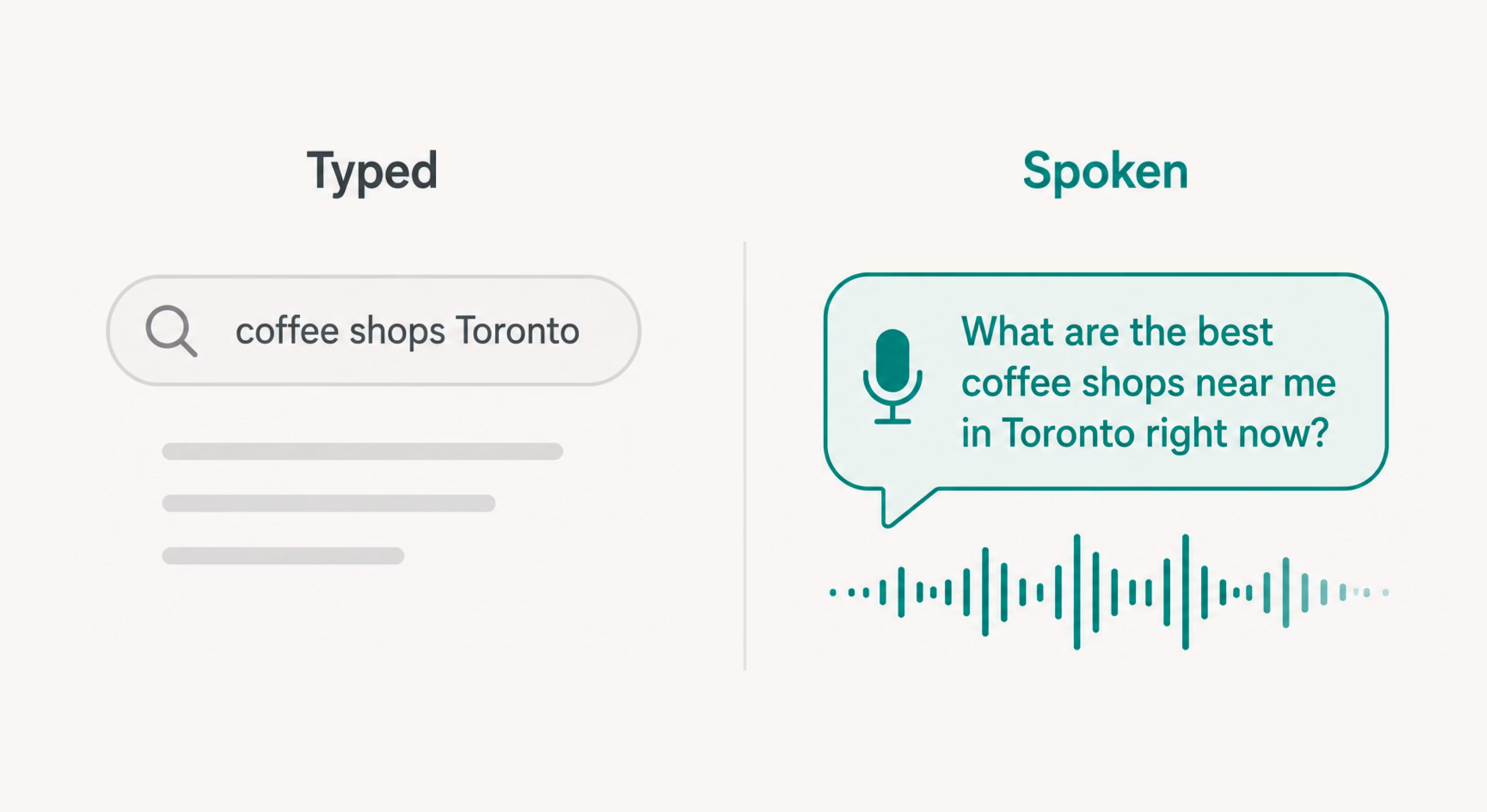
As smart speakers and mobile assistants gain popularity, voice search increasingly mirrors natural conversational speech. Rather than entering short keyword phrases, users typically speak entire questions. To capture this traffic, you need to focus on conversational keywords. Instead of targeting, for instance, “hiking boots waterproof,” you might optimize for “what are the best waterproof hiking boots for muddy trails?”
Getting the phrasing right counts for little if the page itself lags. Voice searches usually happen on a phone, often mid-task, so the page an assistant pulls from has to load quickly and read cleanly on mobile. A slow or awkward page is one an assistant is less likely to read aloud, since it draws from the same results that reward speed and mobile quality everywhere else.
Leverage AI to improve your Google visibility
The same AI reshaping how people search can also change how you work on being found. Handled well, it compresses tasks that used to take days — sifting keyword data, watching competitors, reading what the results reward — into something closer to real time. The sections below show where AI can make that work more efficient.
Use AI tools for keyword research and content creation
For keyword research, AI is fastest at the parts that used to take hours: clustering hundreds of related terms into topics, spotting the questions people ask around a subject, and surfacing gaps where demand exists but you have no page to meet it. A raw keyword export becomes a ranked list of what to write next.
For the writing itself, treat AI as a collaborator rather than the author. It’s genuinely useful for outlines, headline variations, and mapping the subtopics a thorough piece should cover — but a draft written end-to-end by AI tends to lack the first-hand experience E-E-A-T rewards, and readers feel that absence even when they can’t name it.
Analyze competitors and SERP trends with AI
Advanced AI tools track your competitors’ rankings across a whole industry, alerting you the moment one gains ground. In practice, that means watching which pages climb, which keywords they’ve started targeting, and which content they’ve recently added or refreshed.
Also, AI tools can analyze the Search Engine Results Pages (SERPs) to see what kind of content Google is currently favoring — whether it’s long-form guides, videos, or product pages — allowing you to adapt your output accordingly.
Adapt to Google’s AI-powered search
Google increasingly uses generative AI features such as AI Overviews and AI Mode to answer queries directly within the search results. These experiences can surface and cite pages from Google’s search index, which makes the same fundamentals that support traditional SEO just as important here.
Focus on original, useful content that answers the query clearly, is easy for Google to crawl and index, and adds something beyond what already exists. Clear structure and direct explanations can make the content easier to follow, but there is no separate formula that guarantees a citation in an AI-generated result.
Used well, AI handles the legwork so you can focus on the decisions.
Track and improve your performance
Reliable SEO decisions rest on measured results rather than a hunch. Because search rewards effort slowly, the numbers are also what tell you when to hold a strategy and when to change it. Three practices keep that picture clear.
Use Google Analytics and Search Console to monitor progress
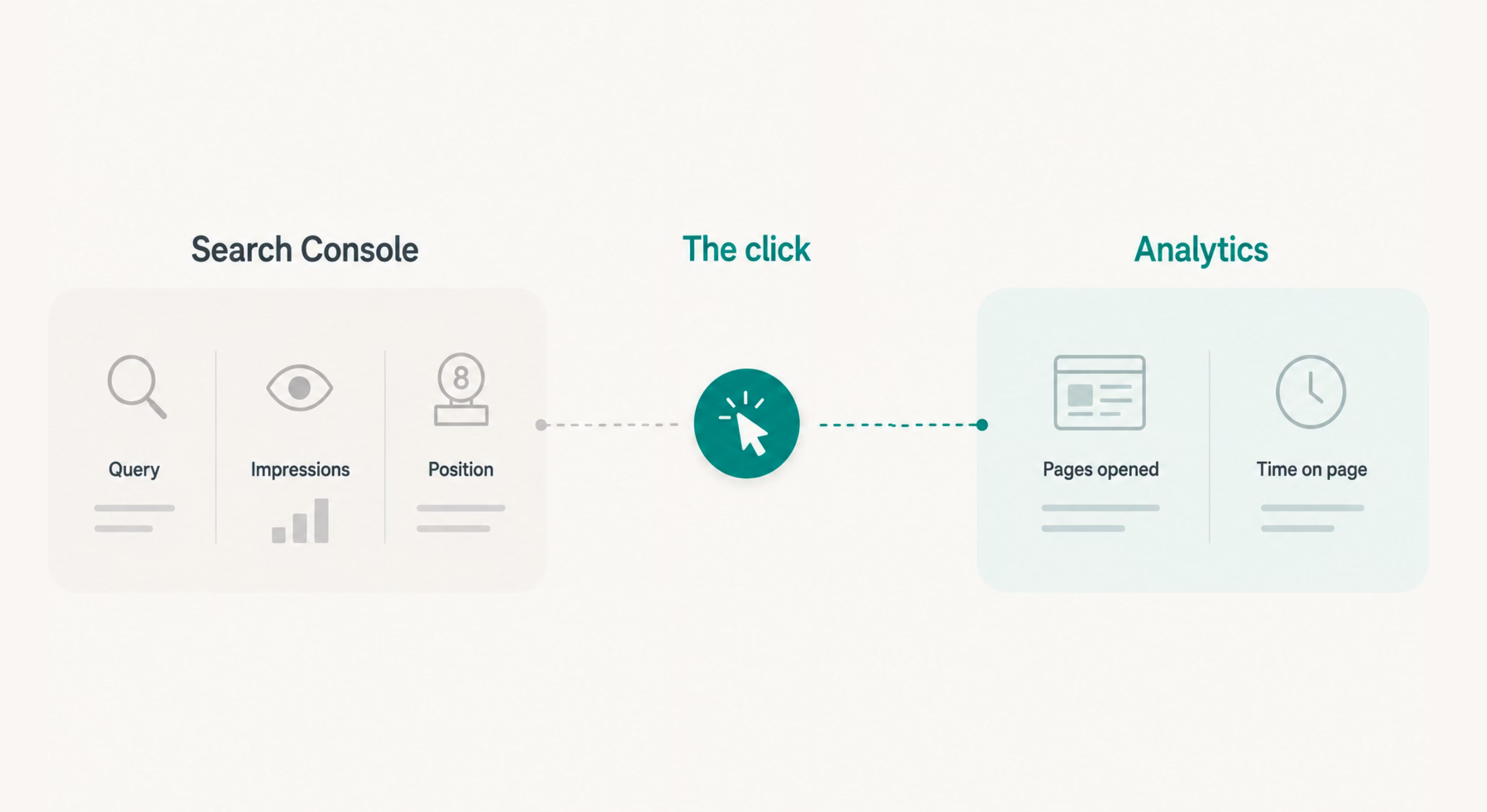
These two tools split the picture between them, and neither is complete without the other. Search Console covers everything that happens before the click — which queries you appeared for, how often, and where you ranked — while Analytics picks up the moment a visitor arrives, tracking which pages they open and how long they stay.
Measure keyword positions and CTR
Position and click-through rate (CTR) are most useful to read together, because the gap between them points to the fix. A page ranking near the top while drawing a few clicks usually has a weak title or description. A page with a high CTR stuck at a low position is the opposite case, and the more valuable one: demand is clearly there, so the page mostly needs the authority to climb into reach of it.
Continuously refine your SEO strategy
The search landscape changes constantly. A strategy that worked in 2024 might be obsolete by the end of 2026. Regularly review your top-performing pages, look for new keyword opportunities, and stay informed about the latest algorithm shifts to ensure your site stays at the top.
Visibility comes down to fundamentals
The tactics in this guide cover different parts of SEO, but they all point in the same direction: make your pages useful, technically sound, easy to understand, and worth trusting. On-page signals, site performance, content quality, backlinks, structured data, and AI visibility all build on that same foundation.
Search will keep changing, and the formats around it will change too. What lasts is a site that gives people a good answer and gives search engines a clear reason to surface it. For teams that want to turn those fundamentals into a plan, Halo Lab’s SEO consulting is the place to start.
FAQ
How long does it take to increase visibility on Google?
While timelines vary, most websites require three to six months to see a substantial shift in search rankings. New websites may take longer to establish trust, while established ones with a strong backlink profile can sometimes achieve results in a matter of weeks.
Do backlinks still help improve rankings in 2026?
Yes. Links from trusted, relevant sites remain one of the signals Google leans on to gauge a site’s authority. What’s changed is the weighting toward quality — a single link from a respected publication now outweighs thousands of low-value directory listings.
How often should I publish content to boost visibility?
There’s no ideal publishing frequency for SEO. What matters more is whether each piece answers a real search need and adds useful information. A sustainable schedule that maintains that quality is better than publishing more often just to stay active.
Why isn’t my website showing up on Google at all?
This is usually due to one of three reasons: your site is too new and hasn’t been crawled yet, you have a technical error (like a “noindex” tag) blocking search bots, or your site has been penalized for violating Google’s spam policies.
Is local SEO still important if I have an online business?
Only if you serve a specific area. A business selling nationwide gains little from it. But one that operates regionally — a consultancy, a local service, a store that ships nearby — still benefits from the map results and local pack, which catch high-intent searches ordinary listings miss.
How can I check if my SEO strategy is actually working?
Track four metrics in Google Analytics and Search Console: impressions, average position, organic traffic, and conversions. Rising impressions and position show you’re ranking wider and higher; traffic and conversions show whether that reach turns into clicks and, ultimately, customers.