



Digital survival used to be about having a website. Now, it is about being found. In an ocean of infinite content, organic search is the only bridge that connects a specific user problem to your unique solution without a permanent toll booth. So why is SEO important, and why should your brand focus on ranking when social media and paid ads offer instant gratification?


In an era where every purchase or service inquiry begins with a digital query, the role of an engine optimization strategy has never been more critical. Companies often struggle to find an equilibrium between paid advertisements and organic growth, yet the data consistently shows that long-term authority comes from being discovered naturally by people. When a brand appears at the summit of a search page, it signals a level of industry leadership that cannot be purchased through banners or pop-ups.
This article explores the significance of SEO through eleven distinct lenses, ranging from psychological trust to technical performance. We will examine how a structured approach to search visibility creates a ripple effect across your entire marketing department, ensuring that your website remains a high-performing asset.
{{banner}}
Why is SEO important?
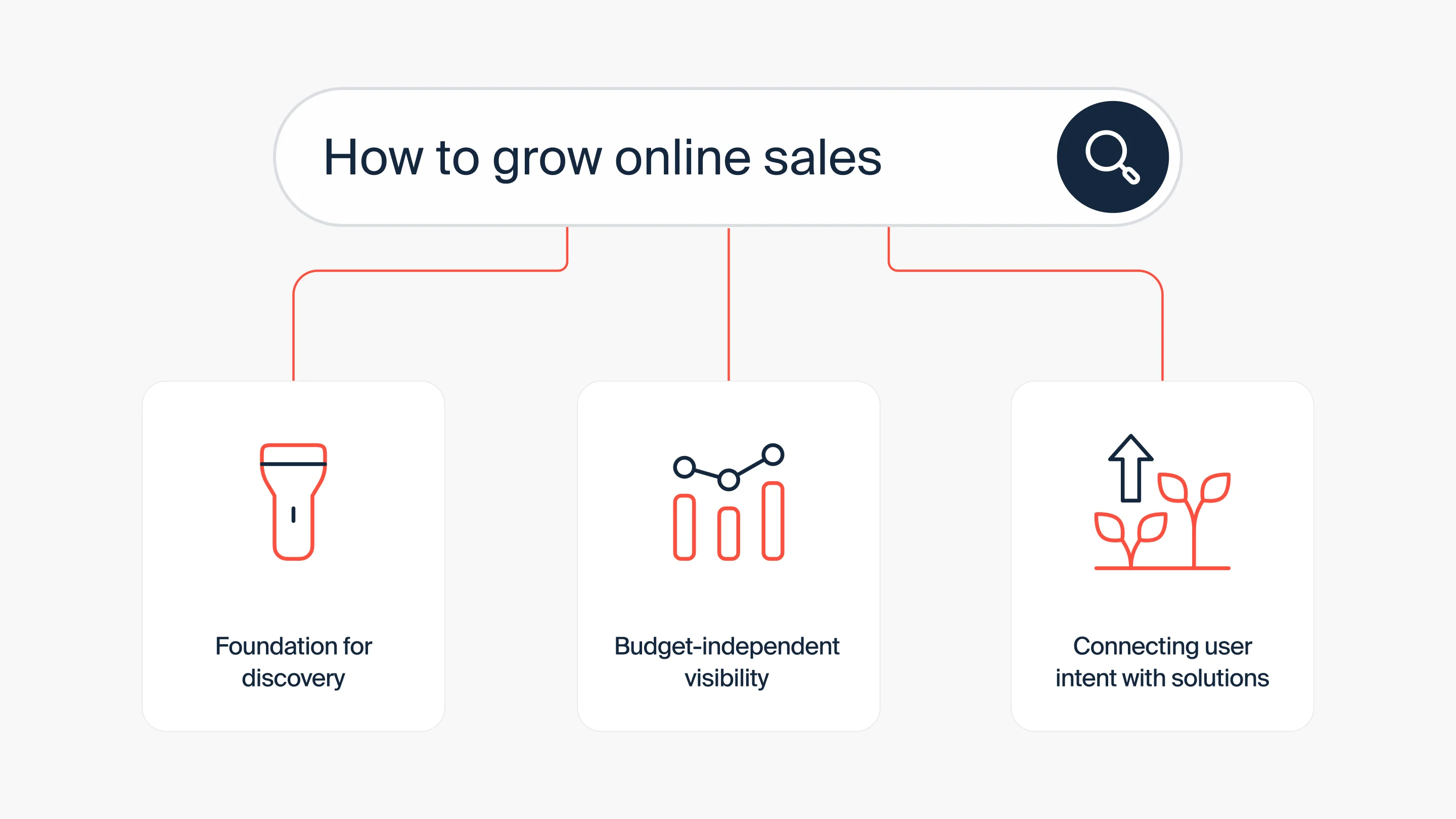
It shapes a company's long-term ability to compete for attention in an increasingly crowded online landscape. Unlike traditional advertising, which interrupts an experience, search optimization integrates into the user's journey. SEO provides a foundation for digital discovery that persists regardless of your daily ad spend.
Without such efforts, a brand risks becoming invisible in a crowded marketplace where competitors are likely already optimizing their presence. Modern consumers have become adept at filtering out "noise," meaning that being part of the "signal" — the actual results they are looking for — is the only way to ensure sustainable growth.
Having outlined the practical value of SEO in broad terms, we'll now take a closer look at this topic in the following sections.
1. SEO drives high-quality organic traffic
Search engines represent the largest funnel for potential clients. When people input a keyword into a search bar, they are actively looking for information, products, or services. This intent makes organic visitors significantly more valuable than those reached through passive channels.
Top organic results used to capture a larger share of clicks, but their performance has declined with the introduction of AI-generated summaries. Even so, organic listings still significantly outperform paid ads, which tend to attract only a small fraction of clicks. Furthermore, the longevity of this traffic source is unmatched. While a paid campaign expires the moment the budget is exhausted, a well-ranked page continues to attract visitors day and night.
Exploring what SEO services are can shed light on how a brand may better leverage such consumer behavior to its advantage. Start by auditing your existing pages for keyword-intent alignment — the quickest wins usually come from pages already ranking on page two.
A practical illustration: one of our e-commerce clients was generating under 5% of revenue from their own website. They relied almost entirely on marketplace sales and paid rising commissions with no control over customer relationships. After fixing the technical foundation (indexing gaps, commercial-intent meta tags, category page structure) and building topical authority through content and links, organic search went from a footnote to the main event: 10x website orders and nearly 50% of total sales coming from Google within 12 months. The site even matched marketplace order volume during peak months. Curious how this was achieved? See the full case.
Organic search converts high-intent queries into lead generation by aligning solutions with needs.
2. SEO strengthens brand visibility and recognition
Consistent placement at the top of search results keeps your brand at the forefront of the consumer's mind. Regularly appearing in results establishes company recognition and reliability, even without an immediate click:
- Top-of-mind awareness: Being present for various industry-related queries reinforces your position as a market leader.
- Extended reach: SEO allows you to capture visibility across multiple niches that paid campaigns might miss due to budget constraints.
- Brand recall: Frequent appearances in the SERPs (Search Engine Results Pages) increase the likelihood of direct site visits in the future.
- Competitive edge: Maintaining a presence where your rivals are absent allows you to claim the majority of the market's attention.
3. SEO establishes trust and credibility
The importance of SEO in business extends to the psychological perception of your company. Most users instinctively trust Google's algorithm; if a website is on the first page, it is often viewed as an authoritative entity.
This trust is earned through a combination of technical health, high-quality backlinks, and the consistent delivery of valuable information. To ensure the site meets these high standards, many organizations begin with a professional SEO audit to identify barriers to growth.
Backlinks act as digital "votes of confidence." When authoritative sites point to yours, search engines view your pages as more trustworthy and useful. Similarly, on-page expertise signals, such as detailed author bios, cited data, and transparent methodology, matter increasingly as Google's E-E-A-T (Experience, Expertise, Authoritativeness, Trustworthiness) framework shapes how content is evaluated. An SEO audit checklist can provide immediate insights into where trust signals might be lacking.
4. SEO enhances user experience
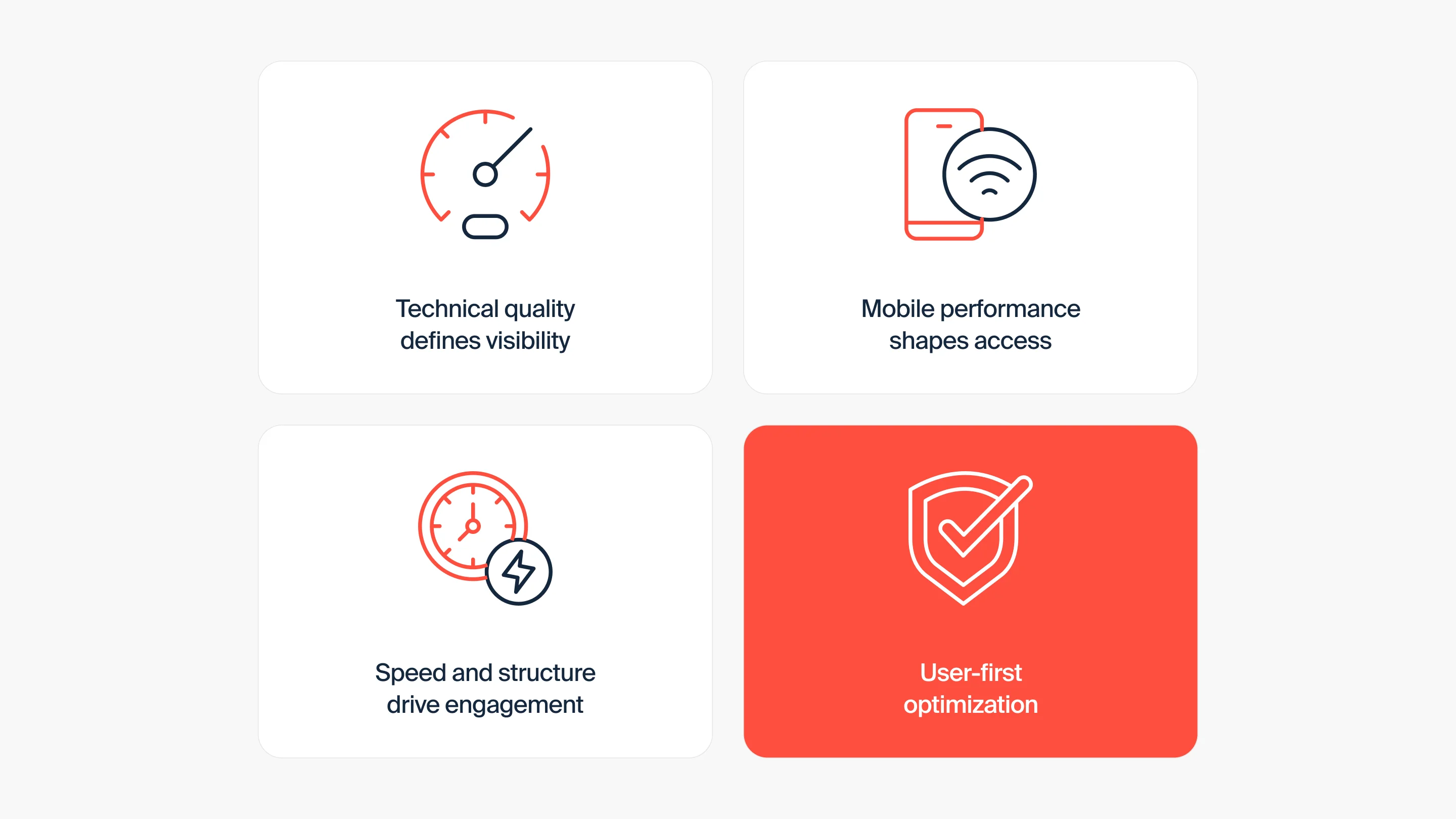
Google has evolved to prioritize users over technical crawlers. Today, search optimization is synonymous with providing a high-quality browsing experience. Poor technical performance — such as slow speeds or a confusing layout — directly results in lower search visibility. Often, these efforts require in-depth technical SEO to resolve infrastructure issues that hinder both crawlers and human visitors.
Mobile optimization is a cornerstone of this process. Page speed is another critical factor — even a one-second delay in loading can noticeably increase bounce rate. A quick diagnostic: run your top five pages through Google's PageSpeed Insights and prioritize fixing the largest image files and render-blocking scripts first.
5. SEO supports the entire marketing funnel
A robust strategy addresses every phase of the customer journey. By creating content for different types of queries, you can nurture a lead from the moment they realize they have a problem to the final decision-making stage.
To answer general questions from people just starting to research a topic, an effective approach is to use educational posts. As users move into the consideration phase, provide them with comparison articles, case studies, and deep-dive reports that highlight your specific advantages.
Finally, at the conversion stage, optimized product pages and service descriptions provide the final nudge needed to close the deal. This funnel approach means organic search feeds your email lists, social channels, and sales pipeline simultaneously — one well-placed article can generate leads at three different stages at once.
6. SEO is cost-effective and delivers long-term ROI
Despite the initial investment of effort and capital, SEO remains one of the most cost-effective marketing strategies over the long term. Unlike PPC (Pay-Per-Click), where every visitor has a price tag, the cost per lead in search optimization has trended downward over the years. That's the reason why many successful brands invest in monthly SEO services to maintain their competitive edge without the skyrocketing costs associated with digital auctions.
Once a page begins to rank well, it requires minimal maintenance to continue driving traffic. With organic search, you are building an asset. Over months and years, the authority of your domain grows, making it easier and cheaper to rank for new terms. This long-term equity enables a business to scale without its advertising budget spiraling out of control.
7. SEO reveals actionable market and audience insights
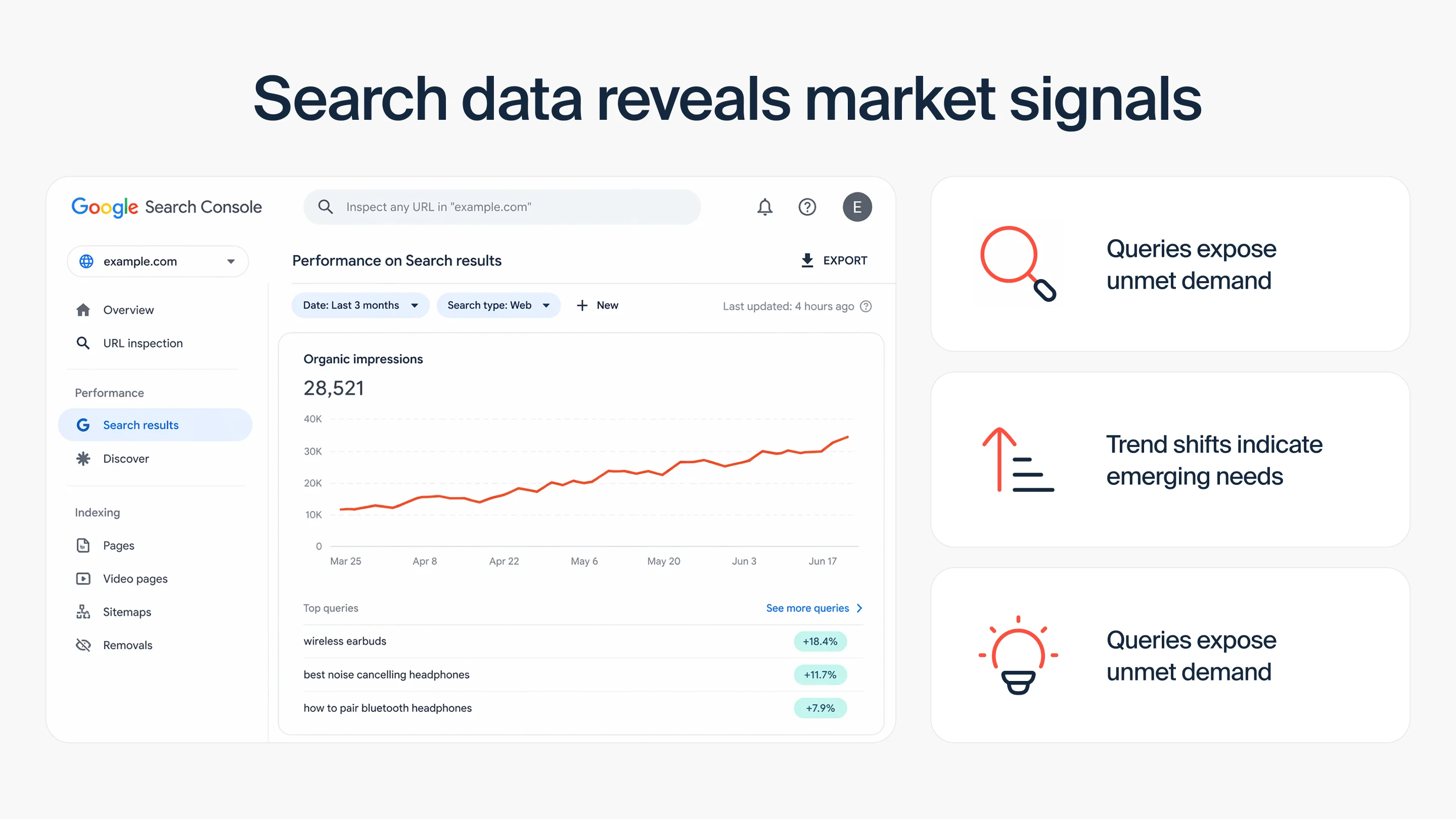
Data gathered from search results and keyword research serves as a massive focus group for your brand. By analyzing what people are searching for, you can uncover hidden pain points and emerging trends before competitors do. This practice exposes which questions are being asked, which terms are gaining popularity, and which topics are losing interest.
For example, a sudden rise in searches for "AI-generated content detection" gave content agencies an early signal to create educational resources on the topic — months before it became a mainstream conversation. Such insights enable a data-driven strategy that removes the guesswork from product launches and campaign messaging.
Practical action: export your Google Search Console queries monthly and filter for terms where you rank positions 5–15. These are your highest-leverage optimization targets — you're already being seen, but not clicked.
8. SEO helps you outperform competitors
In many industries, the difference between the market leader and the runner-up lies in the quality of their link-building and content strategy. Choosing not to invest in SEO while the competitors do is equivalent to handing over your potential customers to them on a silver platter.
The first step in identifying where rivals are weak and where your brand can claim territory is to conduct a website competitor analysis. Look specifically for high-traffic pages where a competitor ranks with thin content — a 1,500-word article that out-answers theirs is often enough to displace an established ranking within 90 days.
Because Google limits its first page to ten organic results, the struggle for digital real estate is an "all-or-nothing" battle. Over time, dominance in the SERPs builds a reputation as the go-to expert in the field, making it increasingly difficult for new entrants to gain a foothold.
9. Local SEO connects you with nearby customers
For brands with an offline presence, the question of why SEO is important for business is answered through local discovery. Mobile searches for "near me" services have skyrocketed, and appearing in the map pack is essential for driving foot traffic. Such optimization involves more than keywords; it requires maintaining accurate listings across various directories.
Following a local SEO guide can help you navigate the complexities of regional rankings and map-based discovery. In this context, effective optimization typically rests on several interconnected pillars:
- Local intent: Focusing on consumers who are prepared to make an instant in-person visit or finalize a service appointment.
- NAP consistency: Verifying that your essential business data is correct and consistent wherever it is cited online.
- Community engagement: Ranking for city-specific terms helps build a strong brand.
- Review management: Encouraging and responding to customer feedback to improve rankings.
- Hyper-local content: Creating pages that speak directly to the interests and needs of a specific neighborhood.
Without such focus, you miss out on the most geographically relevant leads in your area. For professional assistance in this niche, the effective solution is to engage local SEO services to manage a broad-scale presence and ensure dominance in the immediate vicinity.
10. SEO provides measurable performance and continuous optimization
Unlike many traditional marketing forms, every aspect of a search strategy is quantifiable. With tools like Google Analytics and Search Console, you can track the exact path users take from their first search to a final purchase. This transparency enables continuous refinement, ensuring your budget is always directed toward the most impactful tactics.
Analytics enable you to track top-performing content, measure the ROI (Return on Investment) of specific keywords, and diagnose friction points in the user journey. If a blog post is attracting traffic but not converting, A/B testing the headline, CTA placement, and page structure can surface the fix in weeks rather than months.
Practical action: set a monthly review of your top 20 organic landing pages. Identify those that have strong traffic but weak conversion, and prioritize them for CTA and layout improvements before creating new content.
11. SEO builds an adaptive, future-ready online presence
The online landscape is constantly changing, but the fundamentals of search remain a stable foundation. By focusing on high-quality content and a technically sound website, you build a platform that can weather algorithm changes and shifts in consumer behavior.
A clear example is the March 2024 core update, which targeted low-quality, unoriginal content at scale. Sites built on depth, relevance, and expertise were the ones that maintained or improved their visibility, while weaker content lost ground. This highlights a key principle: SEO done right doesn't chase updates — it aligns with them.
Over time, search authority becomes a resilient asset that continues to generate value long after initial investment.
SEO in the age of AI and generative search
As AI continues to be integrated into search engines, people are beginning to wonder about the future of SEO. Generative AI, like Google's AI Overviews and Bing Copilot, summarizes information directly on the search page. Nevertheless, this shift doesn't remove the necessity for optimization — it raises the bar.
To remain visible, brands must now optimize for "information gain" by providing unique insights, original data, and expert perspectives that AI models can cite as sources. AI relies on high-authority content to generate its answers.
If your website provides the most accurate and well-structured answer, the AI is more likely to feature your brand as the primary reference. This evolution requires a shift toward more conversational, data-rich content that provides definitive answers to complex queries.
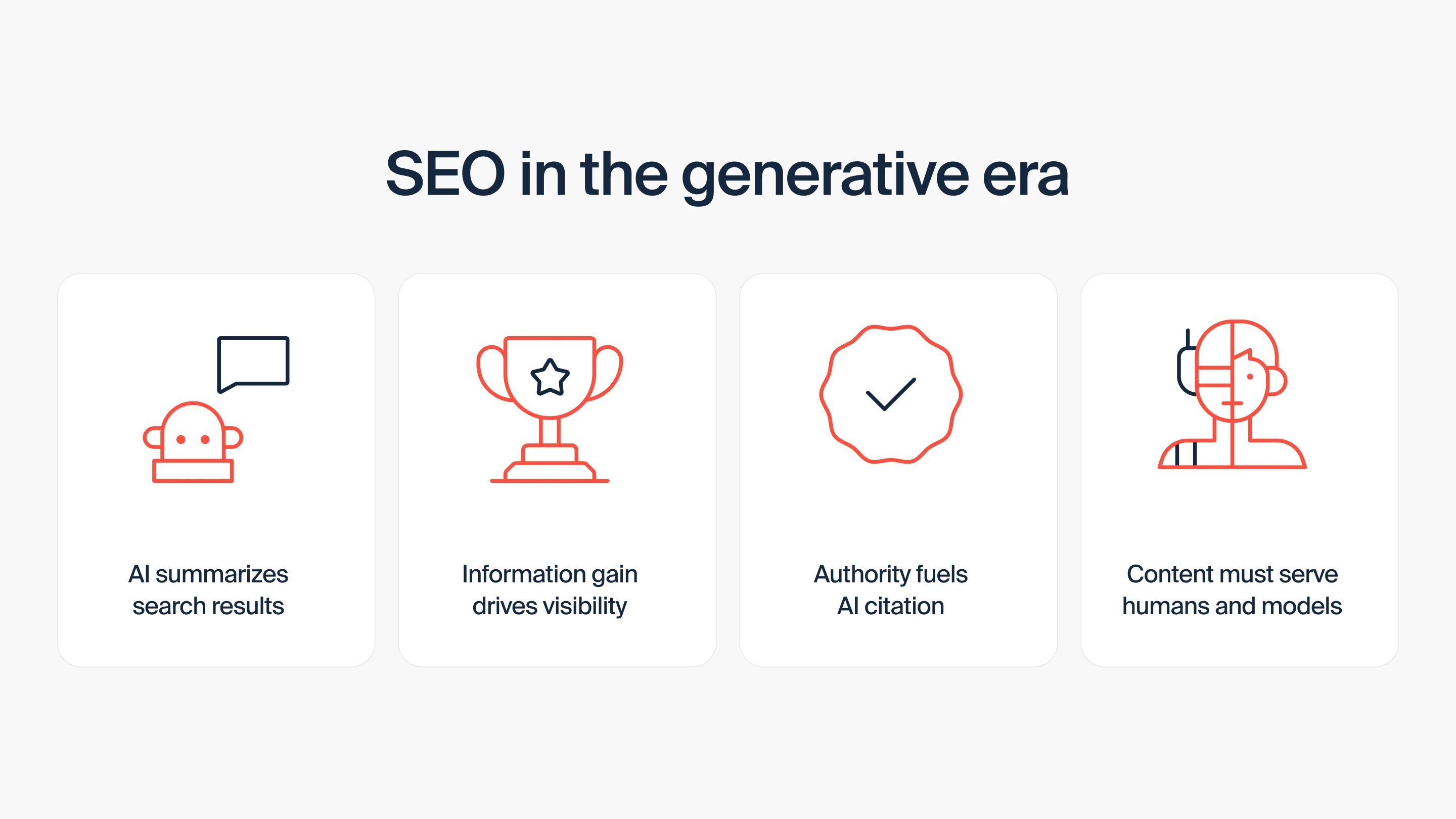
The strategic imperative of SEO
Understanding the importance of SEO is the first step in building a robust, adaptable presence in the digital marketplace. From driving high-intent traffic to establishing unshakeable brand trust, the benefits of organic search are far-reaching. It is an investment that matures over time, providing stability and insight that paid channels simply cannot match.
By prioritizing the user and adhering to search engine guidelines, you create a website that serves as a 24/7 salesperson. In a competitive global economy, SEO is the core driver of modern business success.
{{banner-2}}
FAQ
How long does SEO take to show real business results?
Typically, significant changes in rankings and traffic are visible within 4 to 12 months. Success timing depends on how many competitors you have, your site's current performance, and whether you optimize consistently.
Is SEO still effective in the era of AI and generative search?
Yes. AI tools require high-quality, authoritative data to function. By optimizing your content for expertise and unique value, you ensure that your brand remains a primary source for both traditional search results and AI-generated summaries.
How can small businesses compete with big brands in SEO?
Targeting precise, multi-word phrases allows smaller businesses to dominate specific corners of the market that big brands tend to overlook. Additionally, focusing on local search and providing a superior, personalized user experience can help smaller sites outrank giants in specific contexts.
What's the right balance between SEO and PPC?
While SEO provides long-term growth and lower costs, PPC is excellent for immediate visibility or seasonal promotions. A balanced strategy often uses PPC to capture immediate demand while building the organic foundation to eventually reduce reliance on paid clicks.
How often should you update your SEO strategy in 2026?
Even though search rankings fluctuate day to day, you should conduct a deep-dive audit of your marketing plan at least four times a year. Stay up to date on technical requirements such as Core Web Vitals and adapt your content plan based on the latest keyword trends and AI search behaviors.