



Choosing between SEO and SEM is a common dilemma for businesses trying to boost their online presence. Although both strategies are effective, they rely on fundamentally different mechanisms and require different levels of commitment and resources. Understanding their differences, strengths, and limitations helps you decide which approach aligns best with your goals.


People often blur the line between search engine optimization (SEO) and search engine marketing (SEM), but in practice, they serve different purposes. SEO builds visibility gradually by improving relevance, structure, and trust signals across your site. SEM, on the other hand, relies on paid placements, capturing existing demand the moment users express clear intent.
In this article, we’ll clarify how each approach works, what kind of outcomes they deliver, and when one makes more sense than the other. Before going deeper into comparisons, let’s start with the essentials.
What is SEO?
At its core, SEO shapes a website so it can be accurately interpreted by search systems and naturally reached by people seeking relevant information. Here’s what this process entails.
How it works
SEO aims to strengthen a website so that search engines recognize its relevance and it appears naturally among the top search results. When such two elements are effectively combined, search engines recognize the pages as both authoritative and relevant, boosting their chances of ranking prominently. This trust translates directly into rankings: when someone searches for a keyword you’ve optimized for, your content stands a much better chance of reaching the first page, where most clicks happen.
The SEO workflow begins with research. You need to understand what your audience is actually searching for — the words they use, the problems they want solved, and the questions they expect answers to. Once you have those insights, the next step is creating content that doesn’t just repeat keywords but genuinely satisfies those needs. Quality and depth matter here because search engines increasingly evaluate how useful and complete your content is compared to competing results.
After the content is in place, on-page optimization helps reinforce the connection between your message and the search query. This involves refining titles, headings, URLs, images, and meta descriptions so that both users and search engines can quickly understand the page’s topic. Beyond the page itself, SEO also relies on external signals like backlinks. Links from reputable websites serve as endorsements, signaling to search engines that your content is credible and worth ranking highly.
Finally, no SEO effort is truly effective unless it considers user experience. Even if your page ranks well, visitors won’t stay if the site is slow, hard to navigate, or poorly formatted. Improving page load times, mobile responsiveness, and accessibility helps users move through your site smoothly and interact more effectively with its content. These positive experiences reduce bounce rates and increase engagement, which, in turn, reinforce your page’s relevance and strengthen its position in search results.
Types of SEO
Understanding how SEO builds visibility requires breaking it down into distinct types, each serving a specific purpose:
- On-page SEO: Optimizing the actual content, including keywords, headers, internal links, and images.
- Off-page SEO: Increasing authority through backlinks, reviews, and digital PR.
- Technical SEO: Ensuring smooth crawling, indexing, and performance across devices — foundations that are best built in from the start of any web development project.
Today, there’s also AI and conversational SEO. Users ask questions in natural language, and search engines — and AI-driven overviews — expect direct, scannable answers. This means writing clearly, structuring answers in sections, and anticipating related questions.
If you’re interested in how site architecture supports modern search visibility, our website structure guide covers this in more detail.
Pros and cons of SEO
SEO creates a long-lasting presence in search results. Pages that achieve strong rankings can attract organic visitors for extended periods, reinforcing your brand’s credibility and producing cumulative advantages over time.
Achieving lasting search visibility is a gradual process, and noticeable results may take several months to materialize. Moreover, SEO demands continuous tuning and adjustments as search algorithms evolve. It also requires resources for writing, link building, and technical improvements.
To evaluate your site’s strengths and gaps, an SEO audit checklist helps surface technical and content issues that may be holding performance back. From there, technical optimization addresses structural blockers that can limit visibility and slow long-term progress.
What is SEM?
In practical marketing usage, SEM refers to paid strategies designed to buy visibility in search results, rather than earning it organically.
How it works
SEM uses paid campaigns to secure prominent spots in search results. The most common approach, pay-per-click advertising, lets companies bid on keywords and pay only when visitors interact with their ads. These placements focus on users with clear intent, putting a brand in front of people actively searching for relevant solutions. As a result, SEM functions less as a discovery channel and more as a precision tool for intercepting existing demand.
Paid campaigns deliver results almost instantly, in contrast to organic methods that require time to gain traction. This immediacy makes them ideal for time-sensitive initiatives like product launches, promotional events, or seasonal offers. The impact, however, persists only while the campaigns are active, meaning outcomes are directly linked to continuous investment.
Beyond speed, SEM offers a high degree of control over visibility and messaging. Advertisers can adjust bids, targeting, formats, and copy in real time, allowing campaigns to respond quickly to performance data, market shifts, or competitive pressure. This flexibility makes paid search especially effective for experimentation, from testing keywords to validating audience intent.
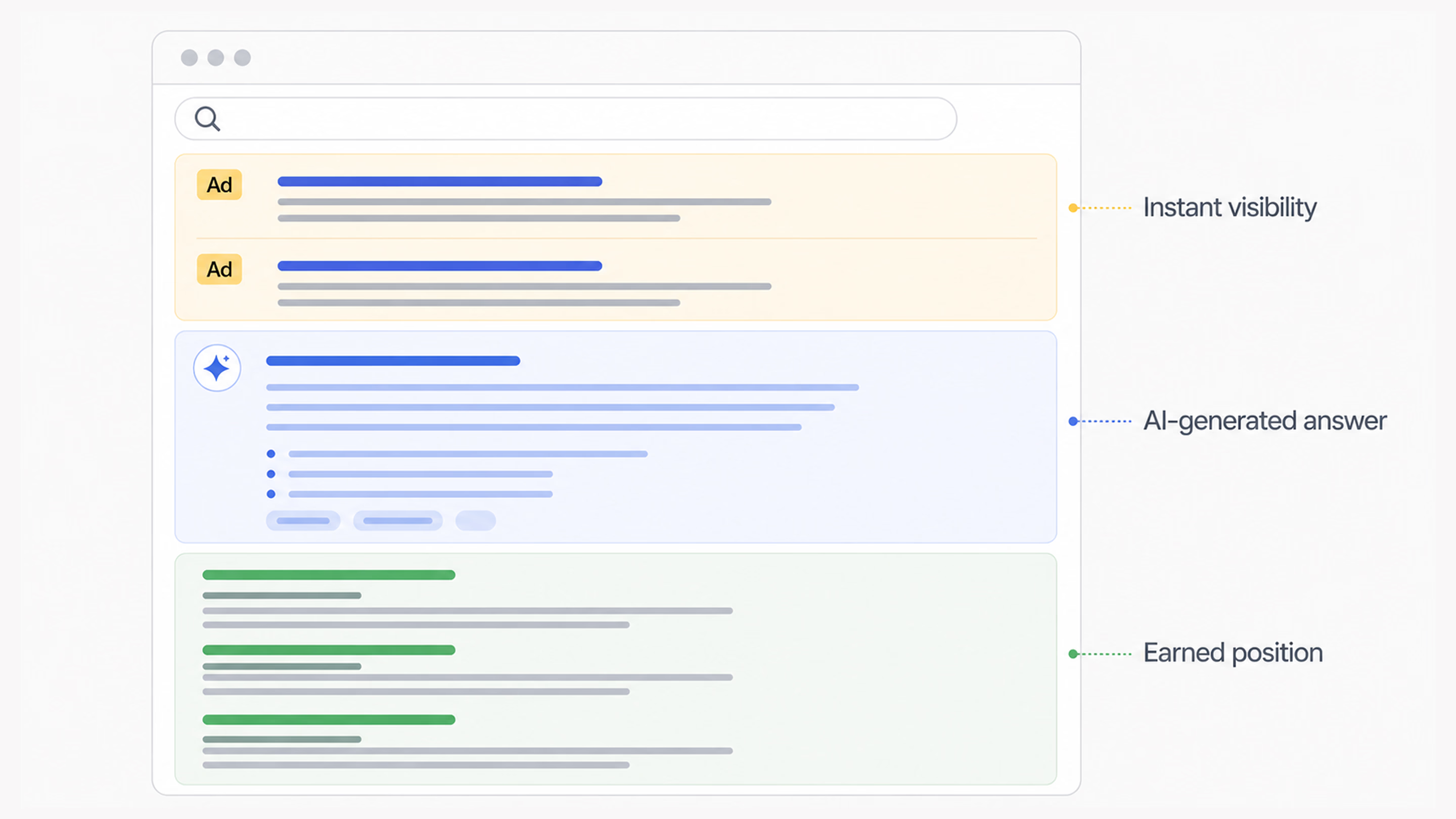
SEM also plays a distinct role in environments where organic reach is constrained. In competitive result pages or queries dominated by AI-generated overviews, paid placements ensure a consistent presence at the top of the page. While this exposure does not compound over time, it provides predictable access to high-intent users at critical decision-making moments.
Components of SEM
Paid search includes several components beyond basic text ads:
- PPC campaigns. Keyword-based text ads shown in search results.
- AI-driven automation. Platforms like Google Performance Max optimize bids, placements, and creatives in real time.
- Video and shopping ads. Formats designed for discovery and product-focused searches.
Strong keyword research underpins effective SEM campaigns and often informs SEO priorities as well.
Pros and cons of SEM
SEM delivers instant visibility. With precise targeting and flexible budgets, it’s especially effective for campaigns that need quick impact. Performance is also highly measurable, making ROI easier to track.
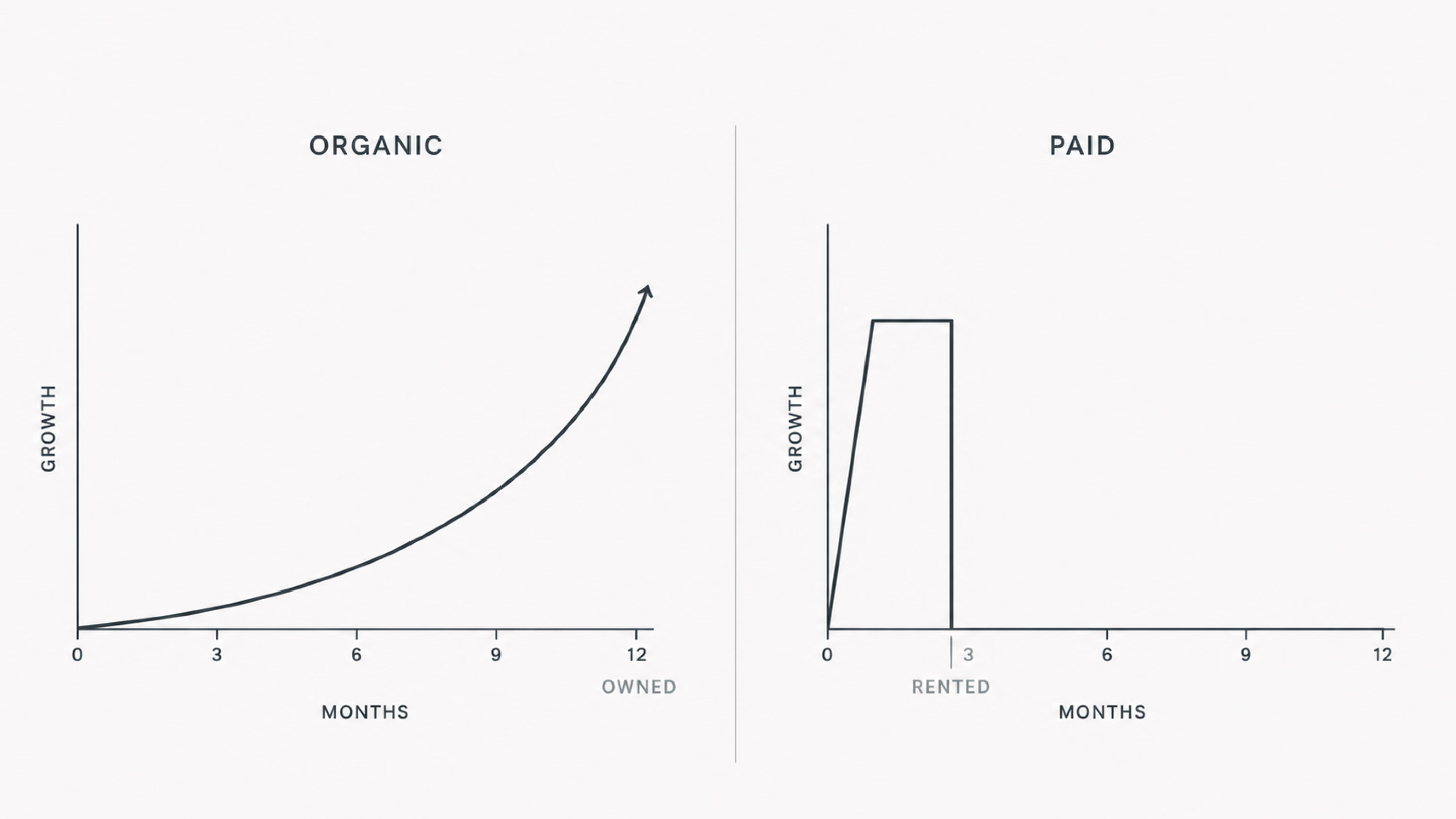
The limitation is sustainability. SEM requires continuous spending, and costs increase in competitive markets. Unlike SEO, SEM does not compound over time — once spending stops, traffic disappears.
SEO vs. SEM: key differences
Now that both approaches are clearly defined, it’s easier to compare them in real-world terms. The difference between SEO and SEM comes down to cost, speed, sustainability, and strategic intent.
Cost, ROI, and budgeting
One of the first things businesses ask is how much SEO or SEM will cost. SEO often demands resources for content development, optimization tools, and occasional technical expertise. While it doesn’t involve paying for each click, building authority takes time and effort. Over the long term, this investment often leads to a lower cost per acquisition because rankings continue to bring in visitors without extra spend.
“Unlike paid ads, good SEO keeps working after you stop.”
SEM, by contrast, has an immediate budget requirement. As a result, you must keep a budget for ad clicks, creative materials, and managing the campaigns. The return is clear and trackable, but the moment you pause spending, the results stop. In short, SEO is more cost-efficient over time, while SEM offers short-term predictability.
Speed of results and timelines
SEO is a long game. Depending on competition and domain strength, results can take months to materialize. This slower pace can be challenging for teams seeking immediate traction.
SEM delivers results as soon as campaigns go live. Keywords, audiences, and creatives can be tested quickly. Many businesses use SEM to generate demand while SEO builds lasting foundations in parallel.
Traffic sustainability and long-term value
SEO creates compounding value. A single page can rank for multiple queries and continue attracting traffic long after it’s published. This reduces long-term dependence on paid channels.
At the same time, SEM provides visibility on demand but lacks durability. You’re effectively renting space in search results rather than owning it, which makes SEM ideal for bursts of growth rather than permanent presence.
Targeting, visibility, and the AI Overviews reality
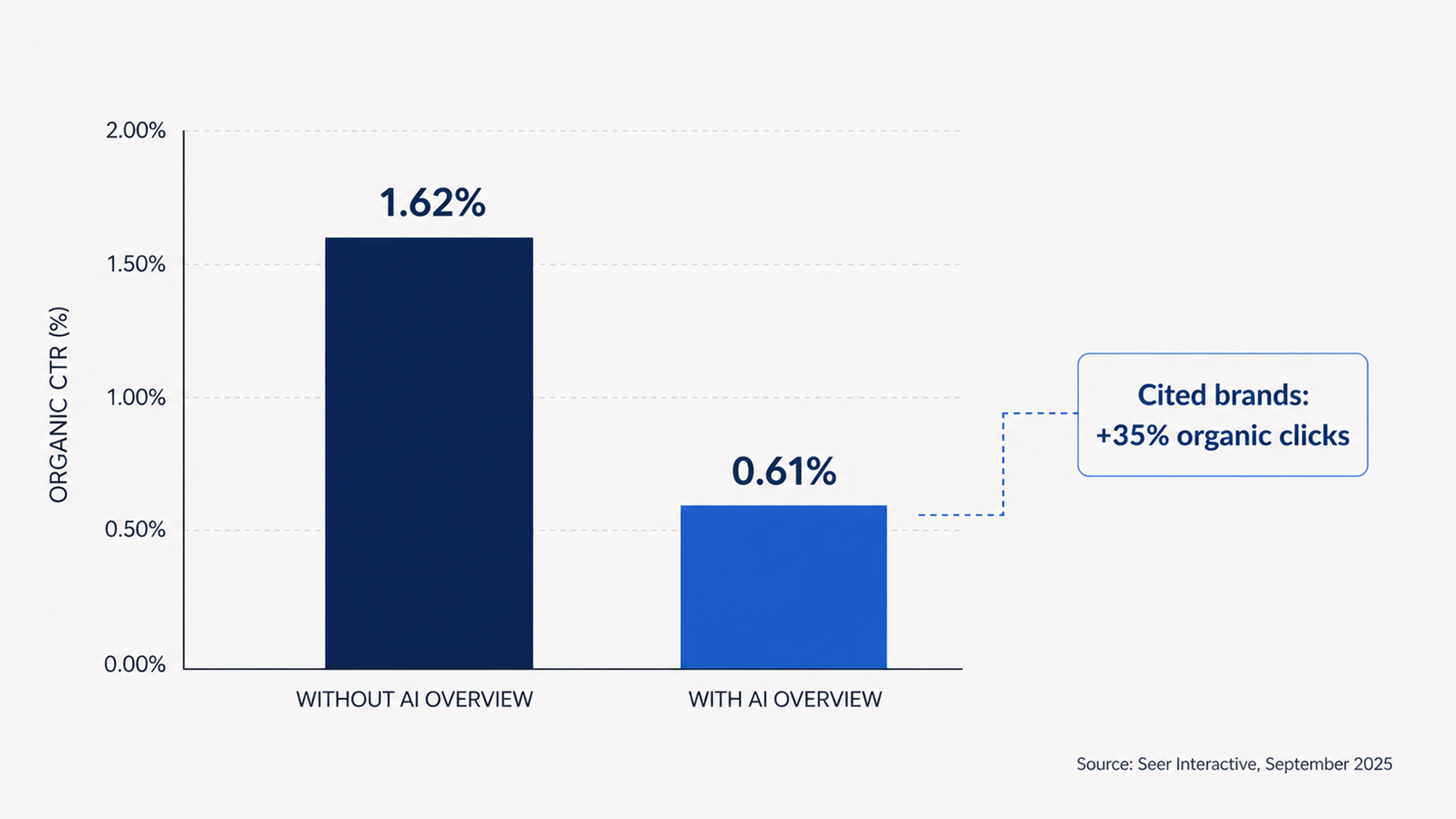
The impact of Google’s AI Overviews on search behavior is now measurable. A Pew Research Center study tracking 68,000 real search queries found that users clicked on results 8% of the time when an AI Overview appeared, compared to 15% without one — a relative decline of nearly 47%. The pattern holds across both organic and paid placements, and multiple independent analyses confirm the direction is consistent regardless of methodology or query type.
There is, however, a meaningful distinction between brands that appear cited within AI Overviews and those that don’t. Cited brands consistently outperform uncited competitors on the same queries across both organic and paid channels — making citation the new strategic priority for SEO.
For SEM, paid placements remain visible regardless of AI Overview presence, providing reliable access to high-intent users in queries where organic visibility has been compressed. Neither channel delivers the returns it did two years ago, but together they remain more resilient than either alone — SEO focused on authority and citation-worthiness, SEM covering the gaps.
When to use SEO vs. SEM
Grasping how SEO and SEM differ is only the first step. Deciding which approach to prioritize hinges on your goals, available resources, and desired speed of results.
When SEO works best
SEO shines when you’re building long-term authority. If your aim is to grow sustainable visibility, capture informational intent, or strengthen your brand, SEO is the right choice. It’s especially valuable when your budget is limited, but you can invest time and consistency. If you’re still mapping out how SEO fits into your broader product roadmap, our guide to the product development process covers how visibility planning connects to each stage of a product’s growth.
For example, a blog that publishes evergreen guides can rank for hundreds of related keywords and bring traffic for years. While the initial investment can be significant, the returns build up over time.
When SEM works best
For fast results, SEM can be an effective choice. It’s especially effective for things like product launches, seasonal promotions, or keyword testing. Paid ads let you control the audience and timing, making them well-suited for urgent or seasonal campaigns.
SEM is especially useful in highly competitive markets where climbing organic rankings takes too long. Instead of waiting months to climb to page one, you can place an ad there tomorrow.
Combining SEO and SEM for maximum ROI
The strongest search strategies combine both approaches rather than treating them as competing options. Insights from paid campaigns — such as high-converting queries and messaging — can help refine SEO priorities and content focus.
At the same time, organic search reduces long-term reliance on paid channels by creating a steady flow of qualified traffic. This layered approach supports short-term performance without compromising long-term sustainability: SEM strengthens today’s pipeline, while SEO secures future growth.
One practical risk worth anticipating is keyword cannibalization. When paid ads target keywords you already rank for organically, you end up paying for traffic you were earning for free — and inflating your own bid costs in the process. The fix is deliberate segmentation: use SEM where organic rankings are weak, and reserve ad budget for queries where paid placement adds reach rather than duplicating it.
To keep both channels aligned, track organic impressions and ranking positions on 90-day rolling windows for SEO, and cost per conversion weekly for SEM, and monitor AI Overview citation frequency for both.
“SEO and SEM solve different problems at different speeds.”
How to match your budget to the right channel
There’s no universal split, but budget size tends to determine what’s actually viable. Under $3,000 per month, SEO-first is the more sustainable path — at that level, paid search rarely generates enough volume to justify the cost in competitive markets.
Between $3,000 and $10,000, a parallel approach makes sense: the majority directed toward SEO foundations, with a focused SEM budget reserved for high-intent, bottom-of-funnel keywords. Above $10,000 per month, a full dual-channel strategy becomes viable — SEO builds long-term authority while SEM captures demand in the short term, with paid campaign data actively feeding back into content priorities.
These figures are directional rather than prescriptive. The right allocation always depends on your market’s competitiveness, your domain’s existing authority, and how quickly your business needs results.
How to choose the right strategy for your business
Across 500+ web projects, we’ve seen one consistent truth: the teams that get their site’s technical foundations right before investing in either channel spend less and grow faster than those who retrofit SEO or layer paid spend onto a poorly structured site. The decision between SEO and SEM is real — but it sits on top of a more fundamental one about how well your website is built to support either.
This becomes especially clear in practice. In one of our e-commerce SEO cases focused on sales growth, improving technical SEO and restructuring product pages led to measurable gains in both organic traffic and revenue — without relying on increased ad spend.
Budget and ROI timeline play the biggest role. When time is available but budgets are constrained, SEO typically delivers stronger long-term results. If immediate lead generation is the priority, SEM becomes the faster lever. For most businesses, combining both works best — and the right balance shifts as the business grows.
Competition shapes that balance further. In markets where competitors dominate organic results, SEM provides a way to break in while you build authority. Both scenarios also assume your website is built to convert the traffic you’re generating. If page speed, mobile responsiveness, or site architecture are concerns, address them at the development level before scaling spend in either direction.
Finally, consider how Google’s AI Overviews affect your niche. AI-powered overviews are shifting how people engage with search results, often reducing clicks to websites even for high-ranking pages. That makes it even more important to optimize your content for clarity, authority, and direct answers — so your brand earns citation rather than just position. Pairing this with SEM ensures visibility in both organic and paid sections of the results page.
Ultimately, the most effective strategy comes from alignment rather than rigid choice. When timing, resources, and market dynamics are considered together, SEO and SEM work as complementary tools — each compensating for the limitations of the other.
{{banner}}
FAQ
Is SEO still worth it with Google SGE?
Yes. Even with Search Generative Experience reshaping the results page, SEO remains critical. Google’s AI-generated answers still draw heavily from authoritative websites. This gives well-structured, optimized content a better chance of being cited or referenced. While click-through rates from traditional organic positions may decline, SEO ensures your brand continues to surface in both results and overviews.
Can I do both SEO and SEM at the same time?
Absolutely. The key is coordination rather than duplication — use SEM data to identify high-converting keywords and feed those into your SEO content plan. Monitor where paid and organic overlap and adjust bids to avoid paying for traffic you’re already earning. When both channels share data and inform each other, the combined return consistently outperforms either managed in isolation.
How much does SEO cost compared to SEM in 2026?
SEO costs typically focus on content creation, technical optimization, and ongoing improvements, making it more front-loaded in effort and investment. SEM, by contrast, depends on continuous ad spend, with costs rising quickly in competitive markets. In 2026, SEO tends to reward long-term commitment, while SEM requires a consistent budget to maintain visibility.
How long does SEO take to show results now?
SEO timelines vary depending on competition, authority, and content quality. New sites might take 6–12 months, while established domains can see results in a few weeks. Algorithm updates and SGE changes mean ongoing monitoring is essential.
Which is better for small businesses in an AI-driven search world?
For small businesses, AI Overviews are shifting how visibility is earned. Appearing in these results depends more on content authority than ad spend, making SEO a strong long-term investment. At the same time, SEM remains useful for generating immediate leads, especially for local queries or time-sensitive campaigns. In most cases, combining both delivers the best results.