




The inventory is stocked, the photography is studio-quality, and the platform is stable. Yet, the sales dashboard remains stagnant. This is the quiet crisis of modern online retail: building a superior product is no longer enough to guarantee a customer base. Without a mechanism to signal relevance to search engines, even the most innovative brands remain invisible to the very people trying to find them.


Search engines are the primary gatekeepers of digital commerce. They decide which brands get seen and which remain buried on page two. However, ranking high is not about tricking an algorithm or stuffing keywords where they do not belong. It is about fundamentally aligning your site’s architecture and content with the intent of your user. SEO for an e-commerce website’s success requires a blend of technical precision, user-centric design, and strategic media.
Viewing e-commerce search engine optimization as a “nice-to-have” or an afterthought is a strategic error. Unlike paid advertising, which stops performing the moment you stop spending, ecommerce SEO is a capital asset. It compounds over time, lowering your acquisition costs and stabilizing your revenue. This guide maps out the specific engineering and content decisions required to capture that value, moving through the technical prerequisites, the nuances of keyword strategy, and the on-page elements that turn casual searchers into committed buyers.
What is e-commerce SEO?
E-commerce search engine optimization is the process of configuring your website and content to rank higher in search engine results pages (SERPs) for terms related to your products. Unlike general websites that focus on informational queries, online stores target commercial intent. The goal is to capture users who are ready to buy or are researching a specific purchase.
General SEO focuses heavily on long-form content and answering questions. Online store optimization involves managing thousands of product pages, handling duplicate content issues caused by product variants like size or color, and ensuring the site architecture supports a massive inventory. The technical stakes are higher because the site is larger.
{{banner}}
Why is SEO important for e-commerce websites?
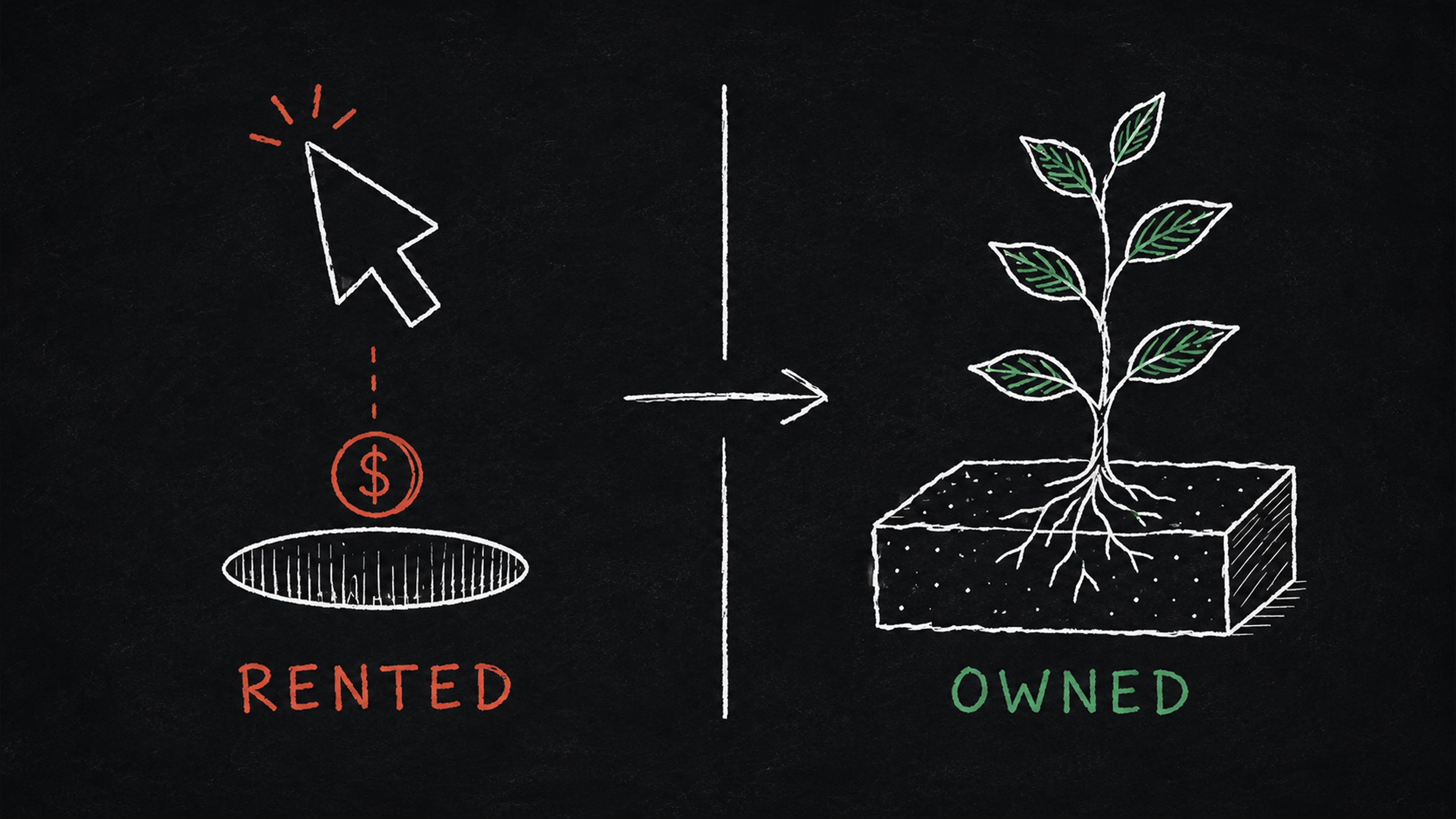
Treating search optimization as optional is a financial risk. Relying solely on social media or paid advertising creates a fragile business model where you are essentially “renting” your traffic. Social algorithms change without warning, and ad costs or Cost-per-Mille (CPM) historically rise year over year.
E-commerce SEO provides stability by helping you “own” your traffic. It transforms your marketing spend from a recurring expense into a capital investment, building a foundation of organic traffic that reduces your Customer Acquisition Cost (CAC) and increases profitability over time.
How SEO helps at every step of the buyer’s journey
Modern purchasing paths are rarely linear. Customers bounce between devices, read reviews, and compare options before opening their wallets. If your store only ranks for “buy” keywords, you miss the 90% of users who are still in the research phase. Search optimization ensures your brand captures attention at every critical touchpoint:
- Awareness (The Problem): A user realizes they have a need. They search for “best running shoes for flat feet” and discover your educational blog post. You solve their problem before asking for money.
- Consideration (The Comparison): The user narrows their options. They search for specific model reviews or “Brand X vs Brand Y.” Your well-structured category page or comparison guide appears, validating your product’s superiority.
- Decision (The Transaction): Ready to purchase, they search for “buy [Brand] running shoes size 10.” Your product page appears immediately with rich snippets showing price and stock status.
By appearing consistently, you build “brand preference.” When the user is finally ready to buy, they choose you not because you were the loudest, but because you were the most helpful. If your team lacks the internal resources to map these complex content architectures, SEO consulting can help align your site structure with high-value user intent.
What e-commerce stores lose without SEO
Ignoring search visibility does not just mean fewer visitors; it means ceding market share to competitors who may have inferior products but superior site architecture. Without a solid strategy, you face tangible business losses:
- Invisible inventory: You may have the best product on the market, but if Google cannot index your facets or filter pages, that inventory effectively does not exist. Competitors with clearer site structures will capture the sale.
- Cannibalized ad budget: Without strong organic rankings, you are forced to bid on your own brand keywords to remain visible. This means you end up paying for clicks you should have received for free, artificially inflating your marketing costs.
- Eroded brand trust: Users statistically trust organic results more than paid placements. A lack of organic presence signals a lack of authority, while technical issues like slow load times (a key SEO metric) directly correlate with high cart abandonment rates.
Reviewing SEO basics will help you identify which of these fundamental risks might currently be leaking revenue from your store.
“Great design builds trust, but great SEO builds visibility. The two must work in tandem.”
Best practices for successful e-commerce SEO
A winning ecommerce SEO strategy relies on three pillars: technical health, content relevance, and authority. Neglecting one weakens the others. If your site cannot be crawled, your content remains invisible. If your content lacks intent, your traffic will not convert. The following sections detail the exact engineering and editorial steps to execute this.
Technical SEO optimization
Technical foundations are the skeleton of your website. If the structure is weak, the beautiful design on top will not matter. Search engines need to crawl, index, and understand your pages without friction or ambiguity.
Build a clear site structure
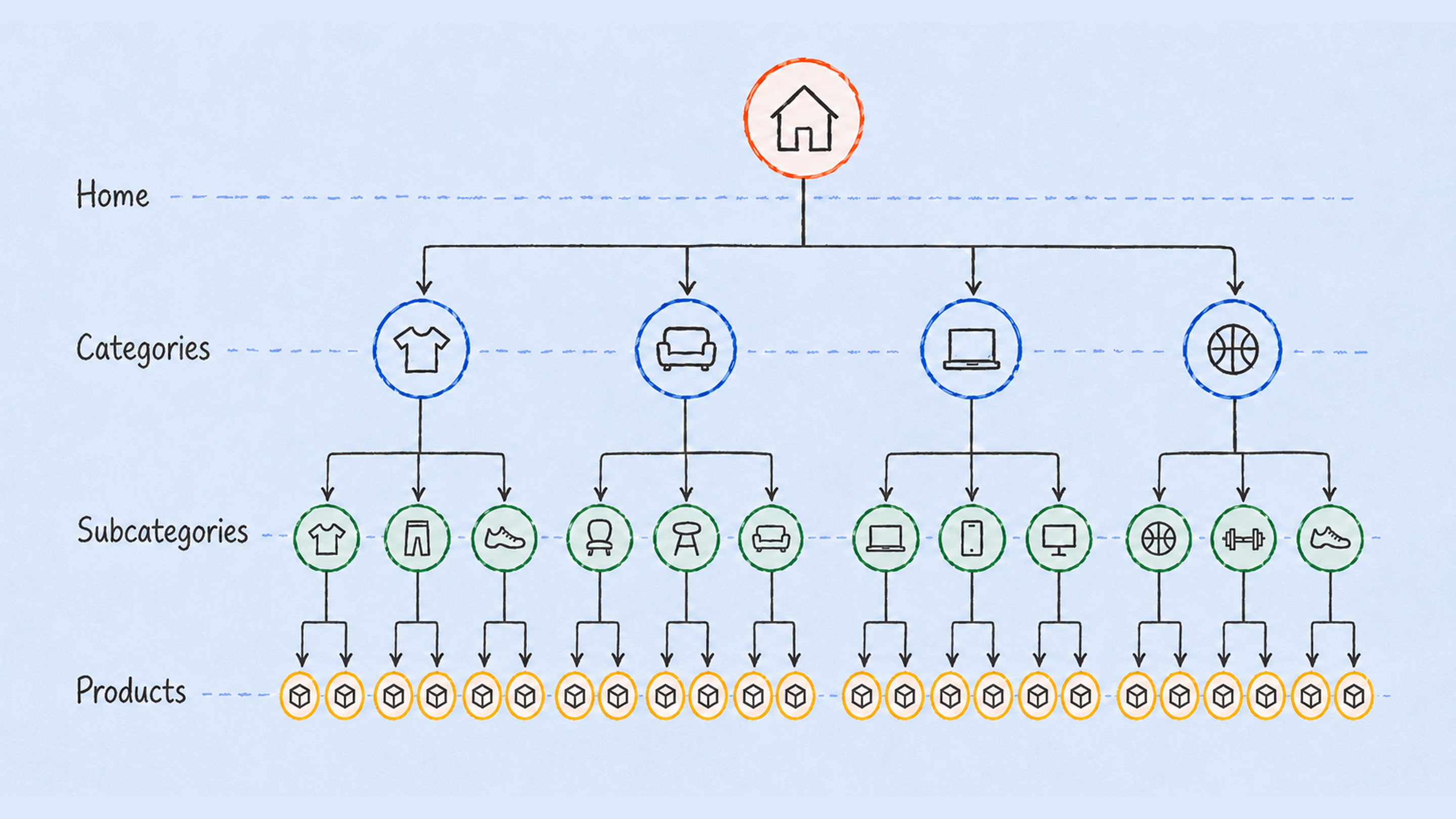
Your site architecture should follow a logical hierarchy that mirrors user behavior. Users and bots must be able to reach any product within three clicks from the homepage. A flattened structure helps distribute link equity — the value passed from high-authority pages like your homepage — deep into your product catalog.
The most effective architecture follows a strict hierarchy starting from the Homepage, flowing down to Main Categories, then Subcategories, and finally landing on the Product Page. Additionally, implementing schema-validated breadcrumbs is essential so Google understands the precise relationship between parent and child pages. Designing an SEO-friendly site architecture from day one prevents the need for massive, risky URL migrations later.
Fix crawl and indexing issues
Online stores generate thousands of URLs, often creating “zombie pages” that offer no value. Faceted navigation, such as filters for size, color, and price, is the biggest technical threat because it creates near-infinite URL combinations like /shirts?color=red&size=m&price=low.
To manage this, you must use self-referencing canonical tags on master pages and point filtered pages back to the main category unless there is significant search demand for the specific filter. Furthermore, your robots.txt file should explicitly block bots from crawling low-value areas like internal search results, cart pages, and wishlists to preserve your crawl budget for revenue-generating pages.
Improve mobile speed and accessibility
Google uses mobile-first indexing, meaning it ranks your site based on its mobile version. Heavy high-res images and unoptimized scripts are conversion killers. You must focus on Core Web Vitals, specifically Largest Contentful Paint (LCP), ensuring your main product image loads in under 2.5 seconds.
Additionally, serving images in Next-Gen formats like WebP or AVIF offers superior compression over JPEG without quality loss, while removing unused JavaScript and deferring non-critical CSS further improves load times. Before launching major campaigns, run through a detailed SEO audit checklist to identify and patch performance leaks that could sabotage your ad spend.
E-commerce keyword research
Finding the right terms is the compass of your campaign. You must identify what your customers are actually typing into the search bar, specifically focusing on commercial intent rather than vanity metrics like high search volume.
Find the right search intent
Search intent categorizes why a user is searching, and mapping the wrong intent to a page leads to high bounce rates. For instance, informational queries like “How to clean leather boots” should direct users to a blog post, while transactional searches such as “Buy brown leather boots size 10” should lead directly to a product page.
Commercial intent searches, like “Best leather boots 2026,” are best served by category or comparison pages. Do not try to rank a product page for an informational query; users looking for a guide will not buy immediately.
{{banner-2}}
Use long-tail keywords
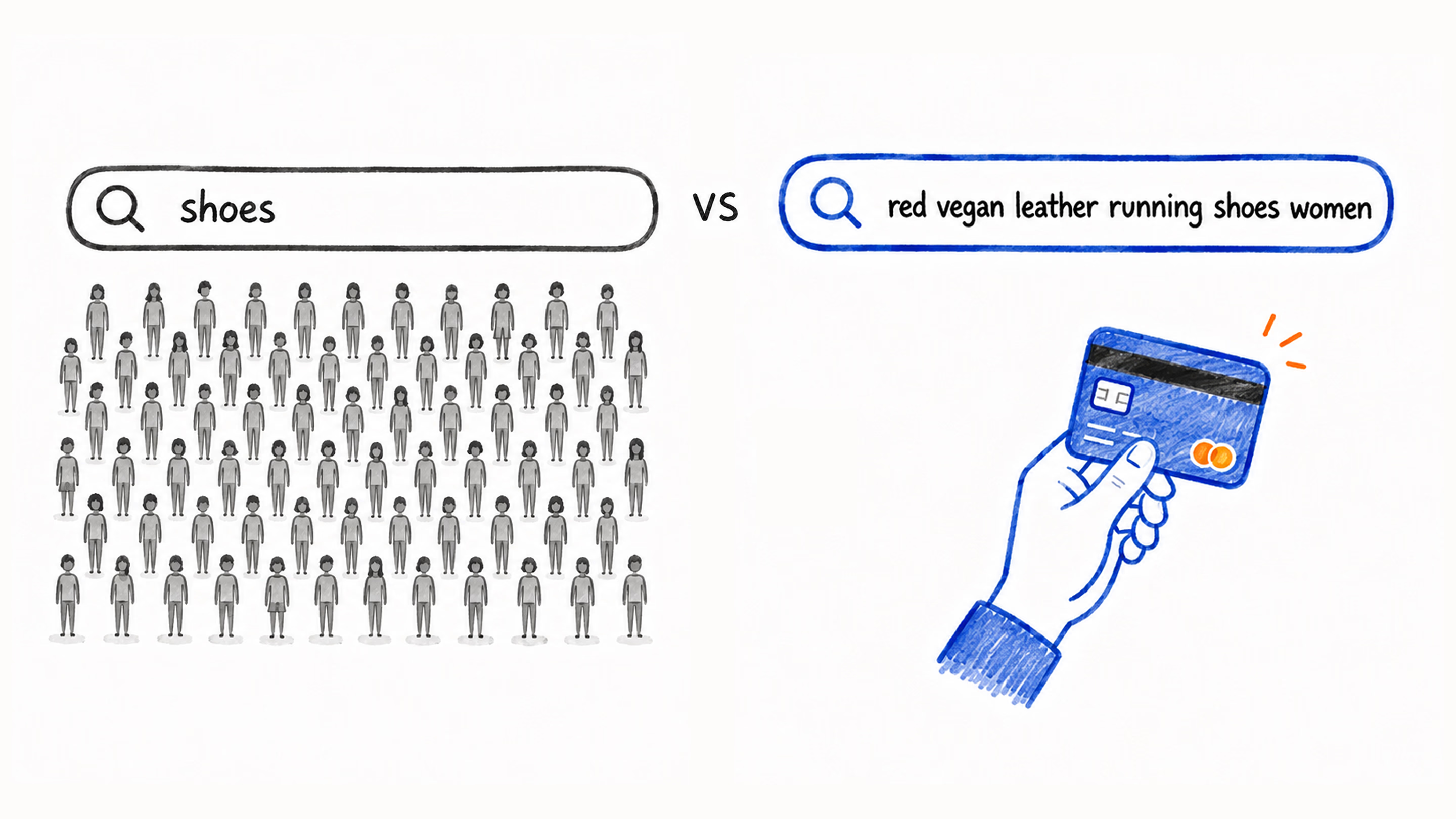
Broad terms like “shoes” are dominated by giants like Amazon. E-commerce SEO tips often focus on long-tail keywords — specific phrases with lower volume but higher conversion rates. A user searching for “shoes” is simply browsing, whereas a user searching for “red vegan leather running shoes women” is ready to purchase.
You should target these specific phrases in your H1s and product descriptions. Mastering these specific terms is often the smarter answer to how to increase organic traffic without fighting unwinnable battles against industry giants.
Target seasonal and trending keywords
Consumer demand fluctuates, so you must prepare your pages months in advance for major events like Black Friday or Christmas. Rather than creating new URLs every year like /sale-2026/, you should create evergreen URLs like /sale/ and update the content annually.
This approach preserves the link authority the page earns over time. It is best to publish seasonal content at least 45 days before the peak interest period to give Google time to index and rank it.
Optimize for voice and visual search
Voice queries differ fundamentally from typed searches because they are conversational and often question-based. To capture this traffic, you should incorporate natural language triggers into your product descriptions and FAQ sections, answering specific questions like “Are these boots waterproof?” or “Does this jacket fit true to size?”
Visual search, on the other hand, relies heavily on image recognition technology. Optimizing for this requires meticulous attention to file naming conventions, ensuring images are named brown-leather-boots.jpg rather than generic codes like IMG_592.jpg.
Furthermore, detailed Alt text and high-resolution assets allow platforms like Google Lens to identify and surface your products to users shopping with their cameras. The intersection of SEO and web development is critical here, as structured data implementation is required for bots to “read” your images and answers correctly.
Optimize on-page SEO
On-page optimization involves refining the visible elements of your web pages. This communicates relevance to search algorithms and convinces users to click. It encompasses everything from the strategic placement of keywords in headers to the optimization of images for faster load times. Unlike off-page factors, which rely on external validation, these are actionable variables you fully control to directly influence your ranking potential.
Write better titles and meta descriptions
The title tag is a major ranking factor and must include your target keyword and brand name. A strong formula to follow is [Product Name] - [Key Feature] | [Brand Name]. The Meta Description acts as your ad copy; while it doesn’t directly affect rankings, it impacts Click-Through Rate (CTR).
It should include a clear Unique Selling Proposition (USP) like “Free Shipping” or “Lifetime Warranty.” If your internal team is stretched thin, expert website copywriting can help craft titles that balance keyword density with clickability.
Improve product and category texts
Manufacturer descriptions are often duplicated across hundreds of retailer sites, and Google penalizes this duplicate content. You must write unique descriptions for your top-selling products, focusing on benefits rather than features.
For category pages, adding a few paragraphs of introductory text gives search engines the necessary context about the collection. High-quality content marketing fills these pages with narratives that engage users and satisfy algorithms.
“In a digital world where everyone sells the same thing, the story you tell about the product is the only competitive advantage you have left.”
Use schema markup for rich results
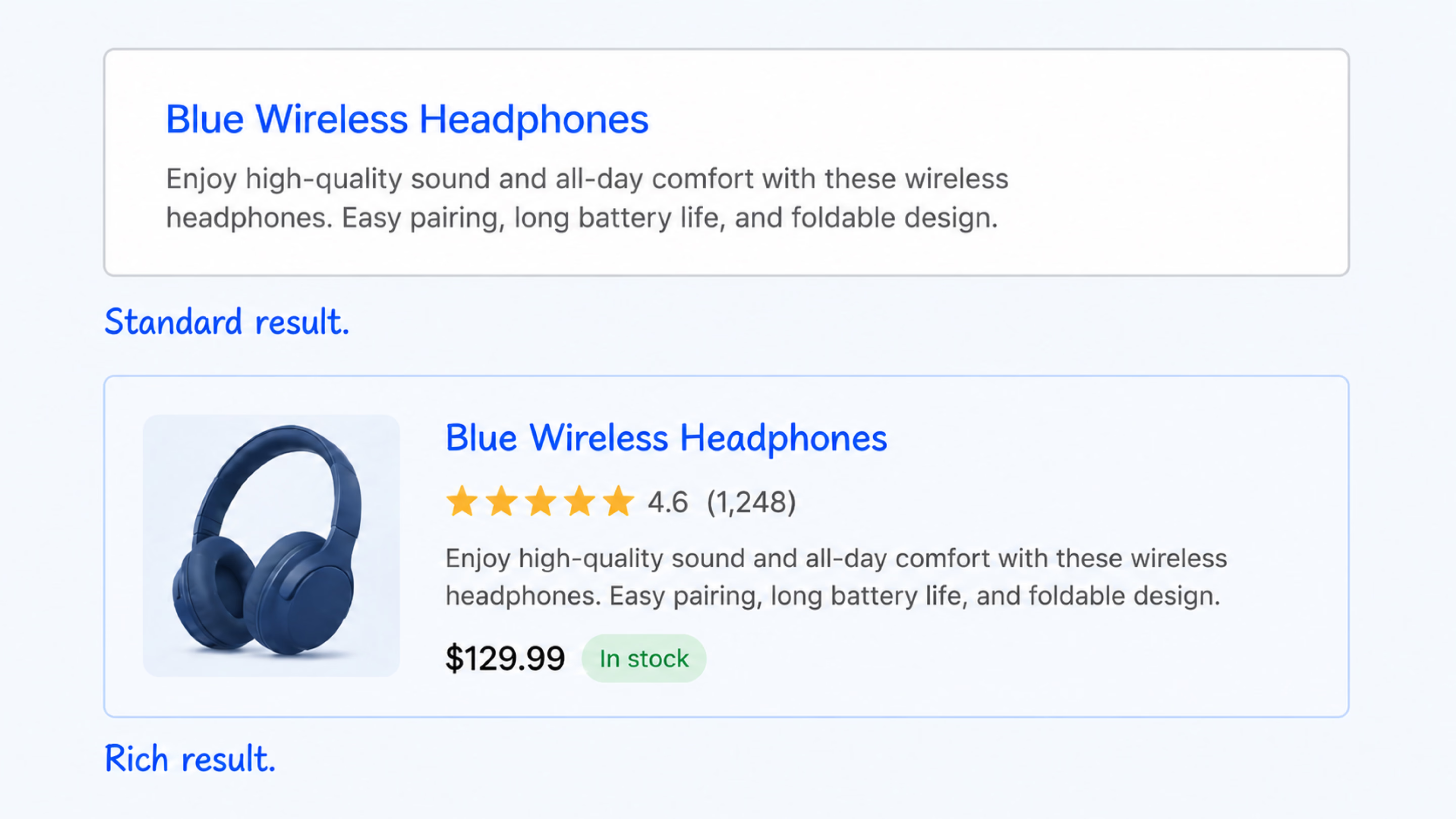
Schema markup is a form of microdata that helps search engines parse and display your content more effectively. For SEO for e-commerce, implementing Product Schema is non-negotiable as it enables rich snippets, which display price, availability, and star ratings directly in the search results.
Beyond product data, you should also implement the BreadcrumbList schema to clarify site structure and the Organization schema to establish brand authority. Validating your code using Google’s Rich Results Test ensures that these enhancements are eligible to appear, significantly increasing your click-through rate by making your listing visually distinct from competitors.
Boost SEO with customer reviews
User-generated content serves as a continuous stream of fresh, unique text that signals to Google that your page is active and relevant. Reviews naturally contain long-tail keywords and semantic variations phrased exactly as customers speak, which helps you rank for terms you might not have thought to target.
Beyond the SEO benefits, displaying positive feedback builds social proof, while responding to negative reviews demonstrates active customer service. You should actively encourage buyers to leave detailed feedback and mark up these reviews with aggregate rating Schema to ensure those valuable yellow stars appear in search results.
Content marketing that drives sales
Blogging acts as the bridge between informational searches and transactional pages. It captures users who are not yet ready to buy but are looking for solutions.
By addressing specific customer pain points before the transaction, you establish trust and position your brand as an industry authority. This strategy keeps your store top-of-mind, ensuring that when the user decides to purchase, they choose the expert who helped them solve their problem.
Create blog posts that attract and educate
An effective blog strategy involves developing a content calendar based on specific customer pain points. If you sell camping gear, you should write utility-focused guides like “How to pitch a tent in the rain” or “Camping checklist for families” rather than just announcing a new product line.
These articles serve as entry points for top-of-funnel traffic, allowing you to link directly to relevant products using descriptive anchor text. The internal linking structure passes authority from your educational content to your commercial pages, establishing your brand as a helpful resource and funneling qualified traffic to your shop.
Use visuals, videos, and interactive content
High-quality photography and video demos are essential for reducing return rates by managing customer expectations before the purchase. Embedding product demos hosted on third-party platforms prevents server slowdowns while keeping users engaged on the page.
To further increase dwell time — a key engagement signal for Google — consider adding interactive elements like 360-degree product views, size calculators, or personalization quizzes such as “Find your perfect skin tone match.” These tools transform a passive browsing experience into an active one, signaling to search engines that users find high value in your specific page.
Optimize content for AI and generative search
Search is evolving rapidly with the introduction of AI Overviews (AEO) and Generative Engine Optimization (GEO), where algorithms prioritize direct, synthesized answers over blue links. To optimize for this, you must structure your content to answer questions concisely immediately after the heading, using clear, factual language.
Utilizing data tables, bulleted lists, and logical formatting makes it easier for AI models to extract, understand, and feature your information as the primary source. Building content with high E-E-A-T (Experience, Expertise, Authoritativeness, and Trustworthiness) signals is now critical to being cited by these new search experiences.

Link building and digital PR for e-commerce
Backlinks (votes of confidence from other sites) remain one of the strongest ranking signals. Earning them requires creativity, as few people naturally link to product pages.
Most publishers prefer to reference informative resources rather than transactional URLs, forcing you to develop high-value content that acts as a magnet for these citations. Without the external validation, even a technically perfect site will struggle to outrank competitors who possess a stronger portfolio of domain authority.
Get links through unique brand stories
Journalists and publishers are constantly looking for compelling narratives, not just press releases about new inventory. Whether you launched a sustainable product line using novel materials or built the business around a genuinely uncommon founding story, pitching these angles to industry publications can yield high-value mentions.
A single link from a high-authority news site via Digital PR passes significantly more domain authority than hundreds of low-quality directory links. This approach builds brand recognition while simultaneously sending powerful off-page signals to Google that your store is a credible entity in your market.
Work with influencers and partners
Collaborating with influencers in your niche offers a dual benefit of social reach and SEO value. When they blog about your product or feature it in a “Top 10” list, you should explicitly ask for a do-follow link back to your specific product or category page.
To ensure these links are natural and add value to their audience, provide influencers with unique insights or assets they can use in their content. Offering unique discount codes can also encourage them to link directly to specific landing pages, driving referral traffic that is highly likely to convert.
Use resource pages and gift guides
Many websites exist solely to curate lists for specific audiences, such as “Best Gifts for Hikers,” “Top Office Accessories for 2024,” or “Must-Have Kitchen Gadgets.” These resource pages and gift guides are often highly authoritative and rank well for commercial intent keywords.
You can capture this value by identifying these publishers and reaching out to the editors to suggest your product for inclusion. By framing your outreach as a way to update their content with the latest and best options, you increase the likelihood of earning a placement that drives highly qualified referral traffic.
Local and international SEO
Your e-commerce website SEO approach changes drastically depending on whether you are trying to drive foot traffic to a boutique or ship products across borders. These two strategies require fundamentally different technical configurations and content signals to be effective.
Local SEO for physical stores
If you have a brick-and-mortar shop, claiming and verifying your Google Business Profile (GBP) is the foundational step for local visibility. You must ensure your Name, Address, and Phone number (NAP) are consistent across all directory listings to avoid confusing search algorithms.
Additionally, creating location-specific landing pages for each store, such as “Shoe Store in Brooklyn,” allows you to capture “near me” searches effectively. You can use our local SEO tips to ensure your physical footprint drives digital traffic.
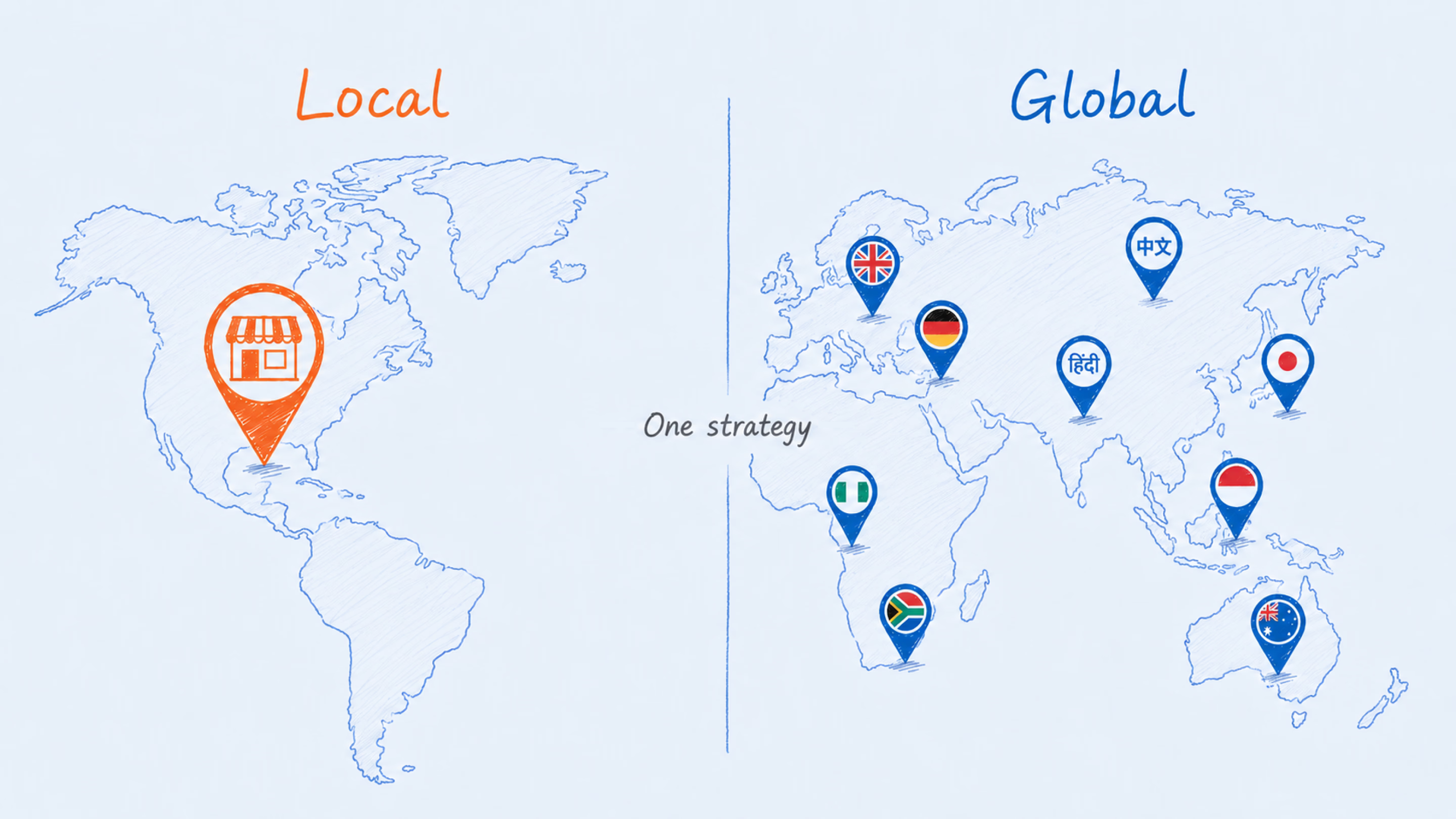
SEO for international and multilingual sites
Expanding globally requires technical precision to ensure the right users see the right version of your store. Use hreflang tags to explicitly tell Google which language and regional version of a page to show in which country.
It is also critical to ensure users see prices in their local currency automatically or via a clear switcher to reduce friction. Structurally, using subdirectories like site.com/fr/ is generally superior to subdomains or separate domains because it consolidates your domain authority into a single entity. Correctly implementing international SEO prevents different regional versions of your site from competing against each other in search results.
Advanced e-commerce SEO tactics
Reaching the first page of results is often a matter of technical competence, but climbing to the top position requires nuance. Once your foundation is solid, you must shift focus toward optimization strategies that compound the value of every existing visitor. These tactics move beyond simple compliance with best practices and focus on aggressive growth and revenue maximization.
Improve conversions with UX testing
Search algorithms now prioritize user satisfaction signals, meaning a site that frustrates users will eventually be demoted regardless of its keyword density. You should deploy heatmap tools like Hotjar or Microsoft Clarity to identify “rage clicks” — instances where users repeatedly click on unlinked or unresponsive elements out of frustration — and analyze scroll depth to see if crucial “Add to Cart” buttons are buried below the fold.
If users frequently return to the search results immediately after landing on your page, a behavior known as pogo-sticking, it signals to Google that your content failed to satisfy the query, necessitating an immediate review of your page layout and load times.
Scale SEO with AI and automation
For stores with massive inventories, writing a unique copy manually for every item is mathematically impossible. You should leverage programmatic SEO to build thousands of landing pages targeting specific attribute combinations, such as “blue cotton summer dress,” using structured data to populate the content dynamically.
While AI tools can generate the initial draft of product descriptions at scale, human editors must refine the tone to prevent a robotic brand voice, ensuring that efficiency does not come at the cost of conversion. Additionally, automating meta tag generation using variables — such as [Product Name] - Buy for [Price] at [Brand] — ensures that every new product launches with immediate optimization.
Measure SEO success in e-commerce
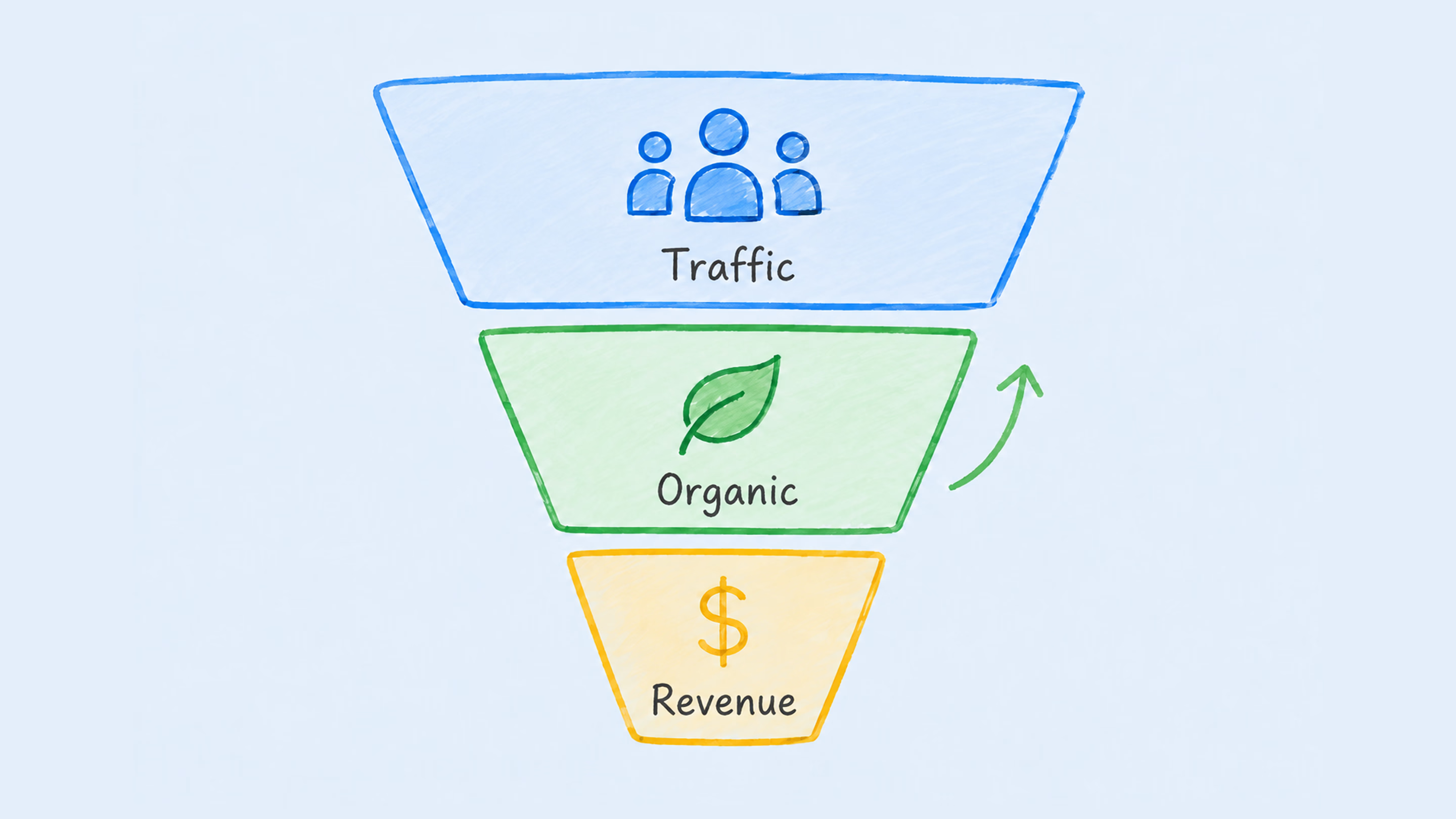
Tracking keyword positions feels rewarding, but tells you little about the financial health of your business. True measurement requires looking beyond the traffic graph to understand how organic search contributes to the bottom line. You must shift your reporting mindset from “how many people visited” to “how much value did we capture.”
The numbers behind a well-executed e-commerce SEO strategy are best understood through a real example rather than projections. One of Halo Lab’s e-commerce clients — a top marketplace seller generating less than 5% of revenue from their own website — had the product, the inventory, and the demand. What was missing was the infrastructure: indexing gaps, weak content architecture around priority categories, and no organic presence for the queries their customers were actually using.
Addressing each layer in sequence shifted that ratio entirely. Within 12 months, the website matched marketplace order volume during peak season, with nearly 50% of sales coming from Google. For those who want to see the sequencing and decisions behind these results, the case study walks through it in detail.
Track revenue and customer value
To see the real picture, you must integrate Google Search Console with Google Analytics 4 (GA4) and move beyond default “Last Click” attribution models, which often undervalue SEO. Analyze the “Assisted Conversions” report to identify high-traffic blog posts that introduce the brand to new customers who convert days later via direct traffic.
Furthermore, segmenting your data to compare the Lifetime Value (LTV) of organic customers versus paid acquisition reveals the long-term ROI of your SEO investment, often proving that organic buyers are more loyal and profitable over time.
Keep testing and improving
The search landscape is dynamic, and a static strategy is a declining one. You should implement SEO split-testing by grouping similar product pages and changing variables — like title tag structures or content layouts — on half of them to measure the impact on organic traffic.
This scientific approach allows you to roll out proven optimizations across your entire site, systematically outmaneuvering competitors who rely on guesswork. Continued experimentation with content formats, such as adding video reviews or comparison tables, keeps your pages fresh and engaging for both users and bots.
E-commerce SEO tools to help you track your results
Managing an online store requires more than intuition; it demands precision. Without the right software, keyword opportunities, technical errors, and revenue attribution remain largely invisible.
A proper stack allows you to automate repetitive tasks and visualize complex data, turning raw numbers into actionable strategies. The following categories represent the essential software required to monitor and improve your search performance.
Keyword research tools
Understanding market demand starts with data, not guesswork. You need to identify exactly what your potential customers are typing into search engines and how difficult it will be to rank for those terms.
Ahrefs and Semrush stand as the industry standards for this purpose. They offer deep competitive intelligence, allowing you to analyze competitors’ top-performing pages and reverse-engineer their traffic strategy.
For smaller stores or startups operating on a leaner budget, Ubersuggest provides a simplified but effective interface to identify low-hanging fruit and long-tail opportunities without the enterprise-level price tag.
Technical SEO tools
These applications are designed to crawl your website exactly like a search engine spider, identifying the structural weaknesses that prevent you from ranking. Screaming Frog is the most versatile tool in this category, a desktop-based crawler that allows you to audit thousands of URLs to find broken links, missing meta tags, and redirect loops.
For those who need to explain complex architecture to non-technical stakeholders, Sitebulb offers excellent data visualizations that map out your internal linking structure. If you are managing a massive enterprise site with millions of pages, DeepCrawl (Lumar) provides a cloud-based solution that monitors your technical health continuously without slowing down your local machine.
Analytics & tracking tools
Data is your eyes and ears. While other tools help you execute work, these tools tell you if that work is generating revenue. The Google ecosystem provides the definitive source of truth for your traffic and performance data. To maintain a clear view of your store’s health, you should integrate the following core platforms into your workflow:
- Google Analytics 4 (GA4): This is the engine of your data strategy. It tracks user behavior, conversion events, and revenue attribution, telling you exactly how much money your organic traffic is generating.
- Google Search Console (GSC): This is the only tool that provides direct feedback from Google. It alerts you to indexing errors and penalties, and shows the exact keywords driving clicks to your site.
- Looker Studio: This visualization tool pulls data from GA4 and GSC to create automated, easy-to-read reports for stakeholders, saving you hours of manual reporting time.
For teams that find the transition to the new tracking environment complex, professional Google Analytics consulting can ensure your tracking pixel is firing correctly and your revenue data is accurate.
Content optimization tools
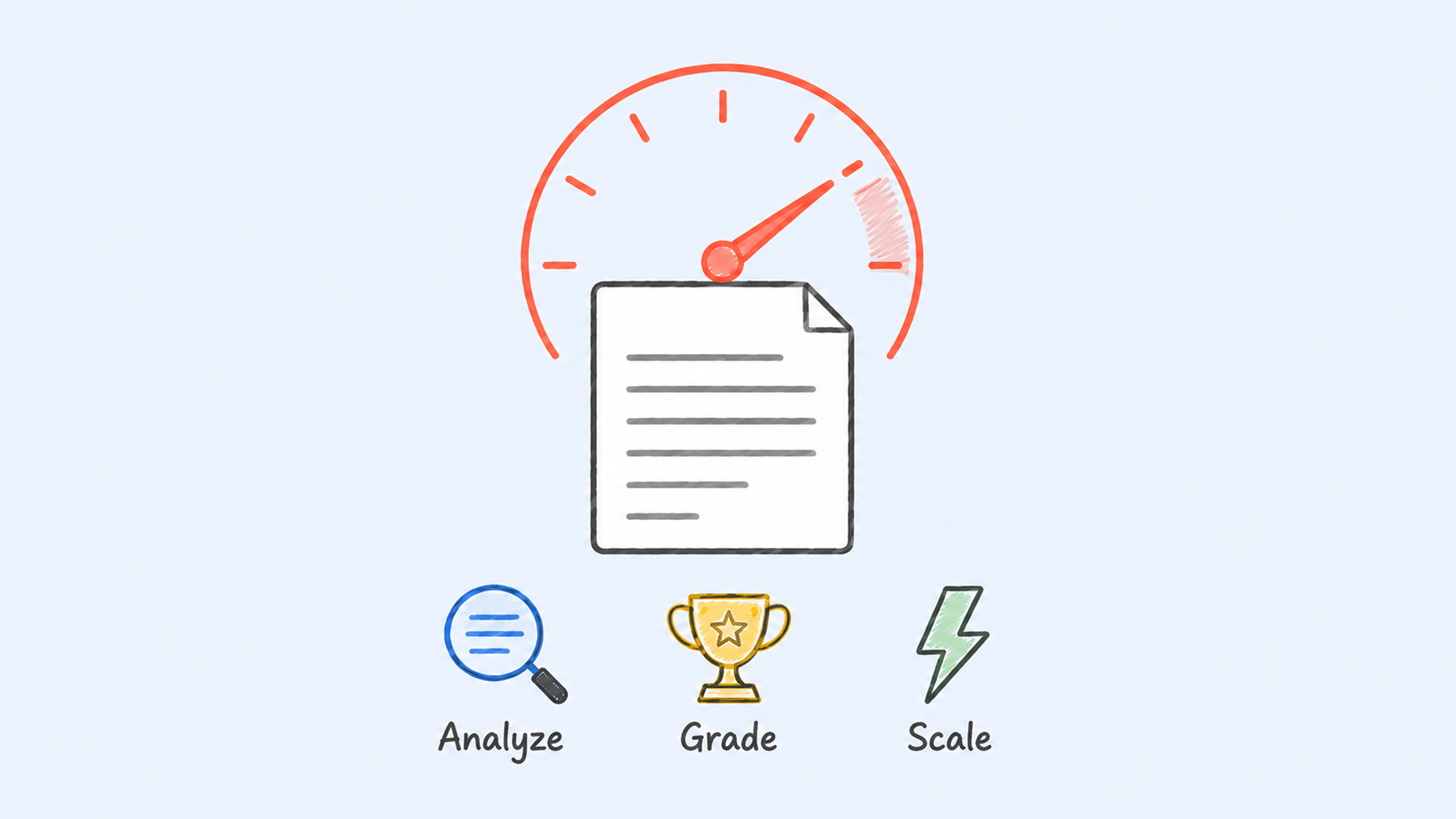
Writing content that ranks requires satisfying semantic relevance, which means covering a topic as comprehensively as the top-ranking results. SurferSEO analyzes the top 10 results for your target keyword and provides a specific recipe of terms and word counts you need to match to compete.
Clearscope focuses heavily on content grading, ensuring your writers are using the right entities and vocabulary to demonstrate expertise. For teams needing to scale production, Frase utilizes AI to generate detailed content briefs and outlines, ensuring your writers hit the ground running with a clear structure.
All-in-one SEO platforms
Sometimes you need a centralized dashboard to monitor the overall pulse of your campaign. Moz is famous for its “Domain Authority” metric, a useful benchmark for understanding your site’s credibility relative to competitors.
SE Ranking offers a versatile and cost-effective alternative, providing accurate keyword rank tracking, site auditing, and competitor analysis in a single interface. These platforms are essential for tracking your progress over time and spotting sudden drops in visibility before they impact your bottom line.
Final thoughts
Mastering SEO for e-commerce site architecture and content is a long-term investment. It requires patience, technical skill, and a relentless focus on the user. Do not look for shortcuts. Focus on building a high-quality store that deserves to rank.
When you align your business goals with the needs of your customers, search engines will follow. Start with your technical foundation. Fix the errors. Build content that answers real questions. Earn authority through genuine relationships. The traffic — and the sales — will come.
At Halo Lab, we approach search visibility as a structural decision — not a marketing afterthought — and it’s a distinction that tends to matter most at the moment a brand decides to scale.
{{banner-3}}
FAQ
How long does e-commerce SEO take to work?
It typically takes 3 to 6 months to see significant movement. Technical fixes can show results faster, while authority building takes longer.
Can small stores compete with big brands in SEO?
Yes. Big brands often move slowly and have technical debt. Small stores can win by targeting specific long-tail niches and providing better local experiences.
What’s the best way to optimize thousands of product pages?
Prioritize your top 20% of products that drive 80% of revenue. For the rest, use template-based optimization and programmatic SEO strategies.
Should I prioritize SEO or paid ads when starting out?
Do both. Paid ads provide immediate data and cash flow. SEO builds long-term asset value. Use ads to test keywords, then target the winners organically.
How do I measure ROI from e-commerce SEO?
Calculate the cost of your SEO efforts (agency fees, tools, content creation). Compare this against the Organic Revenue reported in GA4. The formula is: (Organic Revenue - Cost) / Cost.