




If you have ever looked up “best coffee shops in Austin” or “how to convert USD to EUR,” your search results would likely be a page generated not by a writer, but by a database. At its core lies programmatic SEO.


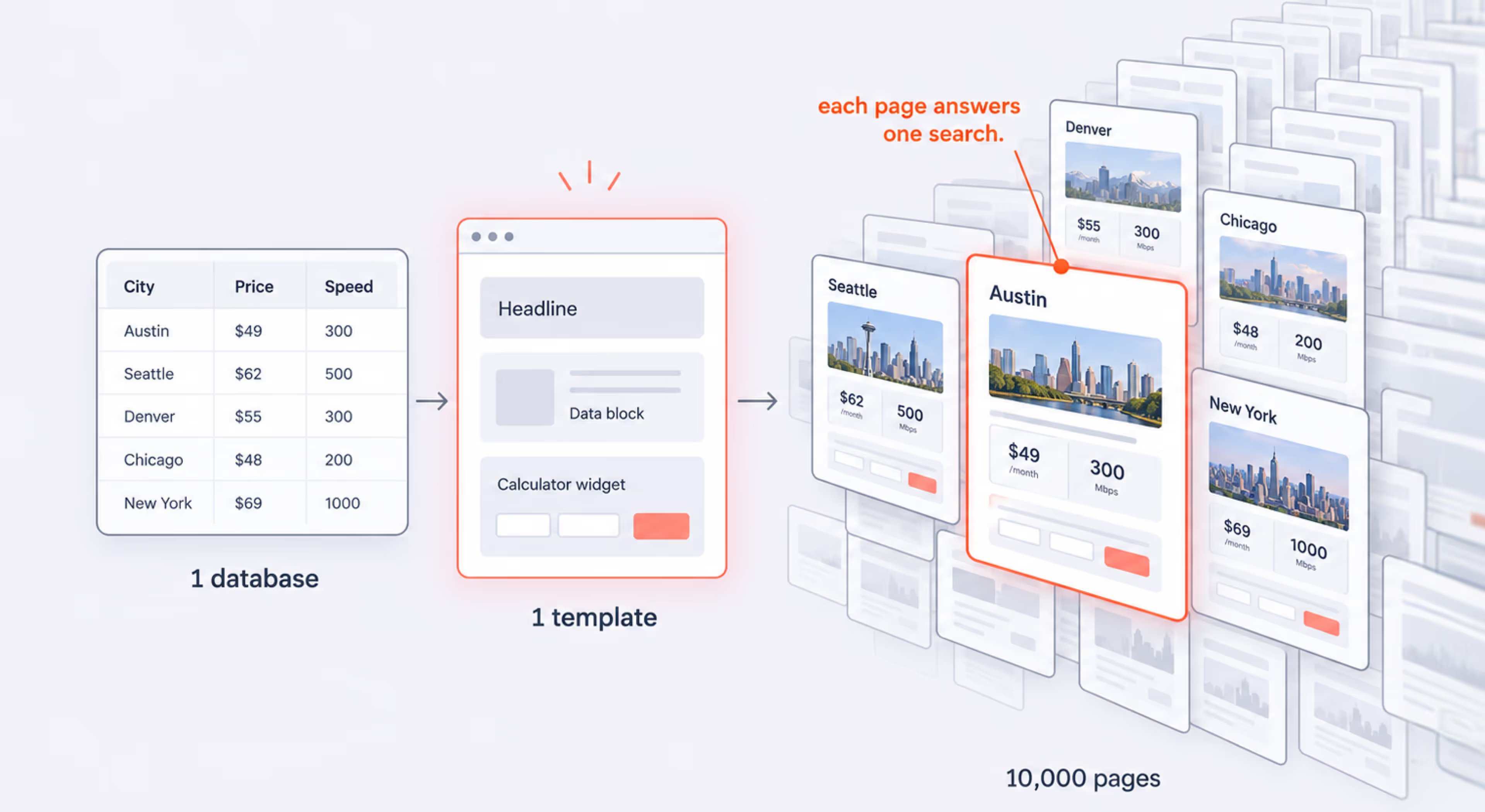
Traditional content production scales linearly — more pages require more writers, bigger budgets, and longer timelines. When your growth relies on capturing thousands of hyper-specific search queries, the traditional model breaks down. This is where programmatic SEO changes the economics. By combining structured data with templates, companies can automatically build large sets of targeted, high-utility landing pages. Instead of writing 5,000 distinct articles for 5,000 different cities or currency pairs, a team creates a single dynamic layout and populates it from a database.
In this article, we’ll explain how brands use automation, its benefits and drawbacks as well as the place of automated pages in a search landscape reshaped by AI answers.
What is programmatic SEO & why it matters today
Programmatic SEO is the practice of addressing large-scale search demand by generating thousands of data-driven web pages from templates and structured databases. Instead of treating every URL as a standalone editorial project, this method treats content generation as a software engineering and database challenge.
According to recent Ahrefs data, almost 93% of keywords in its U.S. database get fewer than 10 searches per month. That means the search landscape is dominated by low-volume queries, like “real estate software with CRM for small teams in Chicago.” Since they don’t get many searches, they can’t justify a hand-written page, but they’re well suited to template-driven content. Programmatic systems allow brands to satisfy these specific, low-competition searches at a scale manual publishing cannot match.
The second reason programmatic SEO matters now is that AI answers have changed what long-tail traffic is worth. Pew Research Center found that when Google shows an AI summary, users click a traditional result in 8% of visits, against 15% when no summary appears.
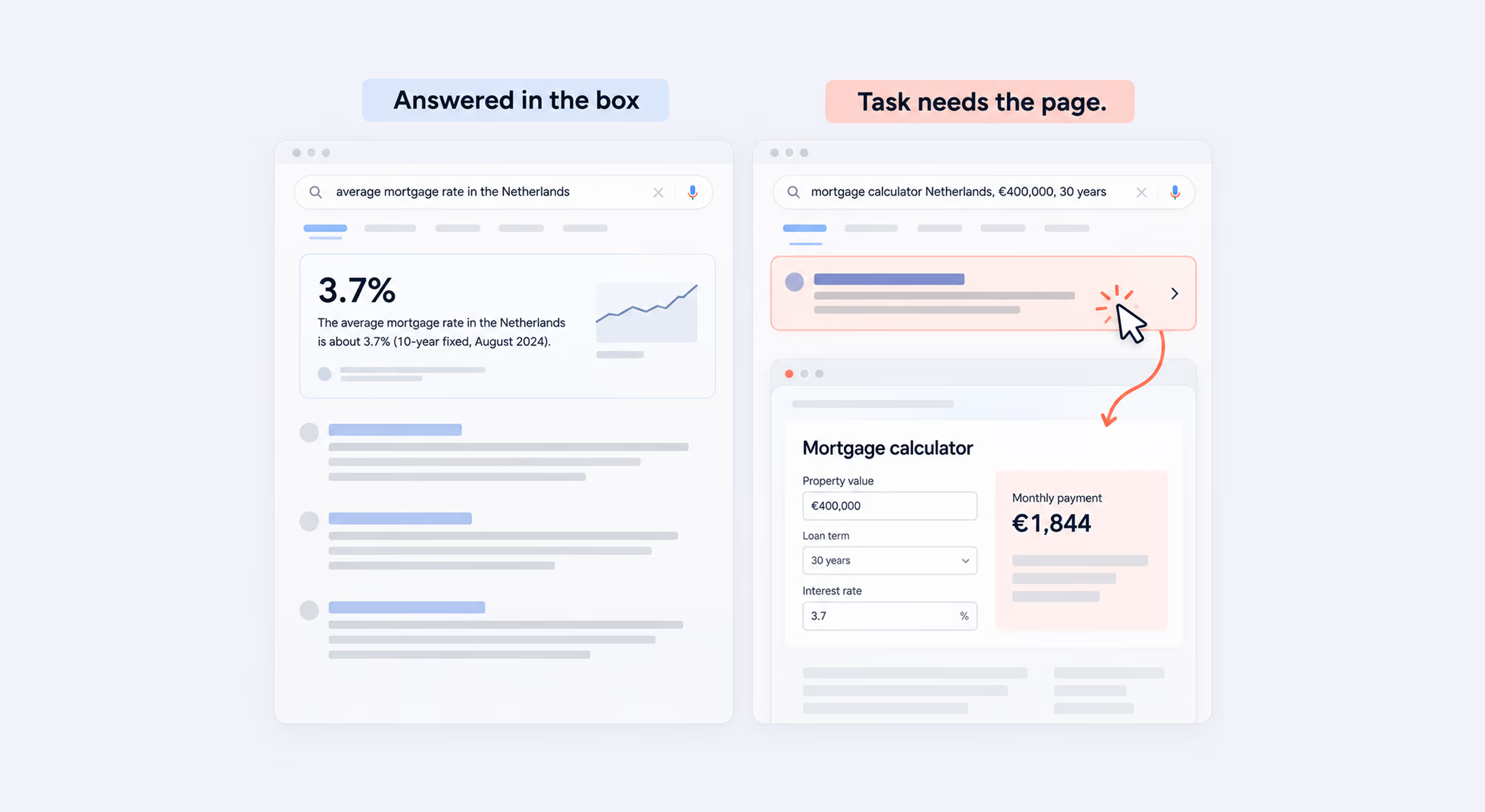
Question-style searches trigger summaries most often, so a query like “average mortgage rate in the Netherlands” is losing clicks to the answer box. A query like “mortgage calculator Netherlands, €450,000, 35 years” still earns the visit: the searcher brings their own numbers, and an AI summary offers the range and links to the tools that can provide the exact numbers. For programmatic SEO, that second query is the template — one calculator page multiplied across countries, amounts, and terms covers thousands of such searches.
How programmatic SEO differs from traditional SEO
Traditional search engine optimization relies on human-centric, editorial execution. A content manager researches keywords, assigns an article to a writer, reviews the draft, adds media, and publishes the piece through a content management system (CMS). This process is ideal for narrative content, opinion pieces, how-to guides, and thought leadership.
The table below highlights the operational differences between traditional and programmatic SEO:
| Operational Metric | Traditional SEO | Programmatic SEO |
|---|---|---|
| Primary Content Source | Human writers, subjective research | Structured databases, APIs, proprietary data |
| Production Speed | 1–5 pages per week per writer | Thousands of pages at once |
| Target Keyword Focus | High-volume, broad short-tail keywords | Low-volume, hyper-specific long-tail keywords |
| Tech Stack Complexity | Standard CMS (WordPress, Webflow) | Custom databases, data pipelines, automated scripts |
| Primary Investment | Ongoing freelance or in-house writer fees | Upfront technical design and data collection |
When programmatic SEO is the right approach for a brand
This automated strategy is only one of the possible SEO services available today, so obviously it doesn’t suit every business model. It requires a specific type of search demand to justify the initial technical setup. If your target audience searches for your product using predictable variations (locations, price points, integrations, or comparative metrics), automation becomes highly viable.
If you run a localized service business operating across hundreds of zip codes, or an analytics platform that tracks thousands of data points, building programmatic pages makes sense. Conversely, if your business relies on emotional storytelling or subjective consulting services, editorial methods remain superior.
What programmatic SEO is NOT
Programmatic optimization is not a system for churning out web spam, and Google’s spam policies name the failure modes directly. The policy defines scaled content abuse as pages “generated for the primary purpose of manipulating search rankings and not helping users” — and states that it applies however the pages are produced. The same document covers doorway abuse: near-identical pages created to rank for similar queries while funneling users somewhere else.
One distinction matters here: using structured public data such as prices, coordinates, or specifications is generally fine. Copying descriptions or other prose from websites into your own templates can be treated as scraped-content spam. In short, use the data, but write the sentences yourself.
This methodology focuses on building structured utility. If a page lacks unique data points, interactive elements, or clear organization, it falls into the category of web doorway pages.
True programmatic SEO is about data democratization
Programmatic SEO vs. AI-Generated Content
With the rise of large language models (LLMs), many marketers confuse programmatic content with mass AI writing. While both utilize technology to accelerate output, their core mechanisms and purposes are different.
AI-generated content relies on probabilistic models to write long-form prose. An LLM predicts the next logical word to create articles that look like human writing, which makes factual errors and repetitive phrasing a constant editing burden. Google actually says that ranking systems reward quality regardless of how content is produced. The risk is not “AI detection” but producing unhelpful pages at scale.
Programmatic page generation, by contrast, turns to deterministic data. You pull exact figures, facts, coordinates, or user reviews directly from a verified database into a fixed design layout. Human copywriters hard-code the text around the data to ensure brand safety, accurate grammar, and structural integrity. AI can vary minor descriptive sentences within a programmatic database, but the core page foundation remains anchored in solid, verifiable facts rather than generative guessing.
Programmatic SEO examples
Programmatic SEO can take very different forms depending on the product and search intent. Here are four examples:
Nomad List — scalable city & location pages
Nomad List shows how far one person can take a database. Founder Pieter Levels started it in 2014 as a public spreadsheet during his “12 startups in 12 months” challenge, then turned it into a platform ranking cities for remote workers by cost of living, internet speed, safety, and weather.
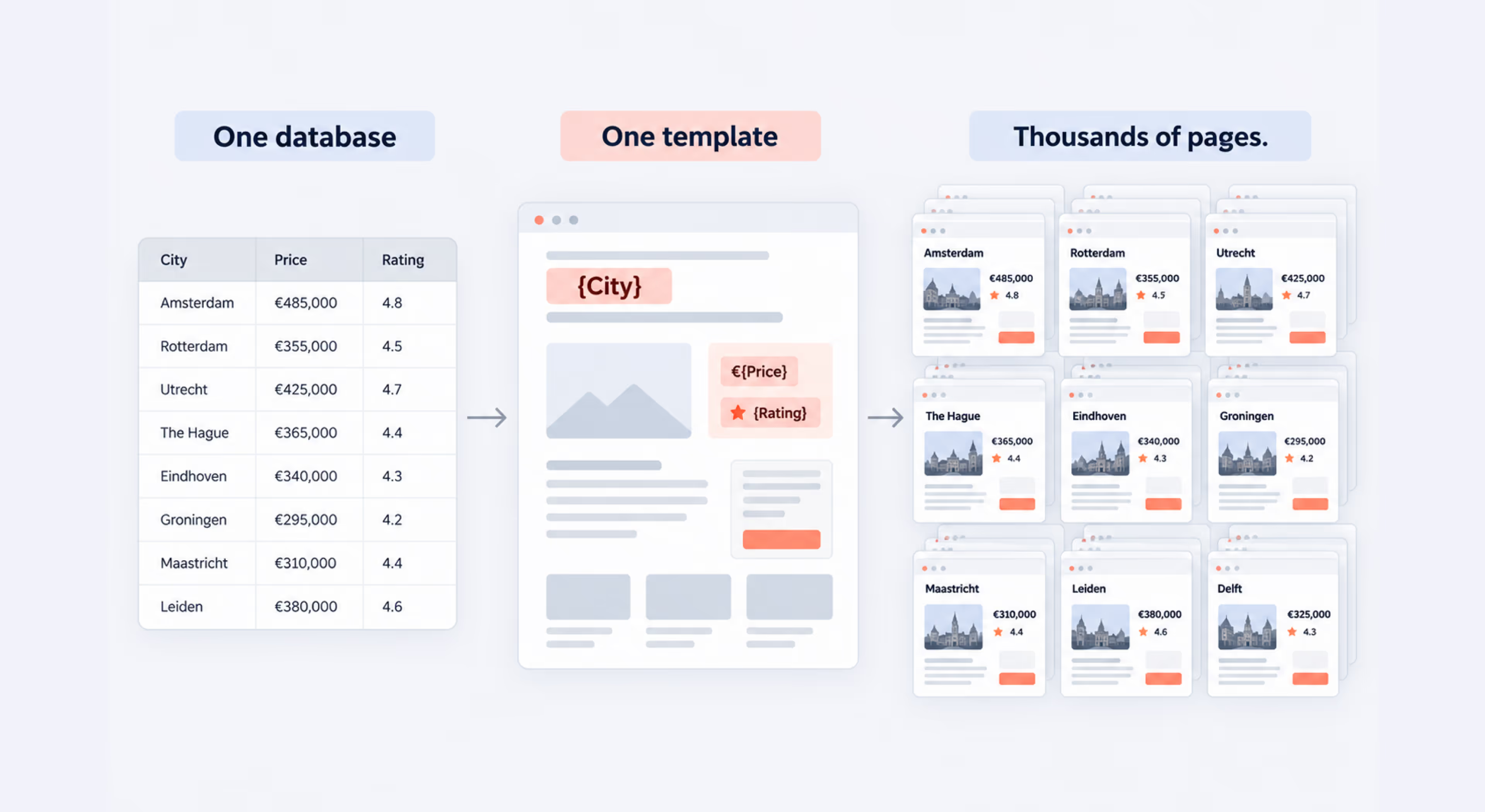
Each city page on Nomad List utilizes the same layout. The unique value comes from the dynamic data injected into that template. A user searching for “cost of living for digital nomads in Berlin” finds a highly accurate, structured layout that updates in real time based on user inputs. This structure allowed a single developer to scale web traffic to millions of visits without an editorial team.
Webflow — automated template catalog pages
Webflow uses automation to capture users searching for design frameworks. Creators submit website templates categorized by industry, style, and software type. Instead of manually building landing pages for every possible category, Webflow utilizes its own CMS architecture to generate pages automatically based on template tags. If a creator uploads a portfolio design tagged with “minimalist” and “photographer,” Webflow’s system automatically generates or updates landing pages dedicated to “minimalist photographer Webflow templates.” This matches long-tail search terms perfectly while populating the page with real, transactional products.
Wise — currency conversion & rate pages at scale
Wise (formerly TransferWise) scaled its global footprint by targeting currency exchange combinations. Consumers search for specific pairs like “convert 500 USD to EUR” or “GBP to INR exchange rate.” Wise pulls live exchange rates into thousands of dedicated pages, each with a live calculator, historical charts, and fee breakdowns. These pages also hold up well against the AI-answer filter: a quick AI response may provide the current conversion, but Wise adds interactive rates, historical context, fee details, and a direct path to transferring money.
Our case — programmatic pages with editorial content
The trade-off between scale and quality is real, and our own closest project shows one way to resolve it. For a new online games catalog, we built the search presence around a scalable programmatic architecture — game, tag, and category pages with templated metadata and SEO rules, plus indexing considered from pre-launch — but kept the content layer editorial. A dedicated writer played the games and wrote individual descriptions, while our editor reviewed and approved them. By the time of the case study, the team had completed 870 game descriptions, and the site had grown from a new domain with no history to around 380,000 monthly users.
{{banner}}
Benefits of programmatic SEO for growing brands
Implementing automation in your organic search strategy creates major competitive advantages, especially for companies that need to outmaneuver legacy brands with massive budgets.
Scalable content production with minimal resources
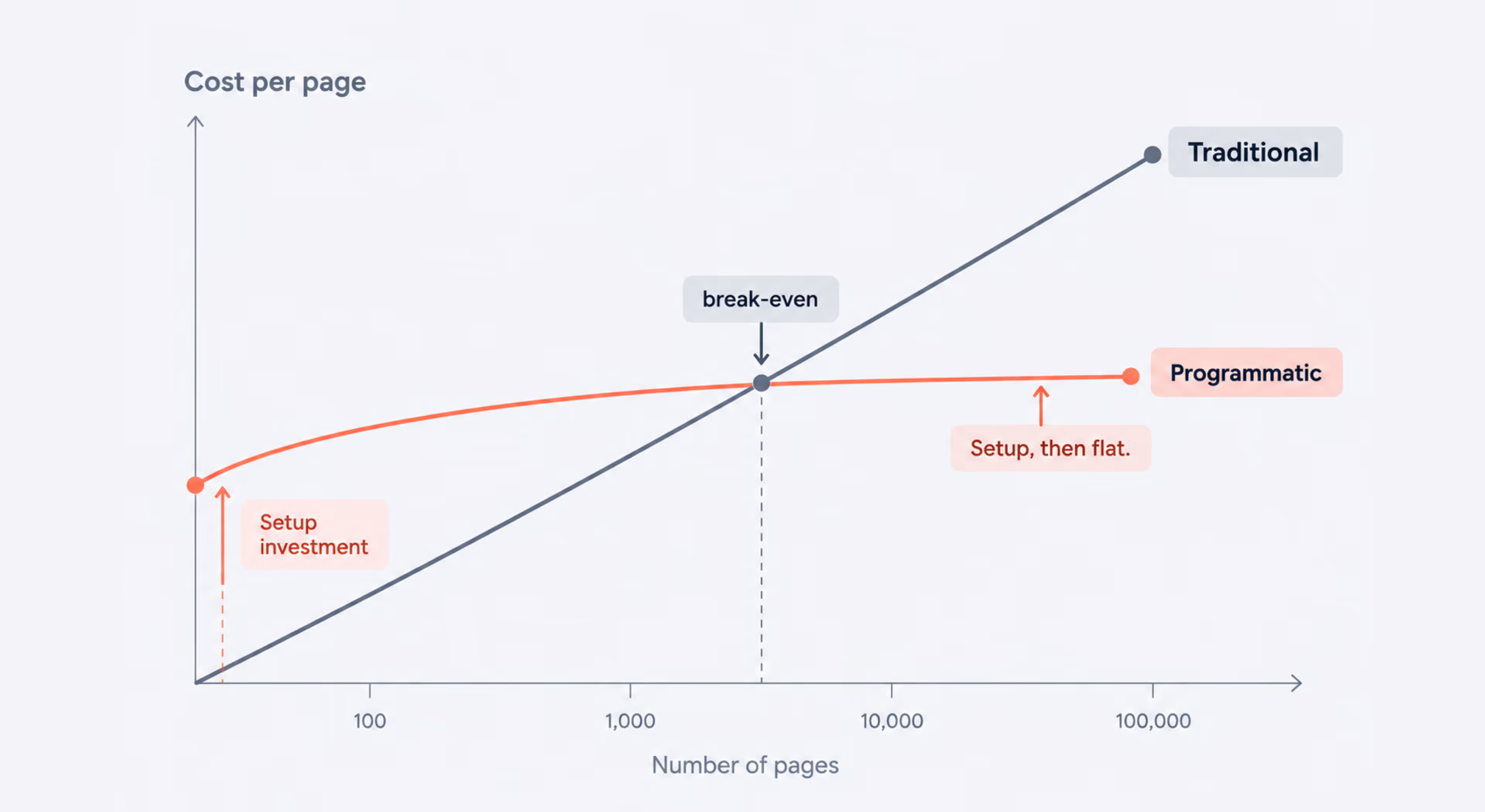
The most obvious benefit of programmatic SEO is decoupling page production from human hours. Once your engineering team sets up the initial database connections and designs the core visual layouts, creating 10,000 pages takes roughly the same operational effort as creating 10. Money goes into data collection and engineering up front instead of into per-article fees forever.
Ability to capture long-tail search demand automatically
While competitors fight over high-volume, hyper-competitive keywords like “hire developers,” a programmatic setup allows you to target thousands of variations like “hire React developers in Warsaw” or “hire Python engineers in Medellín.” These long-tail keywords are often less competitive and show stronger conversion intent.
Consistent page structure improves UX & ranking reliability
When one well-optimized template powers thousands of pages, you can refine the user experience and technical performance of that single layout. Improve mobile loading speed, fix a heading hierarchy, or optimize the CTA button on the core template, and the change rolls out across the entire set. Structural consistency also makes it easier for search engine bots to crawl, parse, and index the site.
The main challenges & risks of programmatic SEO
While the upside of mass automation is immense, poor execution can damage your domain authority. What are the common pitfalls in programmatic SEO?
Thin or duplicate content risks
If your template contains 80% static boilerplate text and only 20% unique database variables, search engine web crawlers may flag your directories as duplicate content. If a user clicks through five city pages and reads the same introductory paragraph with only the city name swapped, visibility will drop — and at sufficient scale, that pattern is what the scaled-content-abuse policy above describes.
Data accuracy and freshness issues
Automated pages are only as reliable as the underlying data source. Outdated information, stale pricing, or broken links degrade the experience instantly. For example, a programmatic job board displaying expired roles will frustrate users and burn the trust the domain needs for its other pages.
Template overuse leading to low engagement
When thousands of pages look identical, a site can feel like an unhelpful aggregator, and users leave without converting. The fix is blending interactive elements — filters, maps, charts, calculators — directly into the template layout, which also keeps the pages useful in ways an AI summary cannot replicate.
Potential for algorithmic penalties if misused
Search engines have grown incredibly sophisticated at detecting mass-produced pages that exist solely to host ads or capture affiliate clicks without adding value. If your site deploys thousands of URLs overnight without clean internal linking, clear navigation, or genuine utility, you risk triggering spam-policy enforcement — algorithmic or manual — that can suppress the entire domain’s organic presence.
How to build a successful programmatic SEO framework
Building a scalable programmatic SEO framework requires a systematic approach blending marketing insight with engineering execution. Below is the step-by-step methodology for building a reliable system.
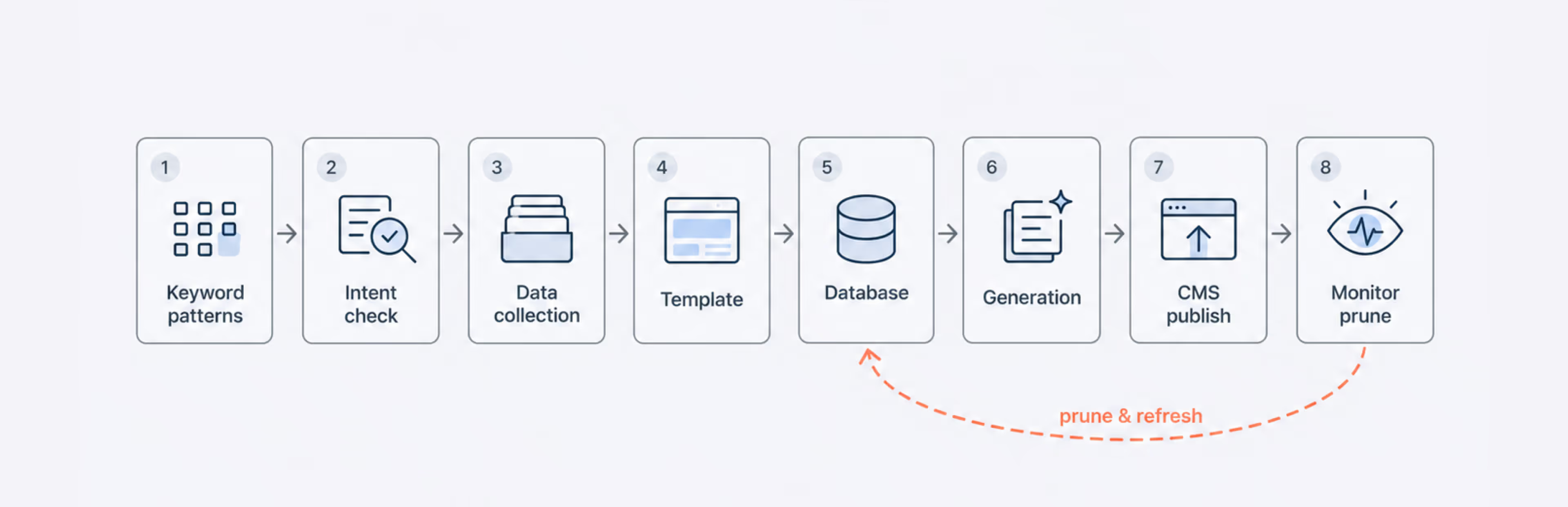
Step 1 — perform keyword research that scales
Traditional keyword research involves looking for individual terms. Programmatic research focuses on finding patterns. With the help of keyword research services, identify a core head term and combine it with modifiers users search for repeatedly across categories.
- Head Term: “Dog-friendly hotels in…”
- Modifier/Variable: “...[City Name]”
By identifying a pattern with hundreds of geographic or categorical variables, you confirm the structural viability of your project.
Step 2 — validate search intent
Before writing code, analyze the existing search engine results pages (SERPs) for your target modifiers. Do users want a long editorial narrative, or do they want quick, structured, visual comparisons? If the top results all feature interactive directories, maps, and bulleted data points, the keyword pattern is an excellent candidate for automation. If the top results are deeply personal essays, automation will fail to rank. Also check whether an AI summary already answers the query outright. In case it does, and your page would add no tool or transaction, the pattern may earn impressions but few clicks.
Step 3 — identify and collect structured data
Once you validate the keyword pattern, secure your information source. You can gather data through three primary methods:
- Proprietary Data: Internal metrics, user behavior stats, or customer survey results unique to your brand.
- Public/Third-Party APIs: Connecting to live data sources like weather networks, financial exchanges, or public flight databases.
- Web Scraping & Aggregation: Lawfully gathering public information from various directories and cleansing it into a structured format.
Step 4 — design a page template
Your design template must be visually engaging and easy to scan. A good programmatic template includes a mixture of static elements (brand storytelling, baseline explanations) and dynamic elements (the specific metrics pulled from your database row). Ensure that your heading hierarchy (H1, H2, H3 tags) uses your keywords naturally based on the current database row variables.
Step 5 — build a content database
Organize your collected information into a clean matrix using tools like Airtable, PostgreSQL, or Google Sheets for smaller tests. Each row represents a unique future URL, while each column represents a dynamic variable injected into the page template. If you’re on the custom-build path, our guide to Supabase backends shows how to stand up a PostgreSQL database this pipeline can query.
Step 6 — generate pages using automation or no-code tools
With your database built, use programmatic tools to connect your information to your design templates. For non-technical teams, no-code integrations like Zapier, Make, or Whalesync can map Airtable rows directly into Webflow or WordPress collections. For larger enterprise setups, custom scripts can parse JSON files and generate static HTML pages automatically via GitHub pipelines.
Step 7 — connect the database to your CMS and publish pages
Import your mapped fields directly into your CMS. When you do this, don’t publish thousands of unverified pages at once. Start with a small batch of 50 to 100 pages first. This allows you to verify that images render properly, formatting remains clean, and meta titles generate without breaking character limits.
Step 8 — test, monitor, and improve performance
Once your initial batches are live, track how indexation progresses within search consoles. Monitor impressions and indexed-page counts first, then engagement and conversions, to confirm users find value. Expect performance to be uneven across the site too: many pages will earn few or no impressions, and pruning or consolidating them is part of the job.
{{banner-2}}
Technical SEO foundations for programmatic pages
When your site grows by thousands of pages overnight, you must guide search engine bots efficiently. Programmatic growth amplifies technical SEO mistakes, so the core technical SEO principles need to be in place from the start:
- Crawl Budget Optimization: Avoid wasting search bot resources on useless pages. Use your robots.txt file to block crawling on internal search results, filter combinations, or incomplete drafts.
- Clean Internal Linking Architecture: Search bots discover web pages by following links. If an automated page isn’t linked from anywhere else on your site, it becomes an “orphan page” and won’t rank. Create robust hub pages, HTML sitemaps, and breadcrumb navigation links to distribute authority evenly across your programmatic pages.
- Dynamic XML Sitemaps: Ensure your sitemaps update automatically as you add new rows to your database. Split massive sitemaps into smaller chunks (maximum 50,000 URLs per single sitemap file) to keep them highly accessible for search engines.
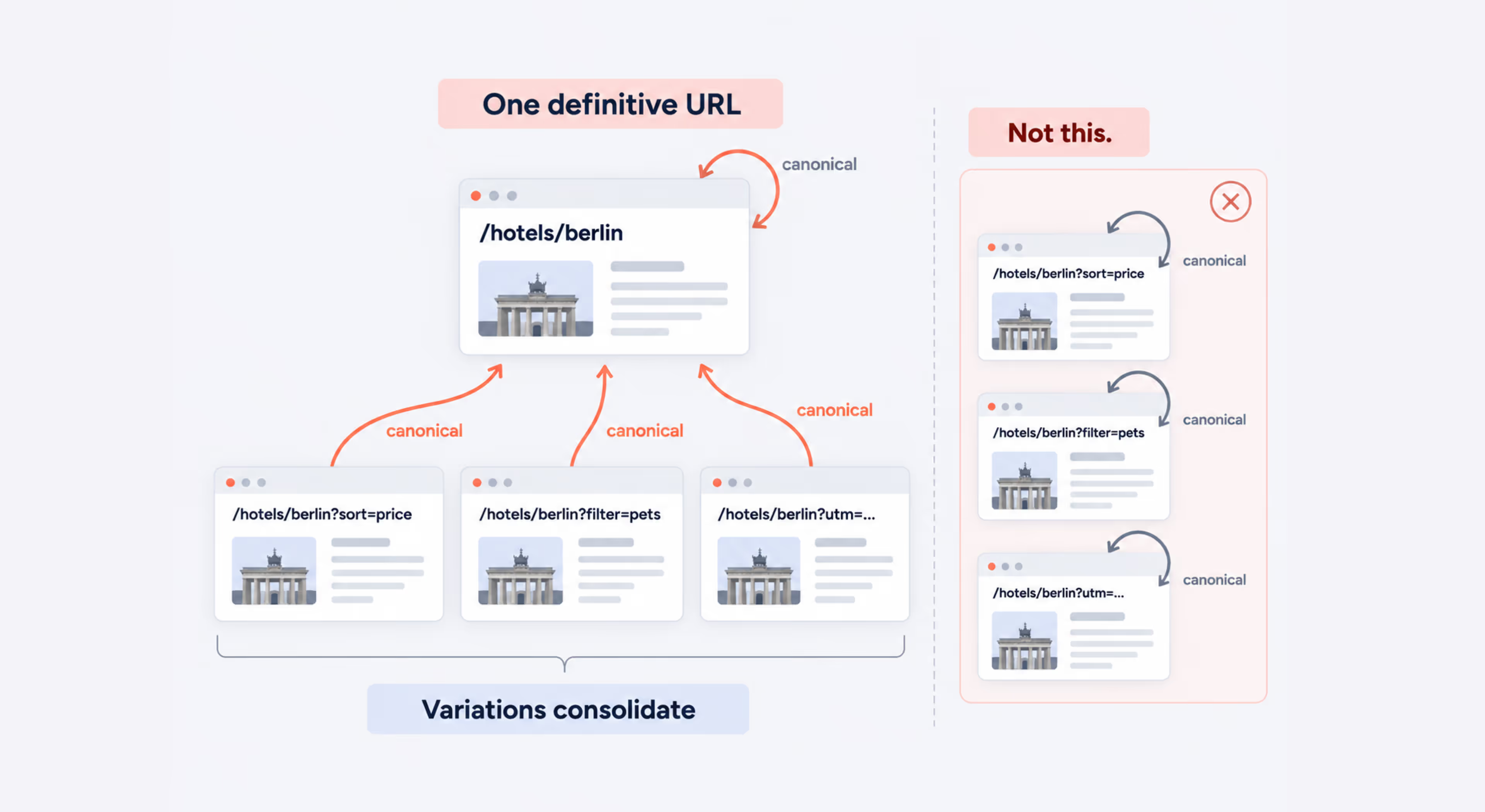
- Canonical tags that consolidate: The clean version of each page carries a self-referencing canonical; every parameter variation of it (sort orders, filters, tracking parameters) must point its canonical back to that clean URL. Give each variation a self-referencing canonical, and you’ve told Google every variation is definitive.
Who programmatic SEO works best for
While highly effective, this programmatic SEO thrives best within specific business sectors built on clear classification systems, such as:
- Marketplaces & Aggregators: platforms listing jobs, rentals, real estate, or local services across geographic areas.
- B2B SaaS Businesses: software with extensive integrations, comparison pages (“Alternative to X”), or template libraries.
- Financial & Data Calculators: live currency conversion, tax estimators, salary benchmarks, pricing directories.
- Travel & Hospitality Networks: hotel availability, local highlights, weather histories, flight routes.
Scale pages that deserve to exist
Increasing your brand’s digital visibility does not require an army of writers to produce articles manually. By turning your search strategy into a data-driven system, programmatic SEO can help you create highly targeted, useful pages at scale.
The strongest implementations tend to share the same foundations: accurate, up-to-date data; search patterns where the page offers something an AI answer box cannot; and enough standalone value for each page to be useful even without search traffic. Those principles also help keep large-scale publishing on the right side of Google’s scaled-content and doorway policies.
{{banner-3}}
FAQ
Is programmatic SEO safe for new websites?
It can be, with two conditions. The pages must offer genuine utility per Google’s spam policies, and the rollout must be gradual. Launching thousands of URLs overnight on a domain with no history is exactly the pattern those policies target.
How quickly can programmatic pages generate traffic?
With a strong technical foundation and low-competition long-tail keywords, indexation and initial clicks can appear within a few weeks. In more competitive niches, three to six months is typical before search engines trust the directory at scale. Set expectations per query type as well: informational patterns increasingly lose clicks to AI summaries even when they rank, so transactional and tool-based pages tend to convert impressions into visits faster.
What industries benefit most from programmatic SEO?
Industries built around structured, variable data benefit most: real estate directories, travel booking engines, e-commerce marketplaces, financial calculators, job boards, and software platforms with large integration libraries.
Do programmatic pages require ongoing maintenance?
Yes. Databases can quickly become outdated as prices change, APIs are updated, and locations close. Keeping these pages visible requires regular database cleanup, fixing broken links, removing pages that get no impressions, and updating templates as user needs and search behavior evolve.
What signals help programmatic SEO pages gain user trust?
Integrate human signals directly into the template: genuine user reviews, live calculators, downloadable resources, verified maps, and clear author or editor citations showing the data is actively curated.