




When a website scales past tens of thousands of pages, standard optimization tactics stop working well. Then, enterprise SEO comes into play, bringing changes to code deployment, editorial asset structure, and cross-functional alignment.


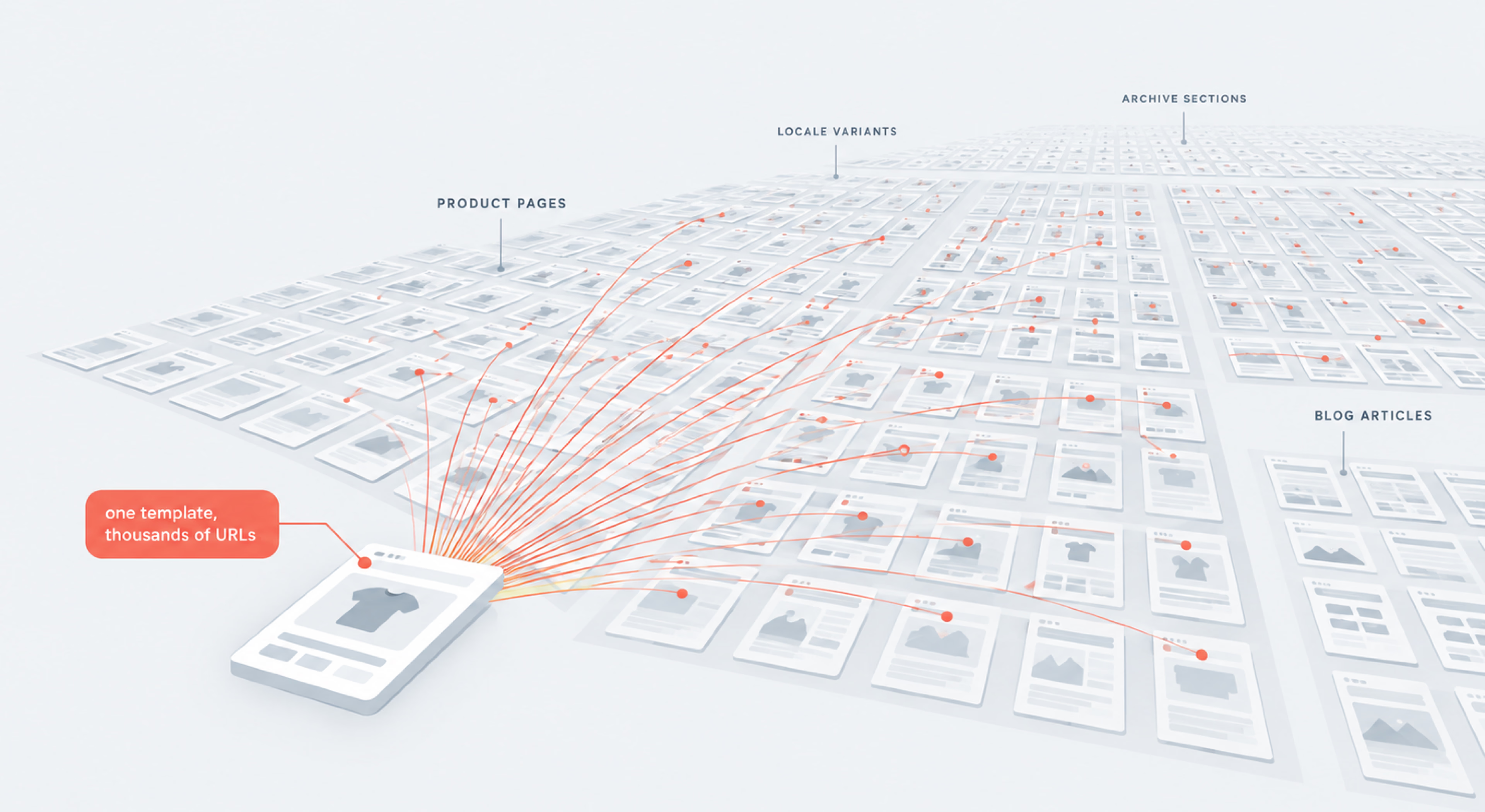
Managing search visibility for a massive brand is about much more than matching keywords or tweaking meta descriptions. Once a website spans multiple international domains, a vast product catalog, or millions of dynamically generated pages, SEO becomes a coordination and risk-management challenge. A single line of code in a global template, say a stray noindex, can quietly remove a huge number of valuable URLs from search results before anyone notices it shipped.
This article looks at what it takes to manage organic search at that scale, including SEO governance, automated checks, crawl efficiency, and business impact.
What is enterprise SEO?
Enterprise SEO represents the strategic, scalable, and highly systematic approach to organic search optimization for large websites. It is a discipline designed for organizations where search operations must integrate with complex development cycles, legal constraints, brand guidelines, and multi-layered stakeholder approval networks.
“The bigger the website, the more every small SEO mistake gets amplified.”
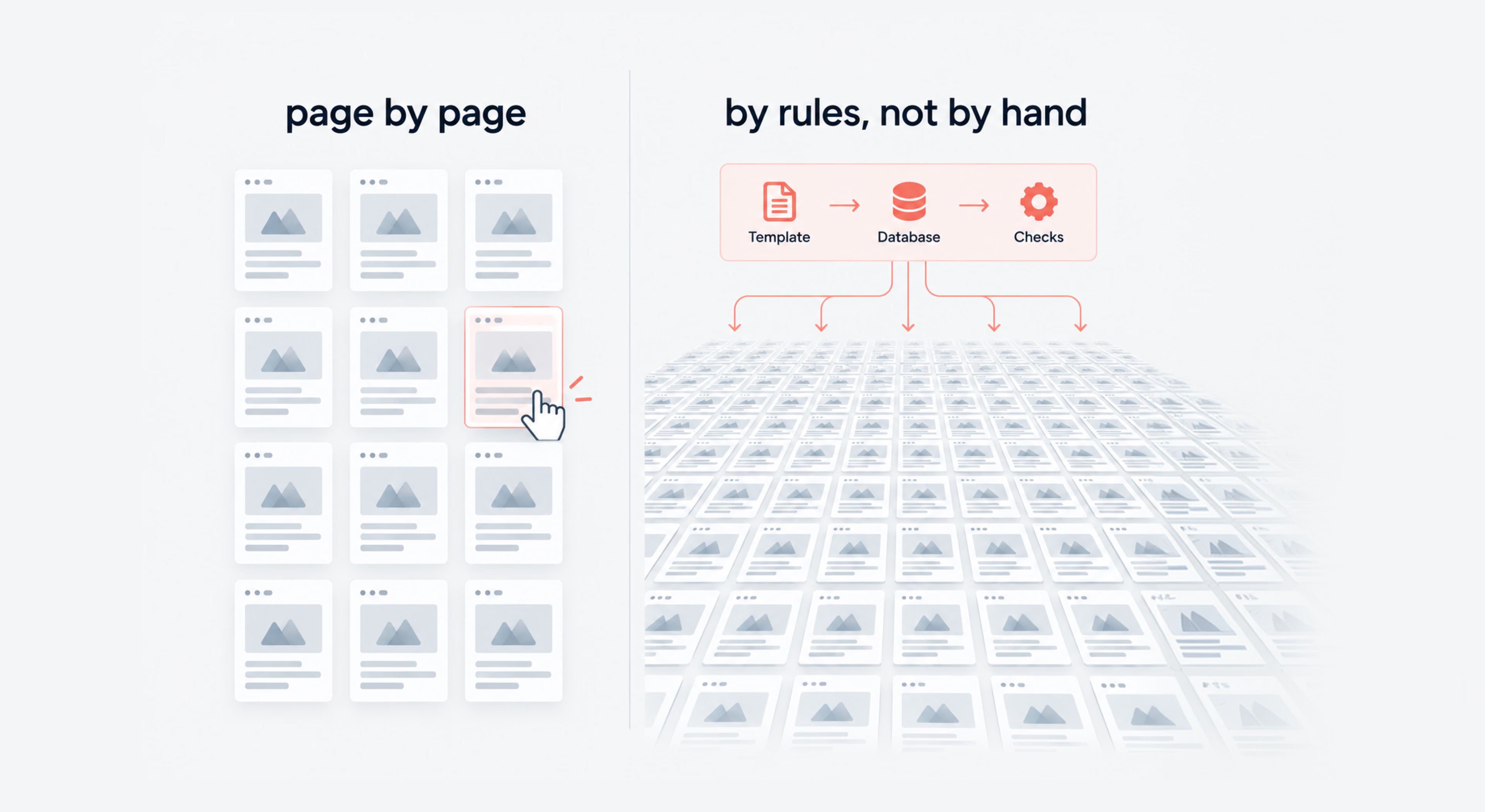
Unlike traditional search marketing, which often focuses on manual, page-by-page improvements, enterprise SEO centers on programmatic optimization, scalable site architecture, and governance. It is about creating repeatable systems, templates, and automation rules that ensure every new page launched is inherently optimized for search engines from day one.
Enterprise SEO works best when an organization treats search performance as a core product feature that requires ongoing engineering support, continuous automated testing, and clear cross-departmental alignment.
Why is SEO important for enterprise?
For companies with complex digital ecosystems, organic search can be a highly cost-effective and resilient acquisition channel. Paid advertising campaigns require continuous, escalating budgets to maintain traffic. Meanwhile, a robust enterprise SEO strategy builds digital equity that continues to drive highly qualified leads, conversions, and brand authority long after the initial development work is complete.
For global brands, search visibility is closely tied to protecting market share and brand reputation. When customers search for industry terms, product comparisons, or branded solutions, strong organic visibility helps keep competitors from taking that traffic and shaping the conversation. Consistent rankings also reinforce trust and support more sustainable customer acquisition costs.
{{banner}}
Enterprise SEO vs. traditional SEO
Enterprise SEO is not simply a bigger version of traditional SEO. Let’s explore how the work changes when more pages, teams, and systems are involved.
Scale and page volume
In terms of scale and page volume, a smaller website might have to deal with a few hundred blog posts and landing pages; an enterprise domain frequently handles hundreds of thousands or millions of live URLs. This massive volume includes dynamic product listings, localized international variations, user-generated content, and legacy archival directories. That’s why enterprise SEO moves away from manual editing and focuses entirely on programmatic rules, database-driven templates, and automated content audits.
Search complexity
Standard SEO usually targets a more manageable set of keywords and search intents. At enterprise level, the challenge is keeping large numbers of queries and pages working together. Large brands need to target competitive head terms, informational searches, and highly specific long-tail queries without letting their pages compete with each other. That means mapping search intent across the customer journey and making sure, for example, that an informational article doesn’t compete with a product or category page for the same query.
Technical requirements
At a smaller scale, SEO still involves the same technical basics: crawlability, indexing, site speed, and a clean site structure. On a large enterprise site, those same issues become much harder to manage. JavaScript rendering, complex server routing, and duplicate content across subdomains can cause problems across an entire site. Even a small structural error in a shared template might waste crawl resources or keep important product pages out of search results.
If you need a more reliable technical foundation for a large, complex site, explore our technical SEO services.
Data and tracking
When we consider data and tracking, traditional SEO is relatively straightforward: standard analytics and search tools can usually cover rankings, traffic, conversions, and other core metrics. Enterprise SEO programs operate on much larger and more complex data streams. Here, teams may need data warehouses, custom APIs, and business intelligence tools to connect search data with CRM and other business metrics.
Organizational complexity
In a smaller business, an optimizer can often write, edit, and publish content directly. In an enterprise, a single update often must pass through legal compliance, brand guidelines, product managers, and engineering teams. Large-scale SEO therefore requires clear approval workflows and a way to demonstrate the value of search parameters to non-marketing stakeholders.
Keyword strategy
With standard SEO, keyword planning usually starts with a focused list of relevant terms, grouped by search volume, intent, and priority. When you manage SEO for large organizations, the process becomes much more complex. Teams may need to organize a lot of phrases, map intent to different stages of the buying journey, and identify content gaps across multiple product or business areas.
To map search demand across the site without creating unnecessary overlap between pages, explore our keyword research services.
Link strategy and brand authority
While smaller sites often focus on active manual link building, large brands naturally attract a continuous stream of backlinks due to their market presence. Enterprise SEO strategy shifts from manual outreach to managing internal link equity and protecting the link profile from toxic patterns. It also ensures that natural brand authority flows efficiently to newer or lower-performing transactional pages.
Core elements of enterprise SEO
Knowing the difference between traditional and enterprise SEO is only the first step. The next challenge is creating a framework that keeps the work consistent, with governance setting the rules and automated safeguards enforcing them across the site.
SEO governance and decision framework
Effective governance gives SEO a clear place in how your digital ecosystem is planned and managed. It defines who owns search priorities, how SEO fits into product and engineering decisions, and which requirements teams need to follow. This keeps search from becoming an afterthought as new features, content, or technical changes roll out.
To achieve this result, you should keep in mind three areas:
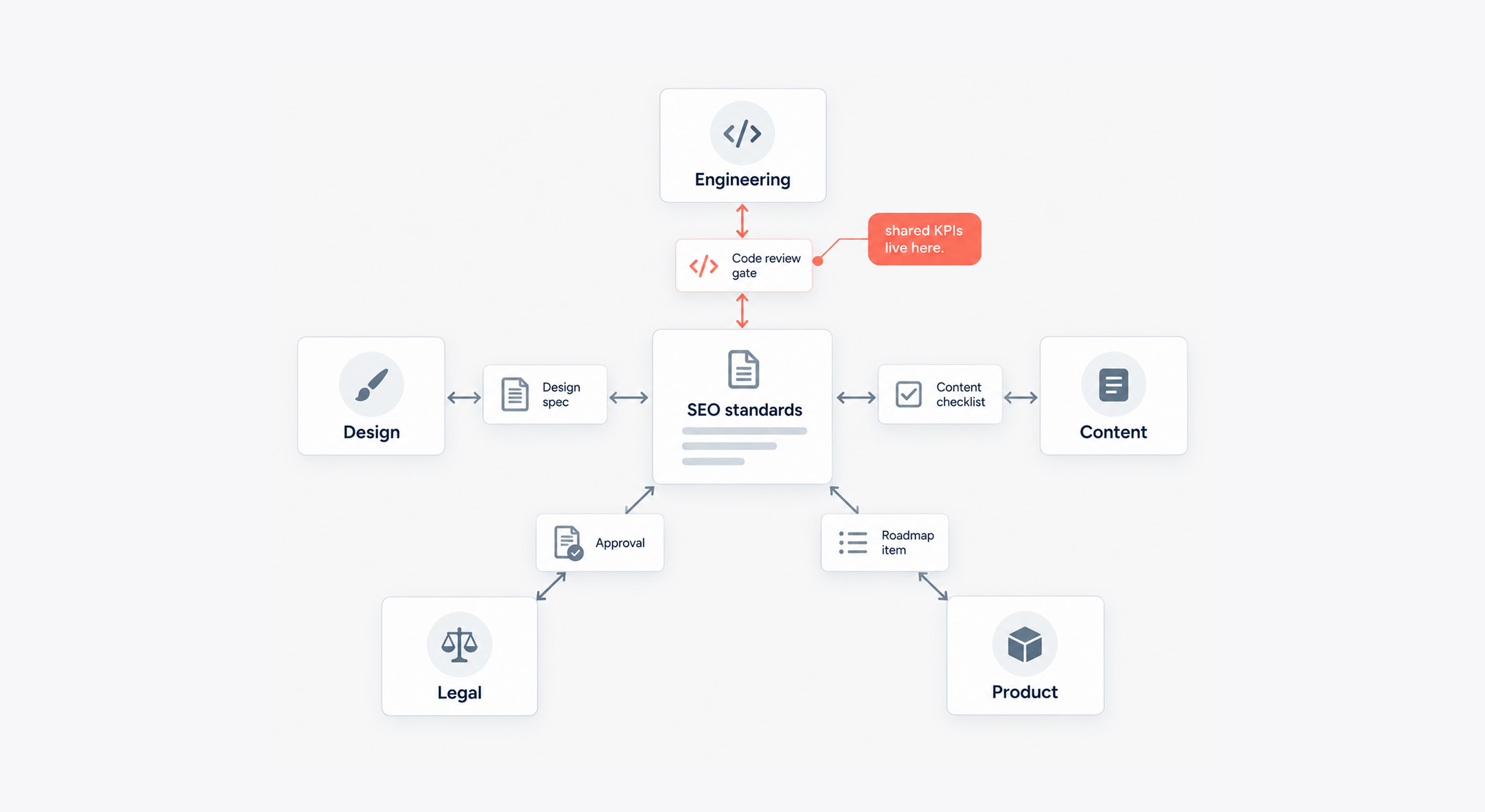
Shared Key Performance Indicators (KPIs): Connect SEO metrics to the goals of product and engineering teams. When developers are accountable for page speed, crawlability, and accessibility, technical SEO turns from a separate task into a part of regular development work.
Standard Operating Procedures (SOPs): Document clear SEO requirements for content creators, designers, and developers. These guidelines help teams apply SEO consistently across content, site structure, and technical implementation.
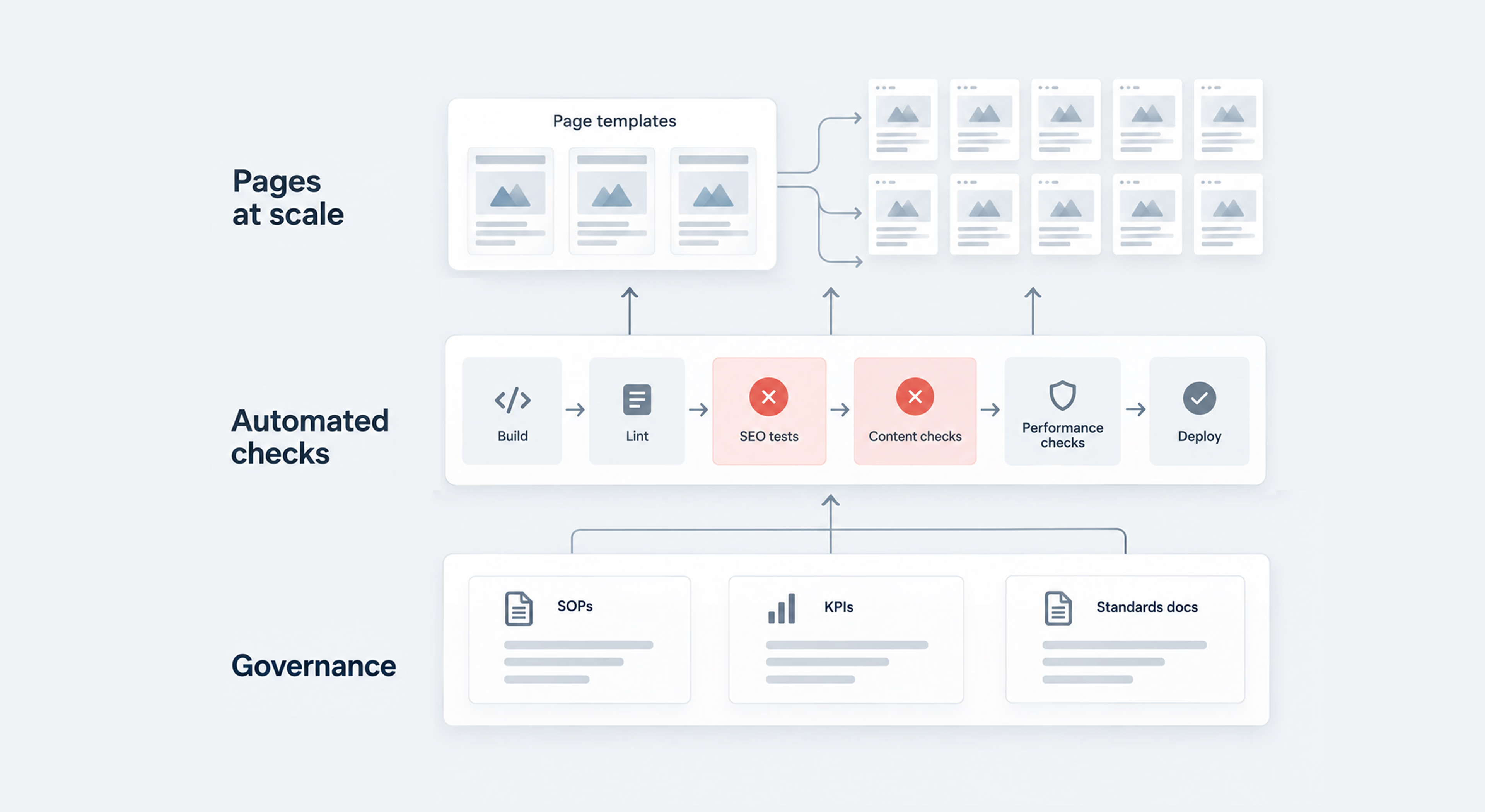
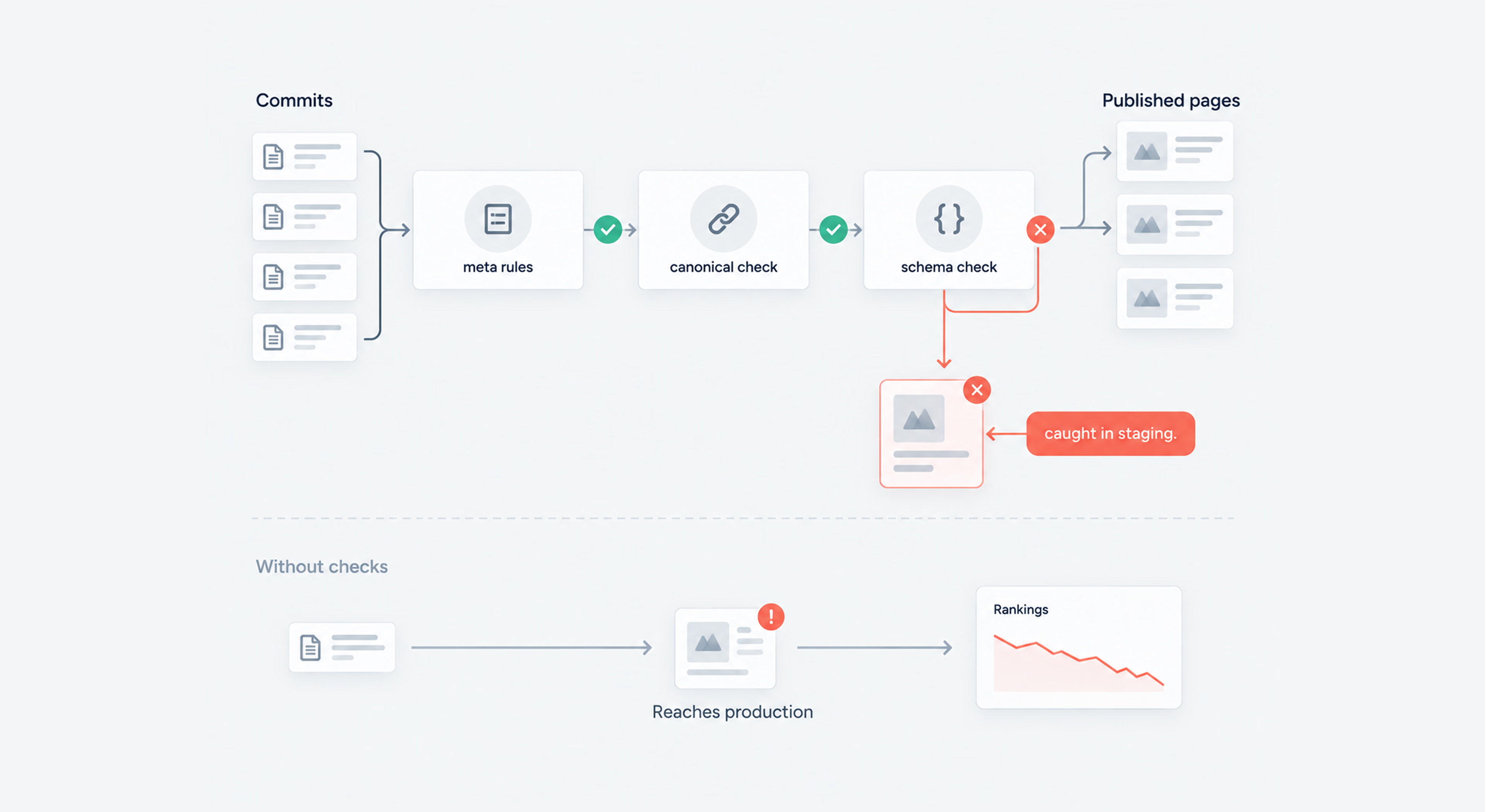
Automated Quality Assurance: Turn those requirements into automated checks wherever possible. Integrate SEO tests into your CI/CD pipeline to catch any issues before changes reach production.
Together, governance and automation create a system that defines what good SEO looks like and checks that it is consistently followed.
Leadership access
A successful corporate search program requires a direct line of communication with executive decision-makers. When search leaders can present organic performance data directly to the C-suite, they can connect organic search metrics to high-level business goals like customer acquisition costs and market share. This visibility ensures the program secures the budget, engineering resources, and cross-departmental support needed to execute long-term initiatives.
Cross-functional ownership
Departments outside of the marketing team heavily shape search performance. This includes developers writing rendering code, designers building the user interface, copywriters crafting the text, and legal teams reviewing the messaging. Building cross-functional ownership means training each team on how their decisions impact search visibility.
Centralized project management
When SEO work spans multiple brands, regions, and agency partners, someone needs to keep it coordinated. A central team can track projects, allocate resources, keep SEO standards consistent, and prevent different parts of the business from competing for the same search terms.
Documented SEO standards
To maintain consistency across hundreds of content contributors and developers, you must document your standards clearly. In essence, they should outline precise specifications for page header hierarchies, URL routing, canonical management, structured data implementation, and image compression guidelines. Also, you need to update them regularly as search engine guidelines evolve.
Release and change management integration
Large websites are constantly changing, with new templates, features, and content updates rolling out across the entire platform. To keep those changes from affecting search performance, the SEO team needs to be part of the development process from the start. That can mean joining sprint planning, reviewing changes in staging, and checking key SEO elements before anything goes live. Building these checks into the development pipeline helps catch layout and technical issues before they reach users or search crawlers.
Continuous internal SEO audits
Because enterprise platforms are highly dynamic, code can break or undergo unexpected changes at any time. Implementing a schedule of continuous automated crawling and internal auditing allows you to identify broken links, redirect loops, missing metadata, and indexing errors before they impact your organic rankings.
{{banner-2}}
Enterprise SEO strategy in practice
A strong enterprise SEO strategy needs a practical way to plan work, prioritize opportunities, automate repetitive tasks, and manage risks across the site. The following areas show how that strategy translates into day-to-day decisions at scale.
Long-term search vision and roadmapping
For enterprise teams, the challenge is not only deciding what to fix, but when each initiative should happen. A 12- to 24-month roadmap helps coordinate SEO priorities with product launches, seasonal campaigns, and larger platform changes. It should still leave room for quick technical fixes, but without letting urgent tasks push bigger initiatives like content expansion, structural migrations, or platform modernization off the roadmap. Our monthly SEO services can support that work on an ongoing basis, with scope that adapts as priorities change.
Prioritization at scale
On a large website, the SEO backlog can quickly fill with hundreds of fixes, tests, and opportunities competing for attention. The challenge is deciding what to prioritize first. Revenue impact, development effort, and risk provide a practical basis for that decision, while smaller, high-impact wins can help demonstrate value before larger initiatives require more engineering support.
We’ve applied the same approach in client work. For a tutoring service, the audit grouped identified SEO issues into three priority tiers — fix now, fix during the upcoming redesign, and safe to postpone. The work then followed what the site could support at each stage: quick on-page wins first, with structural changes held for the new version. Within a year, organic traffic grew 28%. At the time of the case study, 46% of tracked keywords ranked in Google’s top 3.
Automation and scalable SEO processes
As mentioned before, at the enterprise level, teams must leverage programmatic solutions to automate routine tasks. This translates into:
Dynamic Metadata Generation: Use structured database rules to generate optimized title tags and meta descriptions across massive product catalogs, ensuring new listings are immediately optimized.
Real-Time Rank Tracking: Monitor thousands of high-value keywords across multiple locations and devices, alerting the team to sudden performance shifts.
Automated Content Audits: Utilize cloud-based scraping tools to continuously analyze your content library for duplication, broken links, and thin content issues.
Automating these administrative tasks allows your search team to focus on high-level strategic opportunities, technical innovations, and cross-functional collaboration.
Crawl budget, indexation, and architecture control
Because Google limits the time and resources it devotes to crawling any single site, crawl efficiency becomes more important as a website grows. Its crawl budget documentation provides rough benchmarks for sites with over a million pages that change weekly or over 10,000 pages that change daily. For sites below these levels, keeping your sitemap updated and monitoring index coverage is usually sufficient.
At larger scales, the bigger problem is often crawl bloat: too many low-value URLs competing for crawler attention. Faceted navigation is a common culprit, as filters, sorting, and URL parameters can turn a large product catalog into millions of parameterized or near-duplicate URLs. That can leave Googlebot spending time on pages that matter less instead of the ones you want discovered and refreshed more often.
“A massive website’s greatest enemy is crawl bloat.”
Controlling it comes down to four mechanisms:
internal link structures that concentrate on valuable pages;
XML sitemaps that list only canonical, indexable URLs;
robots.txt patterns that keep crawlers out of infinite filter combinations;
canonical tags that consolidate duplicate or parameterized variations.
There is no Search Console setting to fall back on — Google retired its URL Parameters tool in 2022. Control now comes largely from the way the site itself is structured. Server logs then show where Googlebot is actually spending its time, which is often different from what teams expect.
We saw the value of that early control when preparing a new games catalog for launch. Indexation, site structure, and category priorities were addressed before release, then monitored closely once the site went live. That groundwork helped the site start gaining organic visibility early and supported its growth to more than 380,000 monthly users.
Risk management for large websites
For a prominent brand, protecting existing search rankings is just as important as growing them. Risk management involves a few things:
setting up real-time monitoring systems to track critical organic pages;
establishing roll-back plans for major site updates;
closely monitoring security and spam vulnerabilities across user-generated content sections.
The highest-risk event of all is a migration — a platform change, domain consolidation, or URL restructure. To reduce the risk, inventory your URLs, map and test redirects, roll out changes in stages, and monitor rankings for key pages from day one. Many migration problems start with one simple mistake: not accounting for existing URLs.
Aligning SEO with business goals
Search metrics should never exist in an isolated marketing silo. To build a successful, well-supported program, connect search data directly to core business outcomes like pipeline value, customer lifetime value, and digital acquisition costs. Demonstrating how organic performance directly reduces paid ad spend and drives sustainable revenue is the best way to secure long-term executive buy-in.
How enterprise SEO is measured
Measuring the success of a large-scale program goes far beyond tracking individual keyword positions or basic organic traffic charts. Because enterprise search touches so many parts of the business, your measurement framework must be comprehensive and directly aligned with different stakeholders’ goals.
| Stakeholder Level | Core Performance Metrics | Primary Business Value |
|---|---|---|
| Executive Leadership (C-Suite) | Share of Voice, Organic Revenue, Customer Acquisition Cost (CAC) | Demonstrates market leadership and overall channel efficiency |
| Product & Marketing Directors | Non-Brand Traffic Share, Organic Conversions, Visibility by Category | Tracks product-market fit and the health of the acquisition funnel |
| Technical & Dev Teams | Core Web Vitals, Crawl Efficiency, Rendering Health, Indexation Rate | Measures site stability, speed, and platform health |
One more metric is becoming important: visibility in AI-generated answers. Enterprise brands can now track how often AI assistants and Google’s AI features mention or cite them compared with competitors. If your customers use AI tools to find products or recommendations, track this share of voice alongside traditional search rankings.
When reporting progress to leadership, focus on long-term trends and business impact, not daily ranking fluctuations. Group your data by business units, regional directories, or product categories to show where your optimization efforts drive the strongest return on investment.
“Rankings impress marketers. Revenue convinces executives.”
Enterprise SEO comes down to systems
As your site, teams, and business grow, enterprise SEO creates a system that keeps search performance on track. Clear ownership, documented standards, automated checks, and business-focused reporting all play a part.
Search will keep changing, but the need for a well-managed website won’t. When you build SEO into development, content, and business decisions from the start, it becomes easier to protect rankings, find new opportunities, and keep organic search working as the site grows.
{{banner-3}}
FAQ
How large does a website need to be to need enterprise SEO?
There’s no official page-count threshold for enterprise SEO. The need usually depends on a mix of scale, site complexity, publishing frequency, and how many teams or markets are involved. Google’s crawl-budget guidance, for example, is aimed mainly at sites with over 1 million pages that change weekly or over 10,000 pages that change daily. Smaller sites with complex structures, multiple languages, strict approval workflows, or other operational constraints can still benefit from an enterprise approach.
Can enterprise SEO work across multiple domains or brands?
Yes. Enterprise SEO can support multiple domains or brands through a centralized framework that keeps technical standards consistent and helps coordinate search targeting across the portfolio.
How does enterprise SEO handle frequent site changes?
The key is to build SEO checks into the development process. Automated tests, SEO reviews during sprint planning, and clear change-management rules help catch technical issues before they reach the live site.
What are the biggest risks when scaling SEO for large sites?
The main technical risks are wasted crawl budget, indexation bloat from duplicate or thin pages, broken canonical tags or templates, and poorly executed migrations. On the organizational side, poor communication can be just as damaging. Product or development changes may remove critical SEO elements without the SEO team realizing it.
How is enterprise SEO measured beyond rankings and traffic?
By tracking business metrics like organic share of voice (SOV) against primary competitors, organic conversion rates, customer acquisition cost (CAC), and overall impact on revenue. It’s also important to monitor technical health indicators such as indexation rates and Core Web Vitals across templated pages, along with the brand’s visibility in AI-generated answers.
Can enterprise SEO be outsourced?
Yes. Many organizations use a hybrid model: an in-house SEO lead manages internal priorities, coordinates engineering support, and works with product teams, while a specialized agency supports areas such as technical audits, content production, and advanced reporting.