



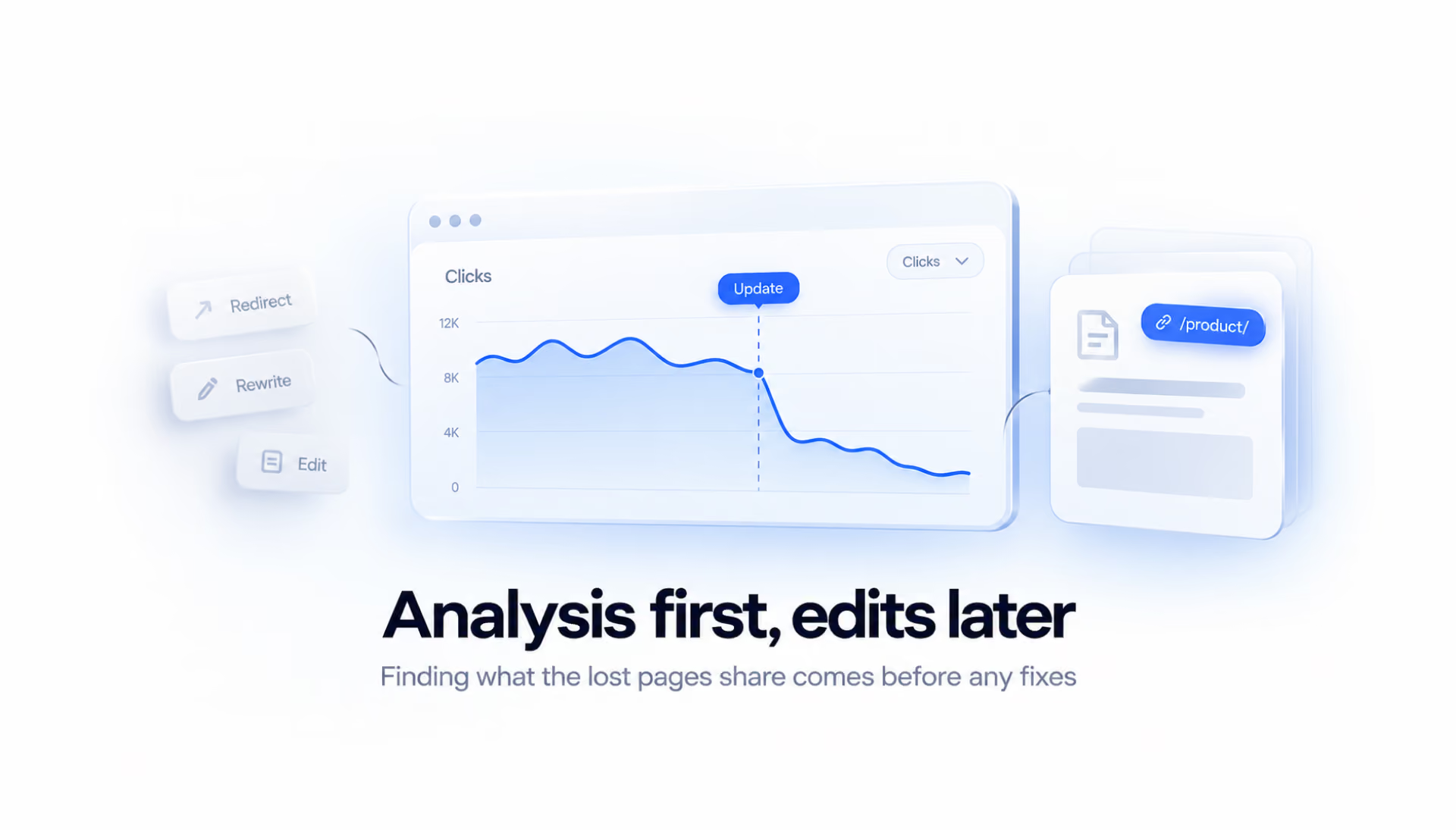
A sharp fall in rankings right after a Google update tends to set off a rush of edits, redirects, and rewritten pages. Most of that energy is better spent later. The first job is a quieter one, working out which pages lost ground and what they have in common.


Positions lost in an update are often not permanent, and they can return once search systems reassess pages that have been improved. How quickly that happens varies from site to site, and the amount of work depends on how deep the problems run. In this guide, we’ll look at how to recover from a Google algorithm update, from confirming that the update caused the drop to the steps that reduce the risk of future ranking losses.
Why Google algorithm updates affect rankings
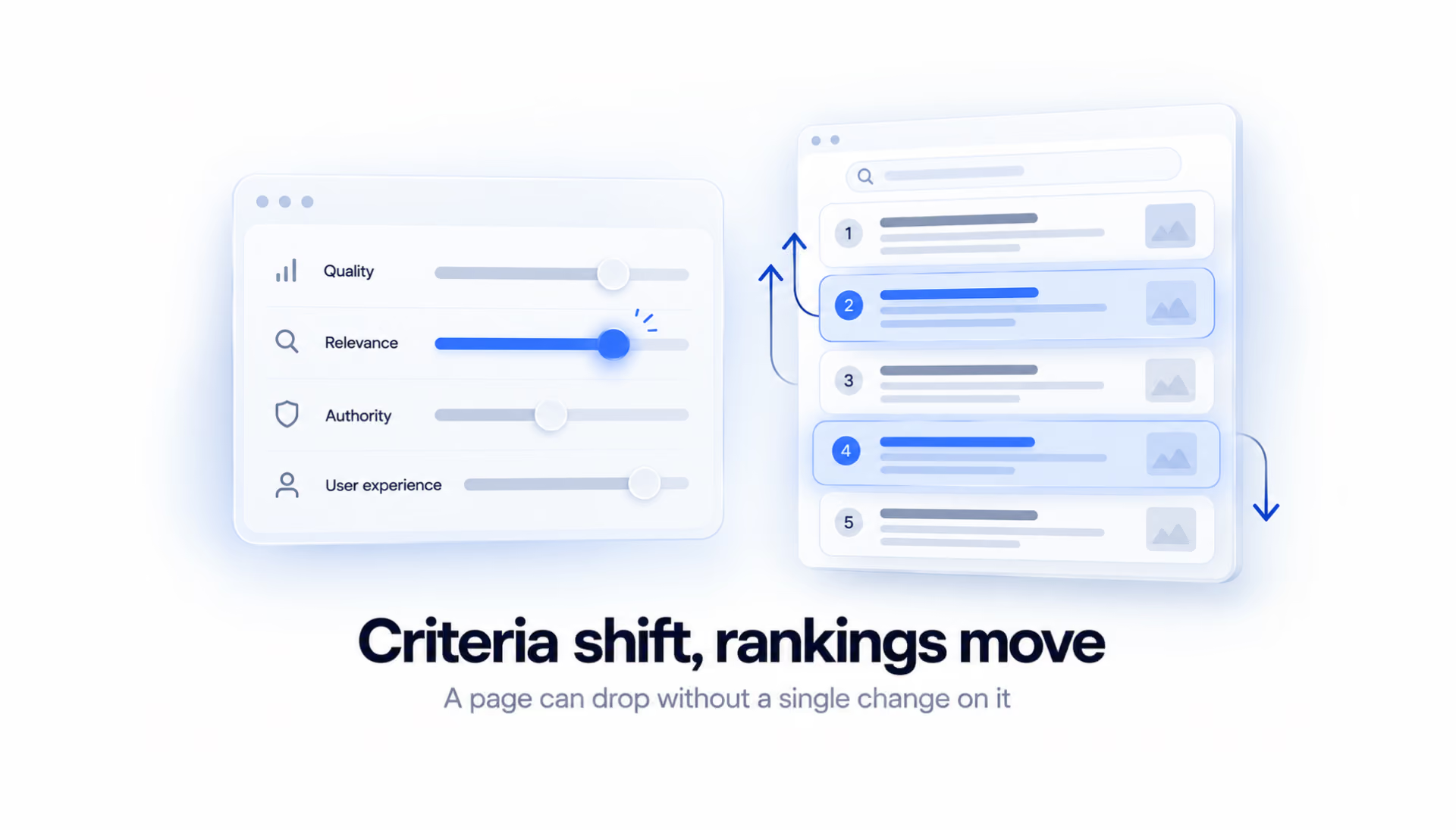
Search rankings change continuously, but several times a year, Google introduces broader changes that can affect the visibility of many sites within the same niche. Core updates change how Google’s systems assess content quality, relevance to a query, authority, and user experience. A page may therefore lose positions even when its content has stayed the same.
These changes can shift the balance between competing pages. Content that better matches the revised criteria may gain visibility, and other results may lose positions as a consequence. Such changes do not necessarily reflect a judgment about the domain as a whole.
Spam updates are a separate category. They target practices such as link spam and scaled content abuse, which means a drop during one of them may point to a narrower set of issues than a drop during a core update.
How to confirm that your rankings dropped because of an update
A drop that coincides with a Google update isn’t necessarily caused by it, since technical changes, tracking issues, or other problems on the site can produce a similar decline. Whether the timing and the data actually point to the update is worth checking before any content or SEO strategy is changed.
Check the timing against confirmed Google updates
On the Search Status Dashboard, each confirmed ranking update has its own entry with a start date, an end date, and status notes added during the rollout, and some rollouts have been announced as taking up to a month. A decline that begins somewhere within that span is more likely to be related to the update.
Rank trackers add a wider view by measuring SERP volatility across a niche. Similar changes for several competitors in the same weeks may point to a broad shift in the results. Stable rankings around you make a site-specific cause more plausible, but on their own they don’t explain the decline.
Compare Google Search Console and analytics data
Google Search Console and analytics help assess a decline from different angles. A few comparisons can be useful here:
- Period comparison. In the Performance report, set the weeks after the update against an equal period before it and against the same dates a year earlier. The second comparison helps rule out seasonal changes in demand.
- Pages with the largest losses. Sorting the Pages table by the change in clicks shows whether the decline is concentrated in particular templates, topics, or sections.
- Clicks and impressions. These deserve closer attention than average position, which works better as background information.
- Country and device filters. They may show that the loss is limited to one market or to mobile search, which affects where the work begins.
- Business impact. Analytics show whether the drop in organic traffic also reduced leads or sales.
Separate algorithm impact from technical or tracking issues
A noindex tag that slipped into a template can cause a sharp drop in search visibility, and so can a robots.txt rule copied over from staging or a rushed migration. Problems of this kind can be identified in the Page indexing report, and URL Inspection gives more detail on individual affected pages.
Tracking failures are harder to spot. When analytics shows a traffic drop but clicks in Search Console barely move, the tag deserves a look before the rankings do.
Console also keeps a list of its own data anomalies, so a reporting issue is worth checking. Consent banners and recent changes to tag settings are frequent sources of missing analytics data as well.
Rule out manual actions and security problems
If Search Console reports a manual action, the affected issues must be fixed before submitting a reconsideration request. The review can take days or weeks.
The Security issues report covers hacked pages and malware. Both can trigger warnings in search results and a fall in clicks that content work won’t reverse.
Why websites lose rankings after algorithm updates
With technical problems, tracking errors, and manual actions ruled out, the next question is how Google’s assessment of the pages may have changed. A decline at this point can have several sources, sometimes at once, including a shift in search intent, gaps in content quality, or stronger competition.
Content no longer matches search intent
An update can change how the search engine interprets the intent behind a query. A page written for one kind of need may then lose positions to content in a different format, such as comparisons in place of guides.
The current first page for the main term reveals whether the expected format and angle have shifted since the article was written. Topics with mixed intent are especially prone to such shifts, since the balance can tip toward whichever type of answer users seem to prefer. In Search Console, changes in the queries bringing users to a URL may also indicate a shift in its search visibility.
Helpful content and E-E-A-T signals are weak
E-E-A-T describes qualities used to assess the reliability and credibility of content:
- Experience. First-hand involvement with the subject, such as having used the product or done the work described.
- Expertise. Depth of knowledge in the field.
- Authoritativeness. Recognition of the author or site by other credible sources.
- Trustworthiness. Accuracy, transparency, and honesty about who stands behind the content.
Trust is treated as the most important of the four, although E-E-A-T itself isn’t a direct ranking factor.
Pages that repeat what other sources already say, name no author, or offer no first-hand insight may lose visibility to content that demonstrates real knowledge of the topic. A useful self-check asks who created the material, how it was produced, and why it exists. If the answers reveal gaps in expertise or originality, a more thorough content review may be needed. Our content marketing services can support that work through research, expert input, and content improvements.
Technical SEO issues reduce crawlability or UX
Technical problems can contribute to ranking losses even when a decline coincides with an algorithm update. Slow templates, unstable layouts, broken internal links, or large numbers of low-value URLs competing for crawling can affect a site’s visibility in search. A crawl with an SEO tool, combined with the Core Web Vitals and Page indexing reports in Search Console, generally points to the main barriers.
{{banner}}
Backlink profile or authority gaps become more visible
References from relevant, trusted websites are one of the signals used to assess a page’s relevance and authority. Competing pages that have earned stronger ones may move ahead in the results, though links seldom tell the whole story behind a decline.
Some links also stop counting over time, because Google’s spam systems can neutralize unnatural ones and remove whatever benefit they once provided. Without evidence of a link-related violation, steadily building genuine authority is likely to do more good than removing existing links.
Competitors improved while your content stayed the same
Rankings are relative, which means a page can lose positions without getting any worse itself. When competitors publish material that is more current, goes into more depth, or is easier to navigate, an unchanged page may slip below them.
A competitor analysis of the URLs that moved up for your main queries can show what they now offer that yours doesn’t. It also helps to note which of them are new to the results, since a new entrant with a strong page may push several older ones down.
How to recover from a Google algorithm update step by step
Recovering from a Google algorithm update calls for decisions based on evidence rather than assumptions. The following steps help identify which pages need attention, prioritize improvements, and measure their impact over time.
Step 1: Map affected pages and queries
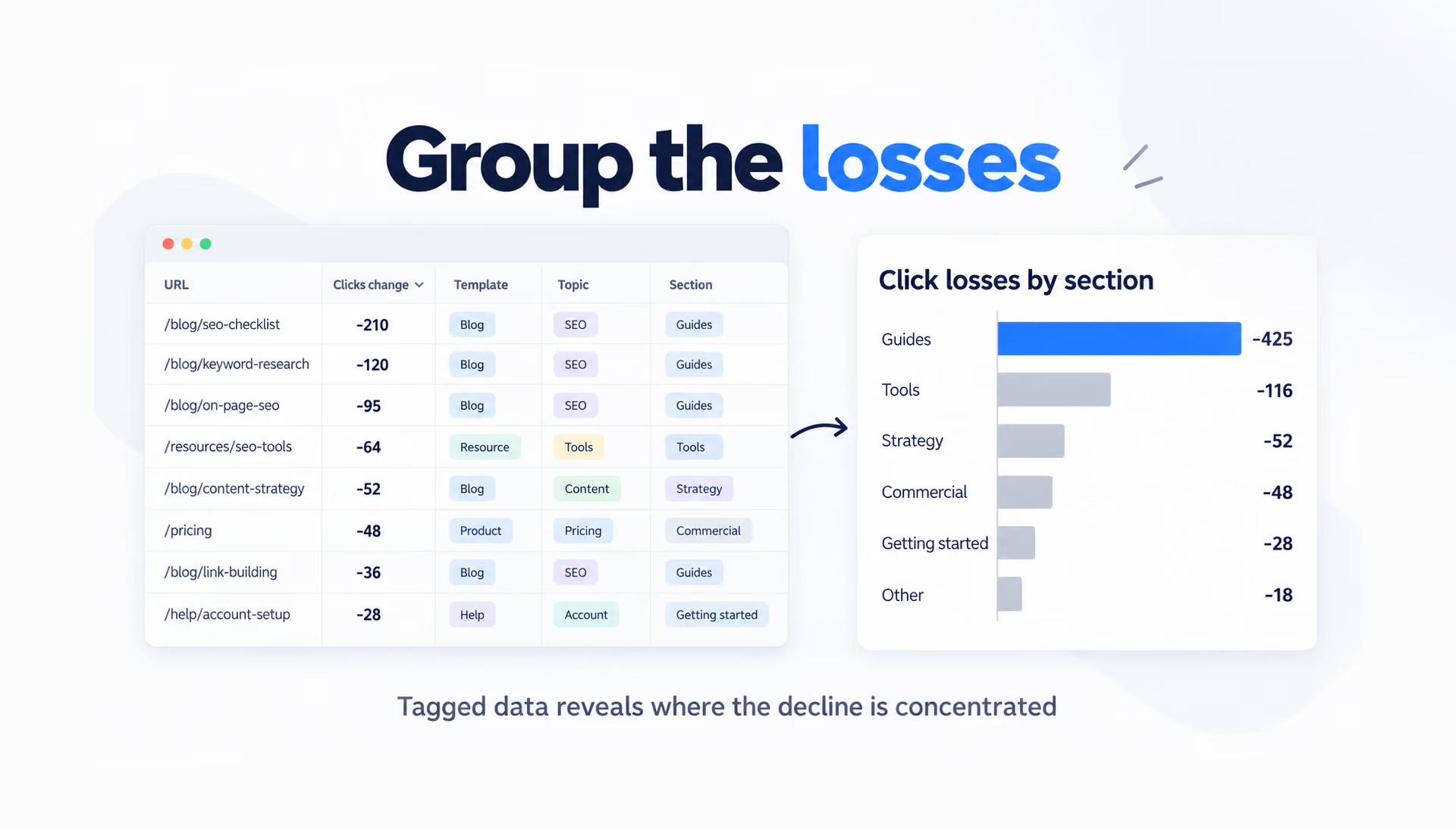
By the end of this step, there should be a short map of the damage. It comes from a period comparison in the Performance report, which singles out the pages and queries with a noticeable loss of clicks and impressions, and from tagging each of those URLs by template, topic, or section.
A map like this tends to take one of two shapes. A decline spread across the domain may point to a broader issue, and a decline concentrated in one section may relate to search intent or to stronger competition there.
Step 2: Prioritize pages by traffic, revenue, and recovery potential
Affected pages rarely deserve equal attention. URLs that generated leads or sales before the update are usually a sensible starting point, followed by those with many impressions and positions just outside the top results. Content with little traffic and no clear business role can often be reviewed later.
Effort also shapes the order of work. Adding a section or updating outdated facts tends to take less time than rebuilding an article that no longer matches the intent of its query. When a URL keeps its positions but stops converting, conversion rate optimization may bring more value than further SEO changes.
Step 3: Rework content around current SERP intent
The scope of the rework comes from one comparison: the priority URL against the pages now ranking for its main query. Sometimes that comparison shows a missing section and little else. In other cases, the format or angle is off, and the page needs a new structure or has to be divided into several focused articles.
The opening is often where the gap is widest. A long introduction keeps readers from the answer they came for, so moving the key information forward tends to help, as long as the rest of the page then covers the query as well as the results above it.
Step 4: Improve content depth, freshness, and trust signals
Readers arriving from search decide quickly whether a page is worth their time, and these content qualities shape that decision:
- Depth. Covering the questions a reader is likely to have next, with accurate details and clear explanations.
- Freshness. Updating facts, prices, or processes that have changed. Changing the publication date without substantial edits does little to improve content quality.
- Trust signals. Add author information, cite reliable sources, and make contact details easy to find, especially on health, finance, and safety topics, where mistakes can have serious consequences.
Step 5: Fix technical SEO and UX barriers
Fixes from the site audit are best handled in order of impact. Issues that block crawling or indexing come first, followed by page speed, mobile usability, and layout stability. Intrusive pop-ups and confusing navigation can also undermine the user experience, even when the content is strong.
After each fix, the URL Inspection tool in Search Console can help verify whether Google can access and process the updated page. The Core Web Vitals report groups URLs with similar issues, which makes it easier to fix a template once instead of page by page.
Step 6: Strengthen internal links and topical authority
Pages under repair may recover more slowly if the rest of the site barely links to them. Links from strong, relevant articles change that by giving crawlers a direct path, and they make it clearer to search engines how the page fits into the site’s topics and how much it matters.
Orphan pages, with no internal links pointing at them, deserve attention at this stage, since crawlers have few routes to reach them. Over time, a connected group of articles on one subject builds a clearer topical structure than a set of isolated posts.
Step 7: Review backlinks before taking action
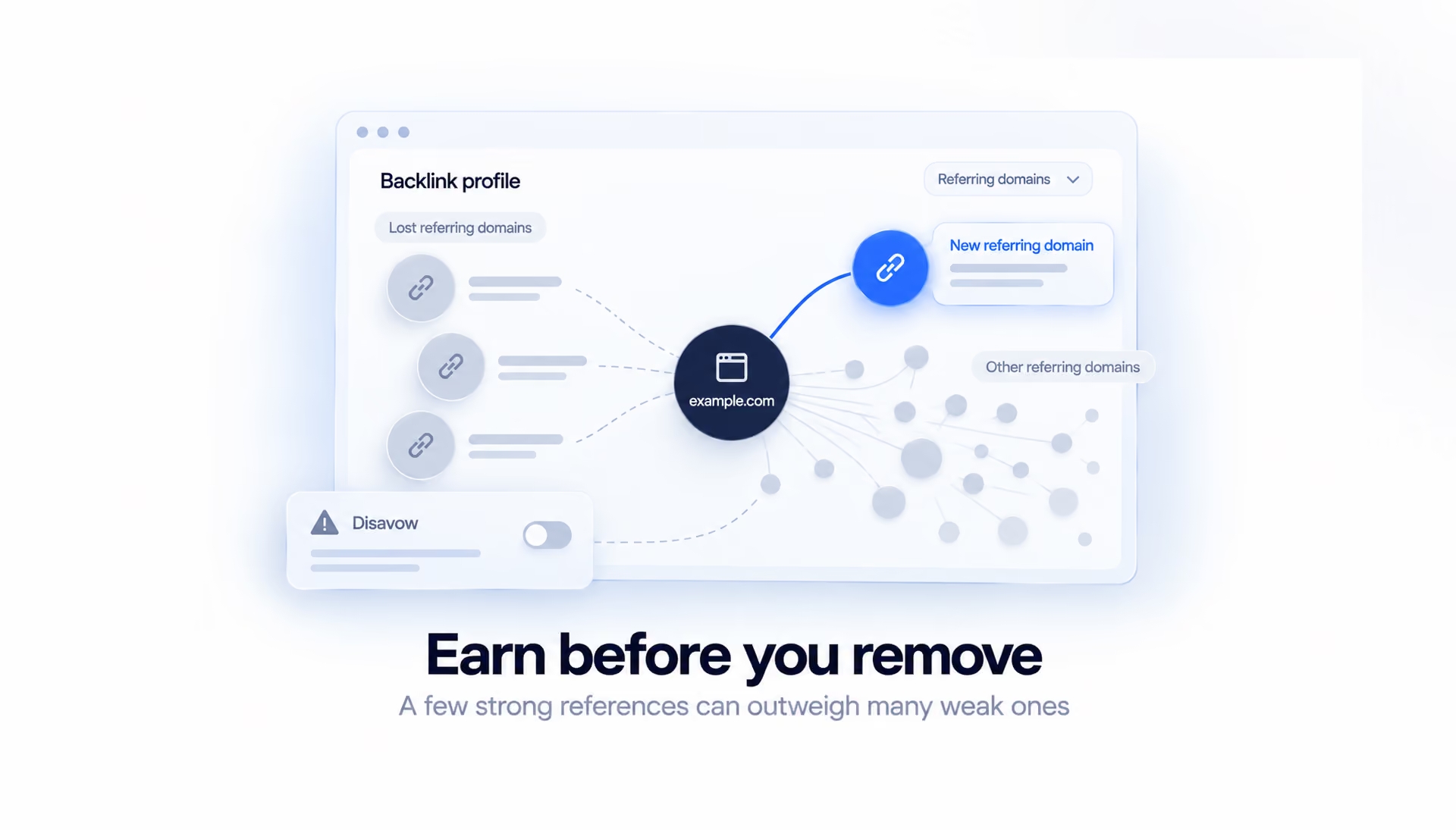
Some of what changed after the update may sit outside the site, in its link profile. A backlink review can show strong, relevant referring domains that have dropped away, which may matter more than a large number of weak links gained, as well as new links competitors have picked up and unusual shifts that need a closer look.
The disavow tool is meant for a narrow situation, when a site has a considerable number of spammy or artificial links that have led, or may lead, to a manual action. Outside that case, using it without a clear need can harm search performance. After an algorithmic drop, earning new mentions from relevant sources may be more useful for recovery than removing existing links.
Step 8: Track results without making rushed changes
Once changes go live, they need time before the outcome can be judged. Checking the same set of pages and queries in Search Console at regular intervals shows whether impressions and positions are returning.
A simple change log, with the date and nature of the edits, makes these checks far more informative. Without it, several overlapping changes make it hard to understand which changes coincided with improvements and which showed no clear effect.
Meaningful improvements can help restore lost rankings, but recovery takes time and rarely follows a predictable timeline.
How long does it take to recover from a Google algorithm update?
There is no fixed timeline for recovery. According to Google, some changes can take effect within a few days, while it may take several months for its systems to recognize that a site has improved. In some cases, rankings may recover during a subsequent core update, although improvements can also become visible between updates.
How long it takes to recover depends on several factors:
- Rollout timing. Positions may continue to shift until the update finishes.
- Crawl cycles. Google needs to recrawl updated pages to discover changes, and their effect on rankings may take longer to become visible.
- Site size. Large sites may have more affected URLs to review and update, as well as more pages for search engines to recrawl.
- Content quality and technical fixes. Bigger changes take longer to prepare and evaluate.
- Implementation speed. Improvements delayed in a backlog cannot begin to affect rankings until they are implemented.
Google also notes that there’s no guarantee changes lead to a noticeable effect in search results, so progress is best measured against realistic goals rather than a return to earlier numbers by a fixed date.
Common recovery mistakes to avoid
Some reactions to a ranking drop can slow recovery or create new problems. Several of them come from the pressure to act quickly, and they are worth checking against any recovery plan.
Changing everything before the update finishes rolling out
Rankings often fluctuate during a rollout, and some of the lost rankings may partially recover before the rollout ends. Edits made during this period make it difficult to separate the effect of the update from the effect of the changes, and rushed rewrites may introduce new problems to pages that were previously performing well.
Deleting content without checking its purpose
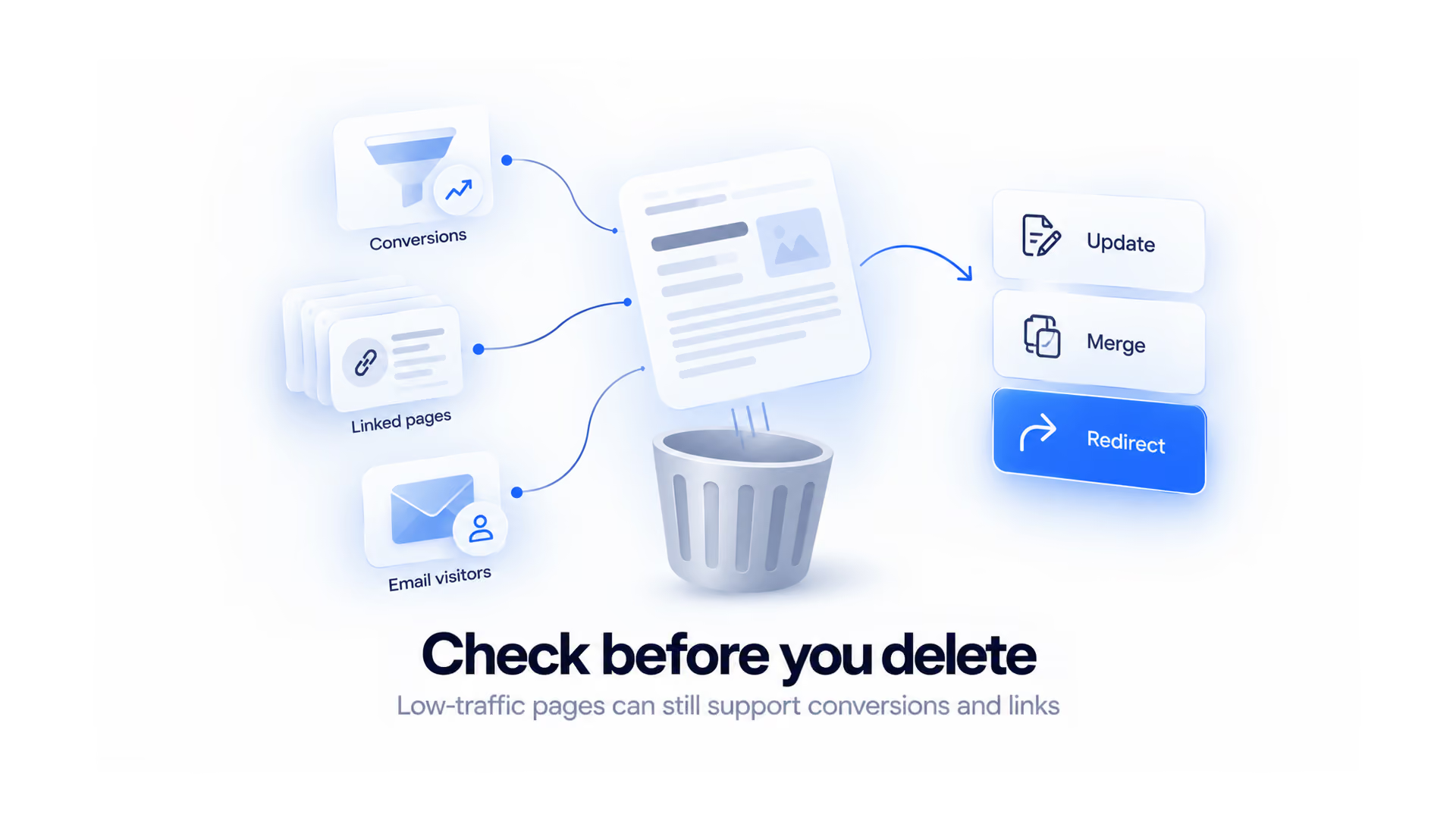
Content pruning can help when a site has many outdated or duplicate pages, yet Google describes deleting content as a last resort. A page with modest search traffic may still support conversions, internal linking, or visitors who arrive from other channels. Updating or merging low-quality pages, or redirecting them to relevant alternatives, is generally safer than removing them outright and helps preserve the value of any links they have earned.
Blaming backlinks before checking content and intent
Links are easy to blame because they sit outside the page. The causes of a drop, though, often lie in content quality or a mismatch with search intent, and disavowing links without a clear reason may remove signals that were helping. Reviewing the page itself first is a more straightforward starting point.
Ignoring pages that lost clicks but still have potential
A page that slipped from the top three to the lower half of the first page can receive far fewer clicks while still showing impressions. Since it already ranks for relevant queries, targeted improvements may be more worthwhile than work on pages that disappeared from results altogether. These URLs are easy to overlook when recovery priorities focus only on pages with the largest traffic losses.
Treating recovery as a one-time fix
Search results keep changing after a recovery, and the next update may assess the site differently again. Regular reviews of key pages help identify new issues early, turning ongoing maintenance into a routine rather than an emergency.
How to protect your site from future algorithm updates
Algorithm changes can’t be predicted, but some practices can reduce the risk of major ranking losses and make smaller drops easier to diagnose.
Build content around real expertise and user needs
Content grounded in first-hand experience and subject expertise can better address the qualities Google aims to reward in search results. Planning topics around the questions customers actually ask in sales calls, support requests, or reviews keeps the content tied to real needs. It also gives the team material grounded in its own experience, which is harder for competitors to replicate.
Keep important pages updated
Pages that bring traffic or revenue benefit from a regular review schedule. Correcting outdated details, answering new questions, and removing information that’s no longer accurate keep them useful to readers. Assigning an owner to each key page makes it more likely that these reviews actually happen.
Monitor rankings, traffic, and SERP changes regularly
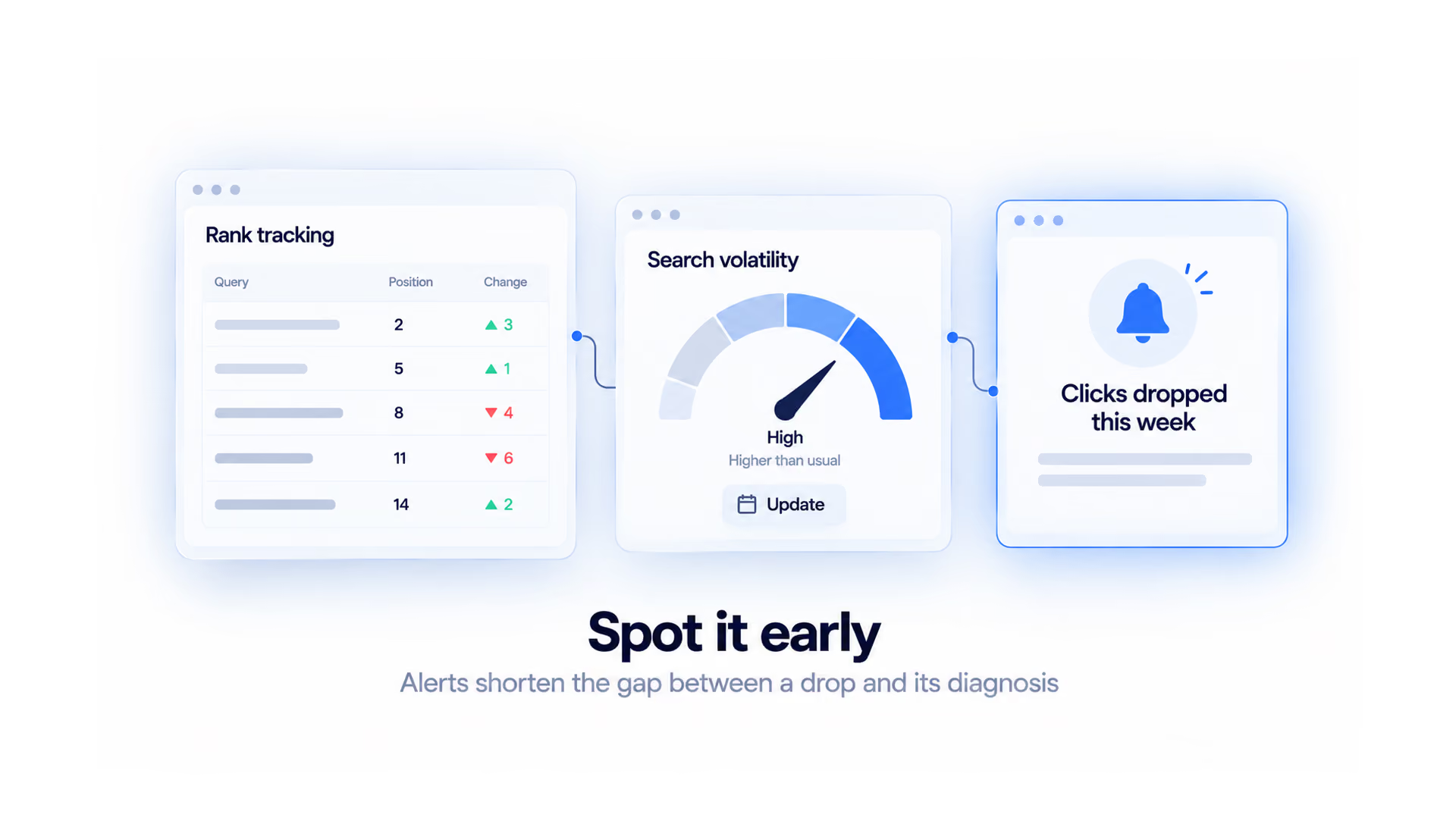
Weekly checks of Search Console and rank tracking for priority queries help spot drops in rankings and traffic early. Watching volatility around confirmed algorithm updates, along with changes in the types of results shown, gives context before any action is taken. Alerts for sudden drops in clicks can shorten the time between a problem and its diagnosis.
Maintain a clean technical SEO foundation
Audits catch indexing errors, broken links, redirect chains, and performance issues before they affect more pages. A stable technical SEO base also makes it easier to tell, after the next update, whether a decline relates to content or to the site itself. Checking key templates after each release helps catch development issues before they affect search visibility.
Diversify traffic and build brand authority
A site that depends heavily on organic search feels algorithm changes more strongly. Email subscribers, social channels, partnerships, and direct visits reduce that dependence, and a recognized brand can also attract the mentions and links that support authority over time. Branded searches can also provide a more stable source of organic traffic when rankings for generic queries shift.
Sites that keep improving their most important pages between updates are better prepared to respond when the next one arrives.
Recover lost rankings with a structured SEO plan
The recovery process can stall when changes are made without clear priorities or a way to measure their impact. A structured SEO plan ties each task to a reason found in the data, an owner, and a date for checking the result, keeping the team focused on the changes most likely to matter.
Such a plan usually brings together:
- An audit. A review of indexing, performance, and the affected URLs that sets the starting point for the rest of the work.
- A content review. A decision for each priority page on whether it needs an update, a new structure, or merging with related material.
- Technical fixes. A queue of issues sorted by their impact on crawling, indexing, and user experience.
- Long-term monitoring. Agreed metrics and review dates, so progress is assessed over a meaningful period rather than in response to daily fluctuations.
{{banner-2}}
Look beyond the lost rankings
A Google algorithm update can change how your site performs in search, but it doesn’t have to dictate every decision you make next. Rather than chasing lost positions with rushed fixes, focus on what your pages could do better for the people searching for them. Some improvements may help rankings recover, while others will make the site more useful regardless of where it appears in search results.
You can’t control Google’s next update or guarantee a return to previous rankings. What you can do is build a site that’s easier to use, more valuable to your audience, and better prepared for whatever changes come next. If you’re unsure where to begin, an independent SEO audit can help identify the improvements worth making.
FAQ
How do I know if my site was hit by a Google algorithm update?
A drop that starts during or shortly after a confirmed rollout listed on the Google Search Status Dashboard is usually the first indicator. If Search Console shows fewer clicks and impressions across many queries while checks for indexing issues, tracking problems, and manual actions reveal nothing unusual, the update may be a contributing factor. Comparing the dates with your site’s release log also helps identify changes that may have contributed to the drop.
What should I check first after a ranking drop?
Start with the Manual actions and Security issues reports, the Page indexing report, and the analytics setup. After checking these areas, compare Search Console data before and after the decline to identify which pages and queries were affected.
Should I delete pages that lost rankings after an update?
Usually not as a first step. Many pages can be improved, merged, or redirected to relevant alternatives instead, helping preserve the value of existing links and guide visitors to useful content. Removal makes sense mainly for pages that no longer serve users or the business in any form.
Can backlinks cause ranking drops after an algorithm update?
They can contribute, especially if competitors have gained stronger links or if links that used to help are no longer counted. Even so, content quality and search intent are often the main reasons, so it’s worth checking them before taking action on links. Separately, a sudden loss of strong referring domains is worth investigating in a backlink tool.
Is a Google algorithm update the same as a penalty?
No, an update and a penalty are different things. An algorithm update changes how Google evaluates sites in general, while a penalty, or manual action, is applied to a specific site after a human review. A manual action can be addressed through a reconsideration request, whereas an algorithmic decline calls for further analysis before deciding whether changes are needed.