



Many business owners launch a website and expect visitors to arrive automatically. The pages go live, but the traffic remains low and the analytics offer no explanation as to why. So, does a website need SEO services to be found, or will good work eventually surface on its own?


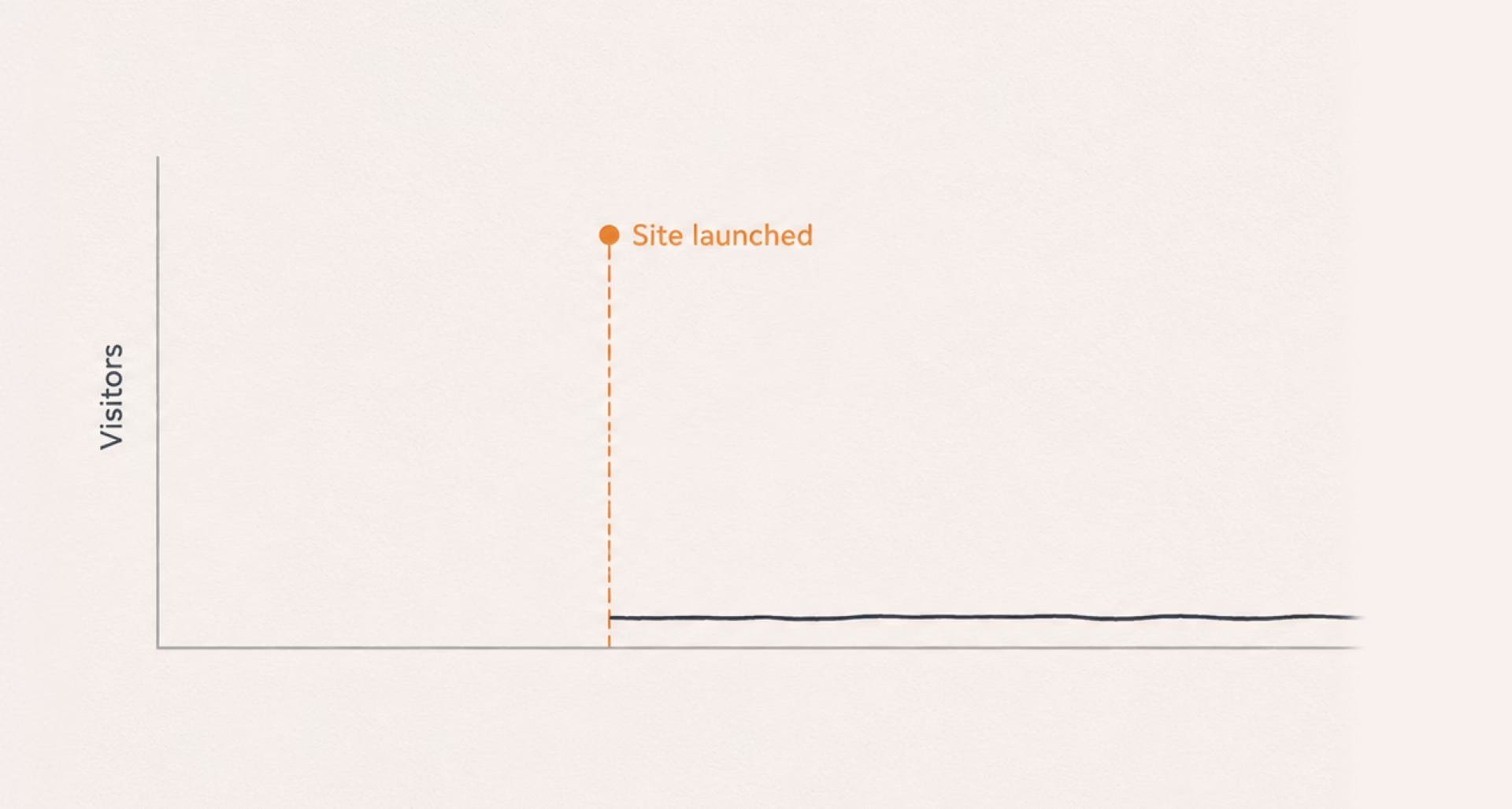
The answer depends on the business, which is why skipping the question tends to be expensive. Anyone asking “why I need SEO” usually has something concrete underneath it — traffic that stalled after launch, competitors appearing above them for their own product terms, or paid clicks that cost more this quarter than last. Those are measurable problems with traceable causes.
This guide covers how to read the mentioned signals in your own data, the situations where search optimization is the wrong investment, and how to tell which of the two describes your site.
Why your website might be losing without SEO
A website that brings in nothing still costs something to run. Founders tend to read a flat traffic line as a seasonal dip or a shift in the market, when the cause more often sits in the structure of the site itself. It usually shows up in three specific ways:
- You are completely invisible on Google: If your pages do not appear within the first few organic search positions, they effectively do not exist for the vast majority of consumers. Most users never click past the first three organic choices.
- Competitors take your market share: Every click your site misses is a click that lands directly on a competitor’s landing page. Over time, this steadily builds their customer base while starving your own.
- Your site fails to convert the traffic it gets: A website that ignores search intent often attracts the wrong kind of visitors. When people land on a page that does not match what they were looking for, they leave immediately without filling out a form or buying a product.
All three look alike in a traffic chart and share almost nothing else, which is why the diagnosis matters more than the symptom. Our guide on why website traffic goes down covers how to tell them apart.
7 clear signs your business needs SEO
The case for search optimization is easier to make in the abstract than to apply to a specific company. Some businesses can grow for years without relying on SEO as a primary acquisition channel. The signs below are the ones that separate the two — each is observable in your own data or your own market, rather than a general argument about why search matters.
1. You rely only on ads and social media
Relying entirely on paid acquisition channels puts your business on a dangerous financial treadmill. The moment you stop pumping capital into ad platforms or sponsored social posts, your incoming lead flow instantly drops to zero.
Paid clicks get progressively more expensive every year as more venture-backed companies bid for the same keywords, shrinking your profit margins. Social media platforms frequently alter their distribution algorithms overnight, meaning a post that used to reach thousands of followers might suddenly only reach a handful unless you pay to boost it.
2. Your competitors gain organic visibility while you don’t
Search a handful of your core commercial terms in a private window and count what comes back. If the same three or four brands hold the top positions across most of those searches, that consistency is the signal — occupying one query is luck, occupying a set of them is investment in content, site health, and backlinks paying off.
The gap is worth sizing rather than sensing. A tool like Ahrefs or Semrush will show which of a competitor’s pages earn the most organic traffic and which terms deliver it, and comparing that list against your own turns a vague feeling of falling behind into a specific set of queries where they appear, and you don’t.
Every term a competitor ranks for is a page someone could have written first.
3. You’re not ranking for your brand or niche keywords
Two problems hide under this heading. The first is rare but serious: someone searches your company name, and your homepage fails to come up first, which usually points to a technical fault — a stray noindex, a misdirected canonical, an unfinished migration — rather than anything about content.
The second is common and costs more. Brand terms work, but the phrases describing what you sell belong to someone else. Nobody types “independent corporate accounting software” out of curiosity, and a site missing from those results is absent at the moment the decision gets made.
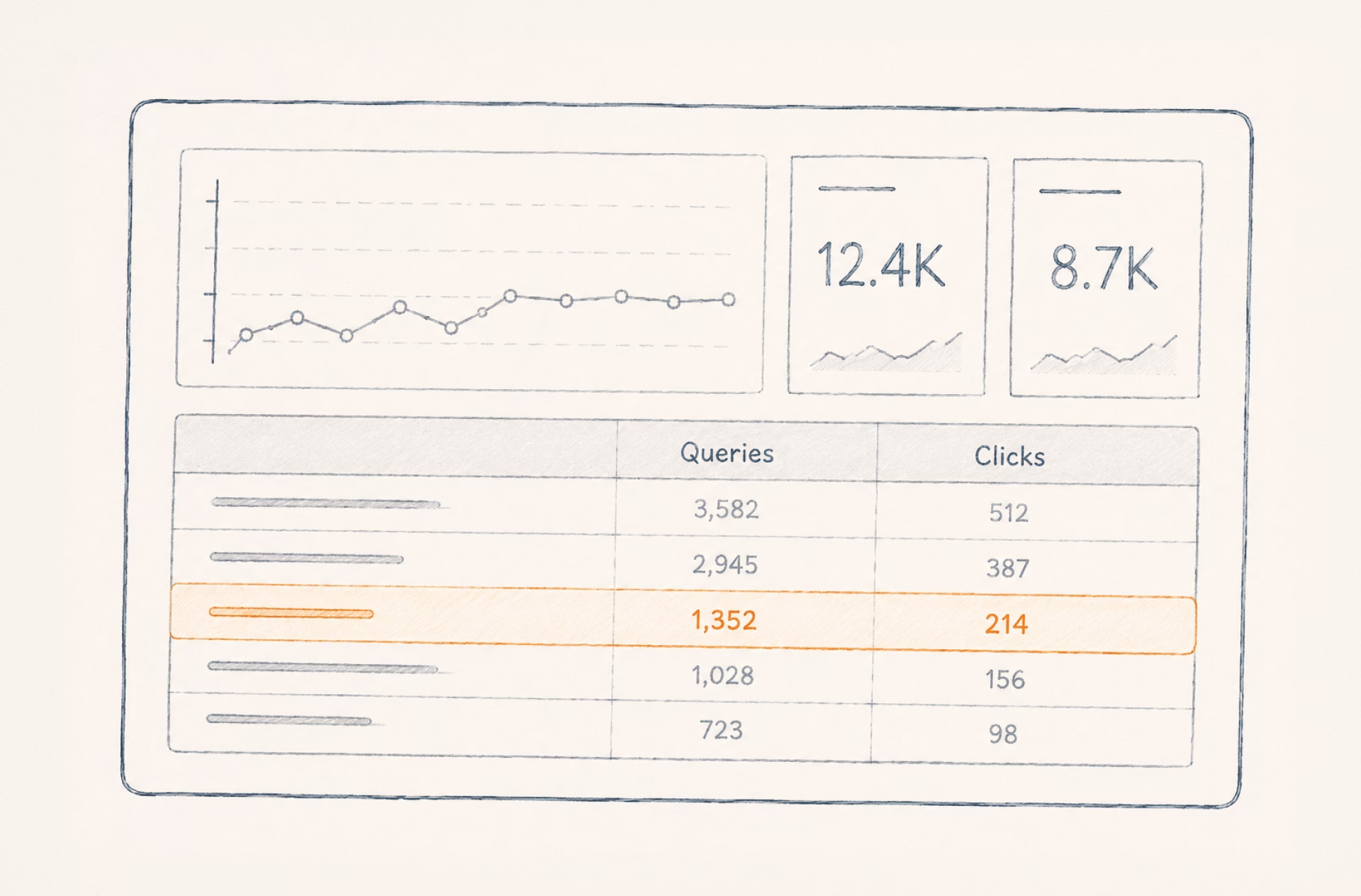
Search Console shows the split: filter the Performance report by queries containing your brand, then invert it. If branded terms carry most of your clicks, the site is being found by people who already knew it existed.
{{banner}}
4. Visitors don’t stay or convert
High bounce rates and low time-on-site metrics mean your digital content is disconnected from user expectations. If thousands of people land on your blog posts but leave within five seconds without clicking a single internal link or viewing a product page, your site design is failing.
This usually happens because the technical execution is poor, the text layout is hard to read, or the page speed is incredibly slow. A solid search strategy forces you to improve the experience of navigating your site.
5. Your site isn’t optimized for mobile or local users
Most searches now happen on a phone, often mid-errand, and the tolerance for friction is close to zero. A page that loads slowly on mobile data, sets type too small to read, or hides a phone number behind pinch-and-zoom loses the visitor before the content matters.
Local visibility works on a different mechanism entirely. A business with a physical location can rank well organically and still be missing from the map pack, where nearby searches actually resolve — and that placement depends less on the site than on a complete, consistent Google Business Profile. This local SEO guide covers what the map pack rewards.
6. You’ve never analyzed your SEO performance
Search produces a detailed record of its own performance, and on most sites nobody ever opens it. That record would show which queries bring people in, which pages earn the clicks, and whether crawl errors have quietly kept whole sections out of the index.
The obstacle here is almost never budget, because the reporting comes free with the domain and takes an afternoon to configure properly. What tends to be missing is ownership — someone whose job includes actually checking it — so the site carries on being run on instinct while the evidence accumulates unread. A single month of that data is usually enough to replace a guess about what the audience wants with a short list of pages worth fixing first.
7. You don’t appear in AI-powered search
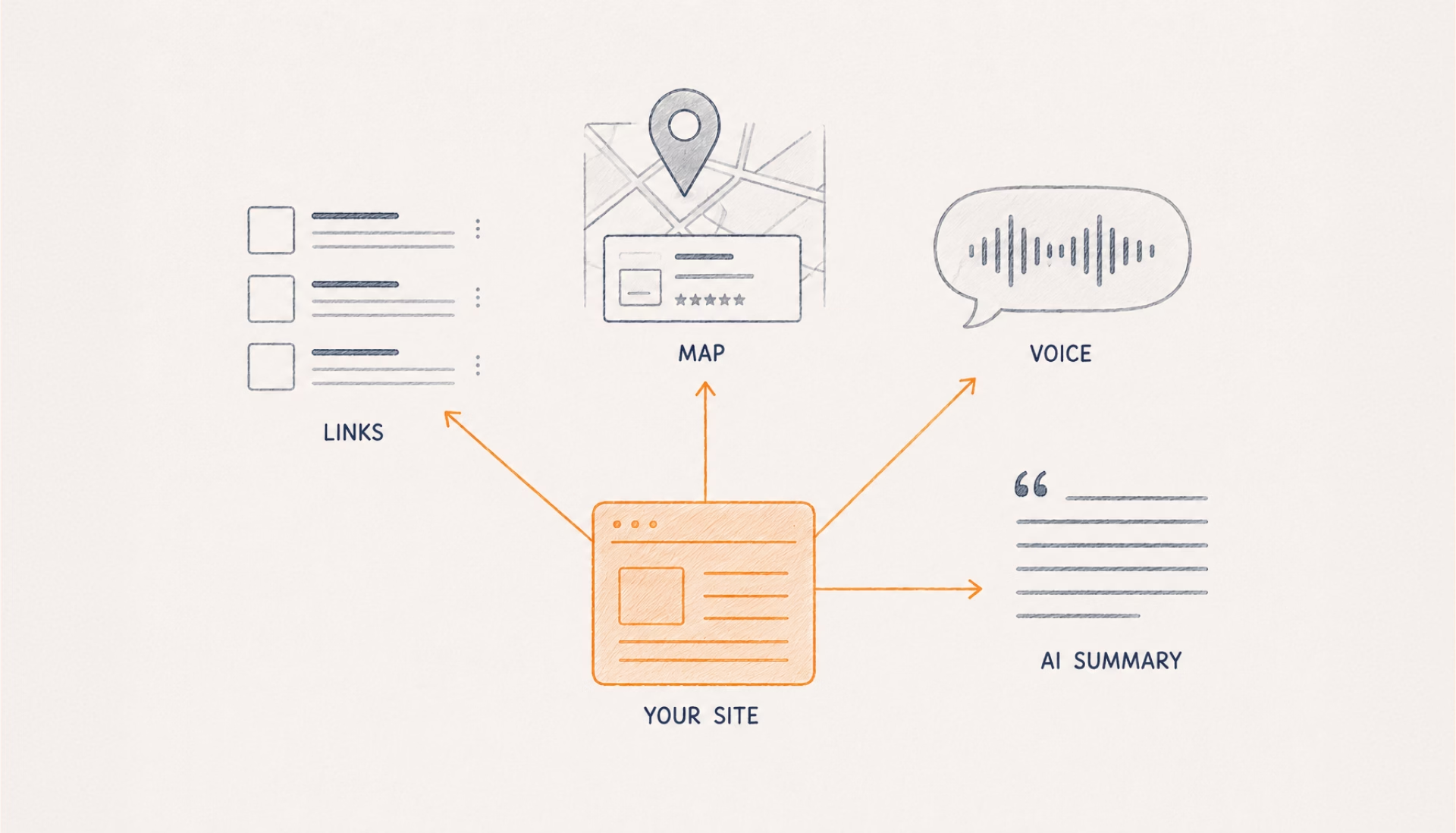
The internet has moved far beyond simple lists of classic blue links. Modern search systems use complex artificial intelligence engines to pull direct answers right into the user interface, meaning consumers often get the exact information they need without ever clicking through to a traditional website.
If your content structure is disorganized, unverified, or lacks clear technical formatting, modern AI models will completely ignore your site when synthesizing answers for users. As AI-powered search grows, SEO increasingly means making your content easy for both search engines and AI systems to understand, verify, and surface.
What happens if you ignore SEO
Passing on search optimization feels like a decision to do nothing, though the effects only ever compound in one direction. A site left alone loses ground gradually rather than suddenly, and the cost of holding the same market share rises steadily while that happens. Here, three consequences account for most of the damage, and each becomes more expensive to undo the longer a site sits untouched.
You lose organic traffic long-term
Rankings behave less like a position than an accumulation. A page holding the top of the results keeps collecting links, clicks, and engagement signals, each of which makes it harder to displace — which is why established pages tend to stay established. The same mechanism runs in reverse on a site left idle, where stale content and unattended technical faults let positions drift down slowly enough that nobody notices until the numbers have moved.
Recovery costs more than maintenance would have. A site that has slid to the second or third page has lost the traffic feeding its own authority, so rebuilding means supplying that momentum from scratch. Our walkthrough on increasing organic traffic sets out what that involves in practice.
AI search and SGE may reduce your visibility and clicks
As search engines integrate generative artificial intelligence into their core interfaces, the layout of search results pages is changing dramatically. These tools summarize web content directly on the search page, creating a “zero-click” environment where users find answers instantly.
If your platform is not structurally optimized to serve as a verified source for these AI summaries, your traditional web traffic will plummet. You should format the data so that these advanced engines cite your brand directly within their generated responses.
Three properties determine whether an engine treats a page as a source worth quoting. Markup like FAQPage, Product, and Organization lets the system identify what a page contains instead of guessing at it. Answer-first structure helps because summarisers draw on the opening lines of a section rather than reading to the end, which puts the direct response at the top and the detail beneath it.
And precise claims with named sources tend to win over general ones, since a system weighing two pages will take the one it can verify — checking your own core questions in an AI assistant shows quickly whether the page being quoted is yours or a competitor’s.
You spend more on ads
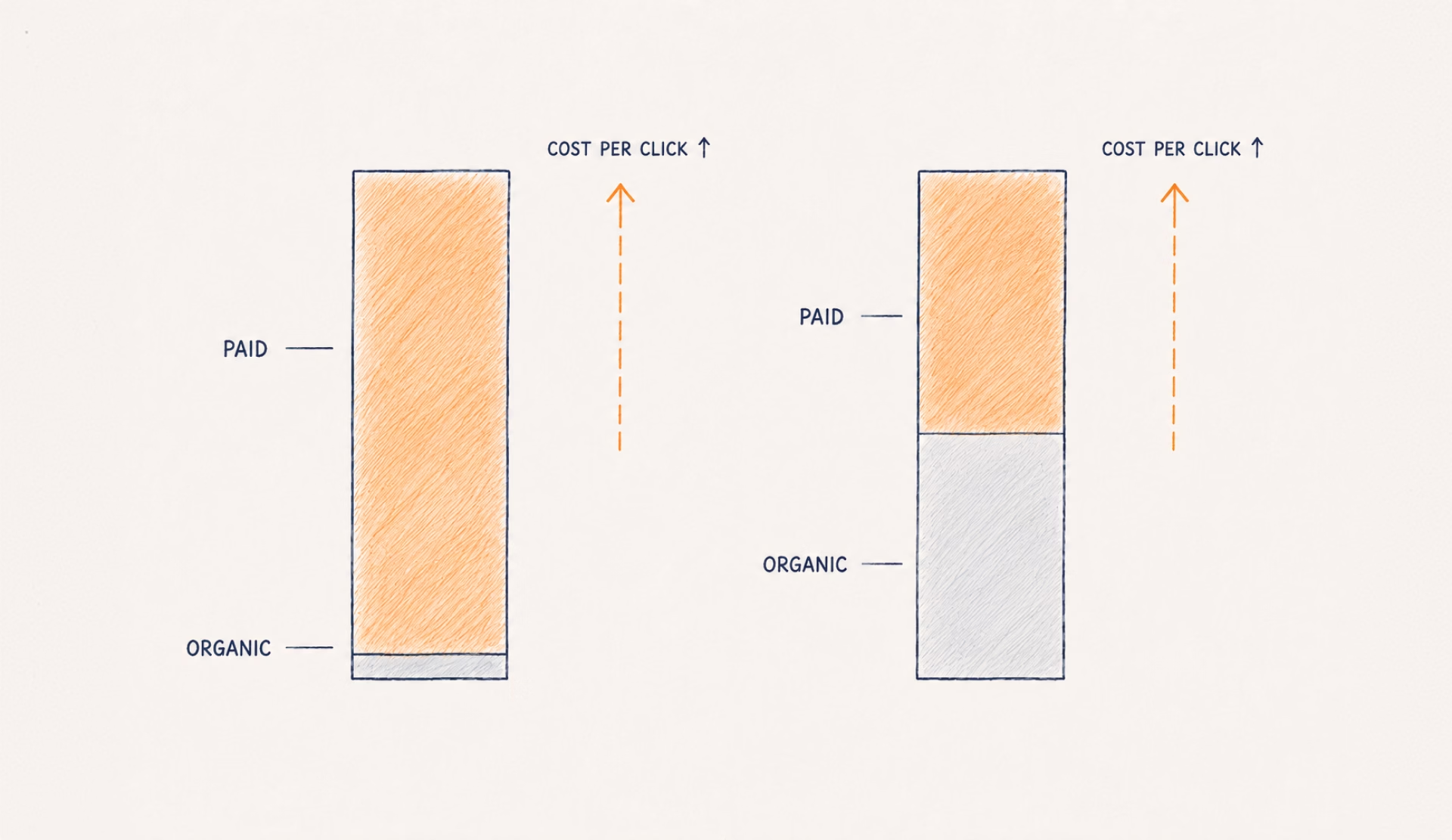
When you lack a natural, self-sustaining stream of inbound customers, your entire business model becomes vulnerable to price changes in the paid advertising market. If your cost-per-click doubles due to a new competitor entering your niche, your customer acquisition costs will surge, wiping out your margins. This financial pressure forces many early-stage companies into a corner where they must continuously pay top dollar for ads just to keep their baseline sales active.
Two numbers turn that risk from a general worry into something specific to your business. Dividing monthly ad spend by the leads it produced gives your cost per lead, and the share of total pipeline those leads represent shows how much of the operation depends on prices holding steady.
A company drawing nine inquiries in ten from paid channels has nothing to absorb an increase, while one at half that can lose a bad quarter and carry on. Organic traffic shifts such arithmetic rather than replacing the ads, since every page holding a position contributes leads the budget no longer has to buy.
Key reasons why you need SEO for your business
Everything up to here has been about recognizing a problem. The reasons that follow describe the other side of it — what the channel produces once it exists, and why SEO is so important for companies that want growth to outpace their advertising budget rather than depend on it.
The case for why you need SEO for your business rests largely on duration: each of these returns takes time to establish and then holds with comparatively little maintenance, which is a different economic shape from any channel rented by the click.
SEO builds long-term visibility
Paid ads deliver faster results, which makes “why do you need SEO?” a reasonable question to ask. What separates the two is what happens to the work afterward: a campaign leaves nothing behind when the budget stops, while a page that ranks keeps earning against a cost already paid.
That durability comes from how ranking is assessed. A page that answers a question thoroughly and stays technically sound accumulates the signals search engines read as reliability, and reliability is slow to lose. The practical effect is that attention can move elsewhere — to a launch, a campaign, a different channel — while the pages built earlier carry on producing leads without anyone tending them.
Drives consistent and qualified traffic
Someone typing a query into a search engine has already framed a problem and started looking for a way to solve it. That distinguishes search from social, where attention is borrowed, and interruption does the work — a person searching for a vendor is at the point of the decision rather than somewhere upstream of it, which is why the same visit is worth more.
The conversion gap follows from that timing. Traffic arriving on a page that matches what was searched for converts at a considerably higher rate than cold outreach or display advertising, where the offer has to create the need before it can meet it. What determines whether you capture any of it is whether your pages line up with the terms people actually use at that moment, and such alignment rarely happens by accident.
{{banner-2}}
Builds brand authority and trust
Consumers naturally trust search engine choices. Appearing consistently at the top of organic results gives your brand an immediate badge of industry credibility. Users assume that if Google ranks your company on the first page, you must be an established, dependable provider in your field.
This organic validation lowers buyer resistance and makes it much easier for your sales team to close deals. To discover how to build an authoritative presence through your writing, read our breakdown on building a comprehensive SEO content strategy.
Supports other channels
Search insight provides a treasure trove of data that improves your entire marketing ecosystem. By analyzing which organic terms bring the most qualified leads to your site, you can refine your paid ad messaging, write better email subject lines, and create highly focused social media campaigns.
Furthermore, the technical enhancements required for search optimization — such as faster load times and intuitive navigation layouts — naturally make your site far more effective for visitors coming from offline promotions or word-of-mouth referrals.
Future-proofs your marketing
Search itself keeps changing shape. A question that once returned ten blue links now gets resolved by a voice assistant, a map result, or a summary generated above them — and every one of those still pulls from sites it can crawl, parse, and trust.
The work that earns a place in those answers is largely the work that earns rankings: fast pages, clear structure, information worth citing. Businesses that have already done it show up in each new format as it arrives, while the rest often find they are absent from a channel they never knew had opened.
When SEO is NOT for you
Search optimization suits most businesses, though not at every moment in their life. The channel has a specific requirement that has nothing to do with company size or budget: it needs time, an audience already looking for what you sell, and something worth sending that audience to. Where any of those is missing, effort spent on search produces very little, and the money would work harder somewhere else. Four situations account for almost all of those cases.
If you’re testing a short-term campaign or MVP
Search results move slowly, and a new page usually needs months to settle into a position that generates meaningful traffic. A thirty-day pop-up or a prototype built to find out whether anyone wants the product will have finished its work before organic visibility begins. Paid search answers the same question in days, which is what makes it the right tool for anything with a deadline that short.
If your website or product isn’t ready yet
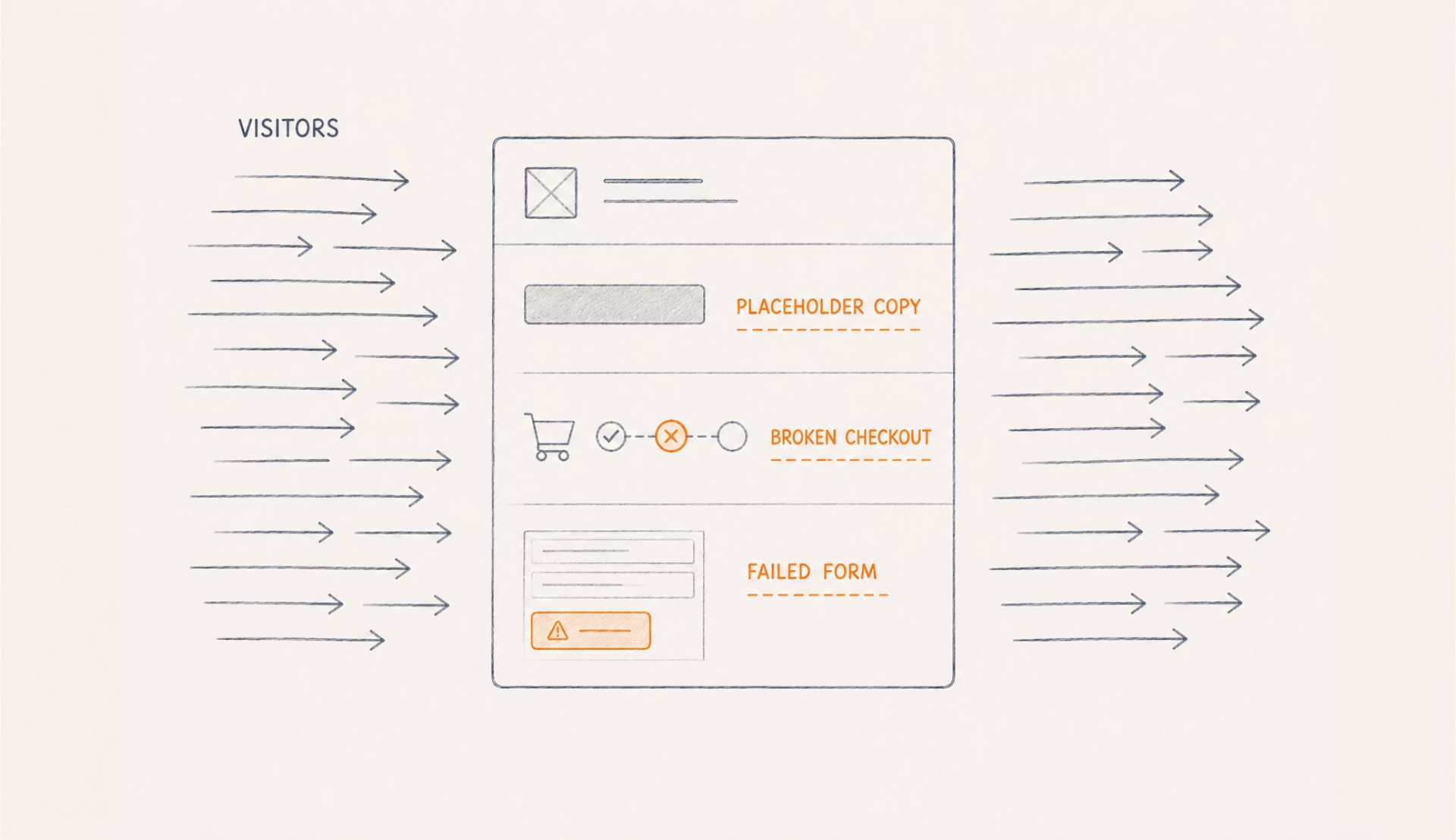
Traffic exposes whatever it lands on. A checkout that breaks halfway through, placeholder copy still sitting in a template, or a sign-up form that quietly fails will convert visitors into people who now know the product doesn’t work. Sending more of them costs money twice — once to acquire the visit, once in the impression it leaves. The order matters here, and the product comes first.
If you have no resources to maintain content or backlinks
Search optimization is a standing commitment rather than a piece of work with an end date. Pages need updating as the subject moves, broken links need fixing, technical faults need catching, and none of that happens without someone whose job it is. A team that cannot sustain such attention across six to twelve months will watch the initial investment decay before it has returned anything.
If there’s no search demand for your niche
Search captures existing demand rather than creating it. An entirely new product category has nobody typing its name, because the name means nothing yet — and no amount of optimization will surface a page for queries that aren’t being made. Demand has to be built first, through PR, partnerships, social, or direct outreach, and search becomes worth funding once people know enough to look.
Search rewards patience and rarely works on a short deadline.
How to know if you’re ready to start with SEO
If you have a functional website, a validated commercial product, and the patience to build a sustainable distribution channel, your company is ready to shift toward organic search. Here is exactly how to start the process methodically without wasting your development budget.
Run a modern SEO audit
Anything you publish sits on top of whatever the site already is, which is why the audit comes before the content plan rather than alongside it. A proper assessment surfaces the faults that quietly cap performance: pages search engines cannot reach, near-duplicate URLs splitting the same content between them, redirect chains, missing or conflicting directives.
Knowing that first changes what you do next. Publishing into a site with structural problems means new pages inherit them, and the effort goes into work that cannot rank for reasons unrelated to its quality. Fixing the foundation is cheaper than diagnosing it later through months of results that fail to arrive.
{{banner-3}}
Analyze your competitors’ digital visibility
Take the time to thoroughly investigate the digital footprints of your top three market competitors. Identify which specific terms bring the most traffic to their platforms, look at the length and depth of their primary landing pages, and evaluate where they get their external links. This competitive analysis shows you exactly what it takes to win in your niche, allowing you to copy their successful strategies.
Define realistic goals, budget, and internal resources
You must establish clear operational parameters before launching the campaign. Decide exactly who will manage your technical site health, who will write your content updates, and how much budget you can afford to allocate each month over half a year. Setting realistic expectations prevents the team from abandoning the campaign early before the search engines have enough time to index your pages and build organic authority.
Do I need SEO for my website?
The question may seem to be about the channel, but it often comes down to how long your business can wait for results. Search rewards businesses prepared to spend several months before the first meaningful return arrives, and that willingness — rather than industry, budget, or company size — is what separates the firms search works for from the ones it disappoints. Where people are already looking for what you sell, and the patience exists to be found, whether you need SEO for your website stops being a real question.
What remains is who keeps it running, because the channel decays the moment attention moves elsewhere. That is the part most businesses underestimate: the year of small corrections that turn early rankings into a position competitors struggle to take back. Halo Lab’s monthly SEO services provide that continuity, turning early rankings into visibility competitors find harder to displace.
FAQ
How long does it take to see results from SEO?
Most websites start seeing measurable improvements within 4–6 months. Competitive industries and new domains may require more time.
Can I handle SEO myself or do I need an agency?
Basic SEO can be managed in-house using free tools and content updates. Competitive markets often require agency support for technical SEO, content strategy, and link building.
How often should a website be optimized?
SEO should be reviewed continuously. Technical audits are typically performed monthly, while key content should be updated at least once a year.
Is SEO still effective with all the AI and algorithm updates?
Yes. Search engines continue to reward accurate, authoritative content, strong technical performance, and positive user experience.
How can I adapt my SEO strategy for AI-driven and zero-click search results?
Use structured data, clear question-and-answer formats, and fact-based content. These elements make it easier for AI systems to understand and cite your pages.