




Even legitimate sites can lose visibility when search filters detect risky indicators. Sudden spam score increases, suspicious referrals, or poor-quality backlinks can quietly erode rankings and credibility. Spotting these problems early helps safeguard your SEO foundation and preserve trust.


Search engines track content quality along with the patterns behind every link connected to your domain. Over time, they reveal how trustworthy your site appears. Referral spam, unnatural link profiles, and manipulative redirects all influence your website’s spam score in ways that most site owners never notice until performance drops.
This guide outlines what a spam score is, how to interpret it, and what steps to take to maintain a healthy balance between growth and authenticity. You’ll learn how to identify threats, correct risky link behavior, and protect your rankings before penalties arise.
What is spam score?
This is a metric created by Moz to evaluate how likely a domain is to be viewed as untrustworthy or risky by search engines. It measures indicators that resemble spammy behavior — such as link schemes, thin content, or domain-level inconsistencies — and expresses them as a percentage.
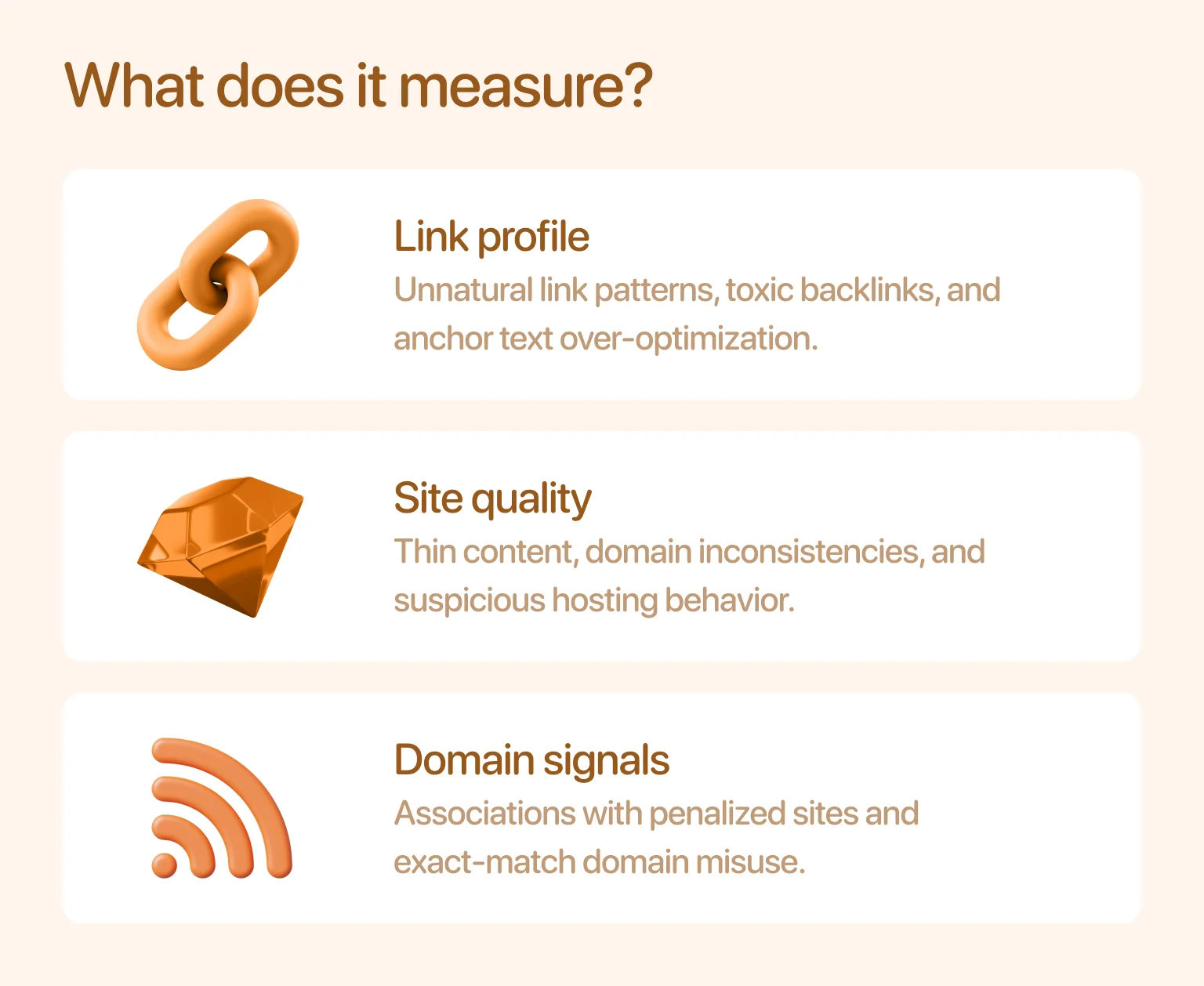
Though not an official Google ranking factor, it’s a valuable indicator of site health. A balanced score reflects organic link growth and relevant connections, while a rising number can reveal deeper technical or reputational issues that deserve attention before they harm performance.
How the spam score is calculated
Understanding this process helps clarify what drives those percentage values you see in tools like Moz or Semrush. These systems evaluate dozens of data points connected to your website’s metrics, including backlink quality, linking domains, content structure, and domain behavior. Each factor contributes to an overall profile that predicts how search engines might interpret your site’s trustworthiness.
Machine learning models compare your domain with others that have been previously penalized for spammy activity. If your site exhibits similar traits — such as unnatural link patterns, repetitive anchor usage, or a sudden surge in low-quality backlinks — your domain spam score rises. The output, expressed as a percentage from 1 to 100, highlights the probability of risk rather than direct penalties. A balanced assessment means maintaining natural link diversity, healthy content signals, and consistent link-building growth.
“Your risk level rises when manipulation outpaces authenticity. Focus on earning genuine trust, not just building links.”
What is a good spam score?
A good spam score generally ranges between 1% and 30%, representing a low likelihood of being associated with spammy practices. This range indicates that your domain maintains a natural link profile and publishes trustworthy content aligned with SEO best practices. Scores that climb above 30% warrant closer inspection, while anything above 60% signals vulnerability or active spam patterns.
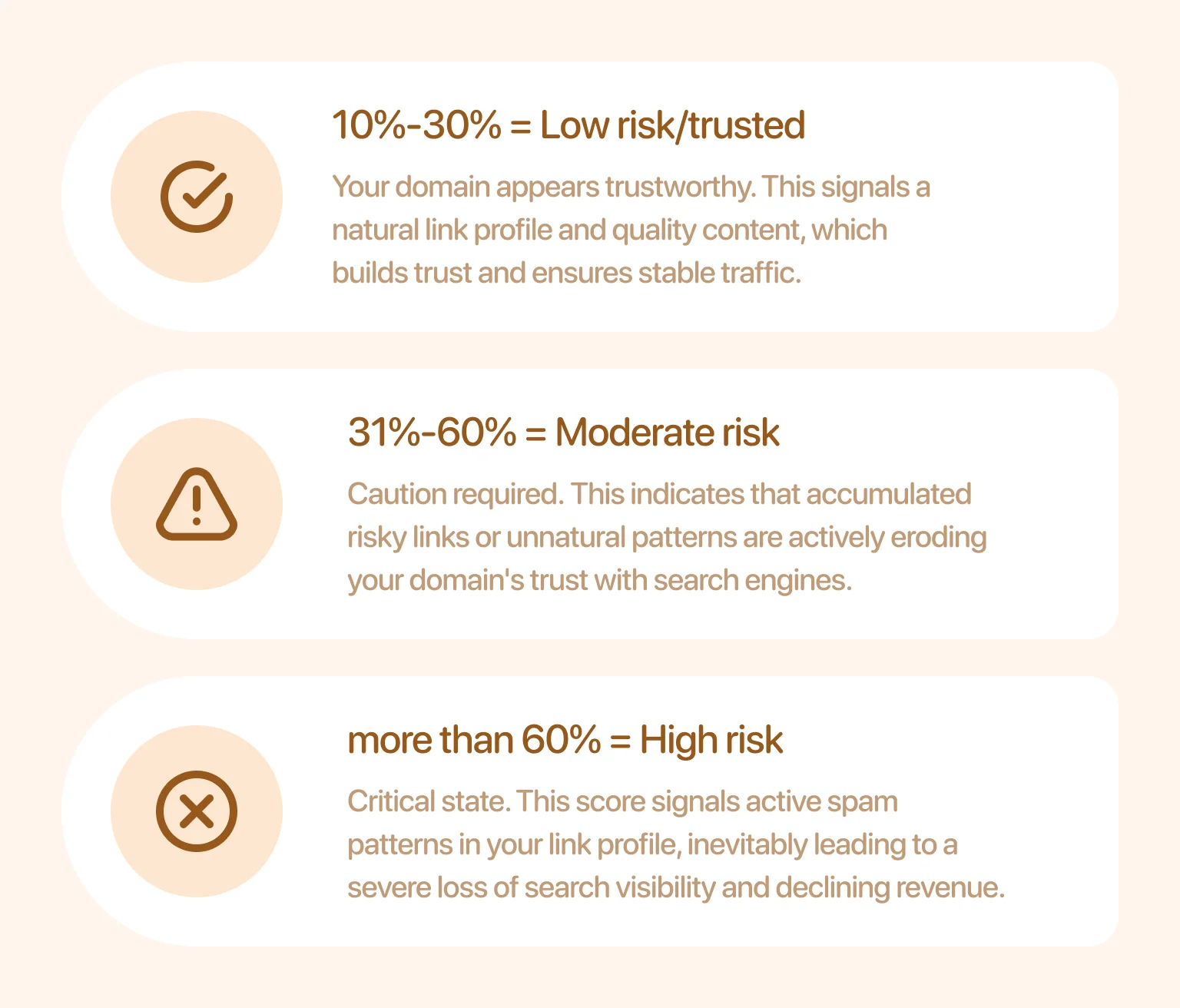
Keeping a low score involves monitoring and corrective action. Regular backlink analysis helps detect harmful sources before they impact rankings. Pairing this with updated, relevant content strengthens credibility in the eyes of both users and search engines. Businesses that routinely check website spam score and proactively manage their links tend to experience more stable search performance and stronger domain equity.
If your site shows early signs of risk, investing in professional guidance can help uncover and fix underlying issues. Explore SEO consulting services to evaluate your site’s SEO health and build a safer, stronger link profile.
Common misconceptions about spam score
Misunderstanding these metrics often leads to wasted effort or panic. Many website owners react when they see elevated numbers without understanding their context. The following misconceptions are among the most common:
- “A high spam score means Google has penalized my site.”
This metric is not an official Google signal. It indicates potential risks based on patterns similar to known spam sites, but doesn’t confirm penalties. - “If my spam score increases, my rankings will drop immediately.”
In reality, rankings depend on hundreds of factors. A temporary fluctuation in this metric doesn’t automatically affect visibility unless it reflects genuine SEO issues. - “All backlinks from low-authority sites are harmful.”
Authority alone isn’t the deciding factor. Context and relevance matter more. A niche-related blog with moderate authority can still provide valuable, natural references. - “Disavowing links always lowers spam score.”
Disavow files inform Google to ignore specific backlinks, but don’t directly change your Moz-based score. That number adjusts over time as your link profile improves.
Awareness of these misconceptions prevents unnecessary panic and promotes smarter SEO decisions. Treat metrics as a guide — an alert system that helps you stay proactive, refine your strategies, and safeguard your site’s SEO health.
Factors affecting spam score
Every website’s spam score is built on patterns. Search engines don’t see a single red flag and assume manipulation — they see combinations of factors that, when combined, resemble spam. These indicators often arise from unnatural link activity, poor link sources, or inconsistent anchor usage.
The goal of maintaining a low score is controlling these patterns. Each element below reflects behaviors that search algorithms associate with risk. Knowing them lets you shape a safer, stronger link profile that reinforces authority instead of undermining it.
Over-optimized anchor text
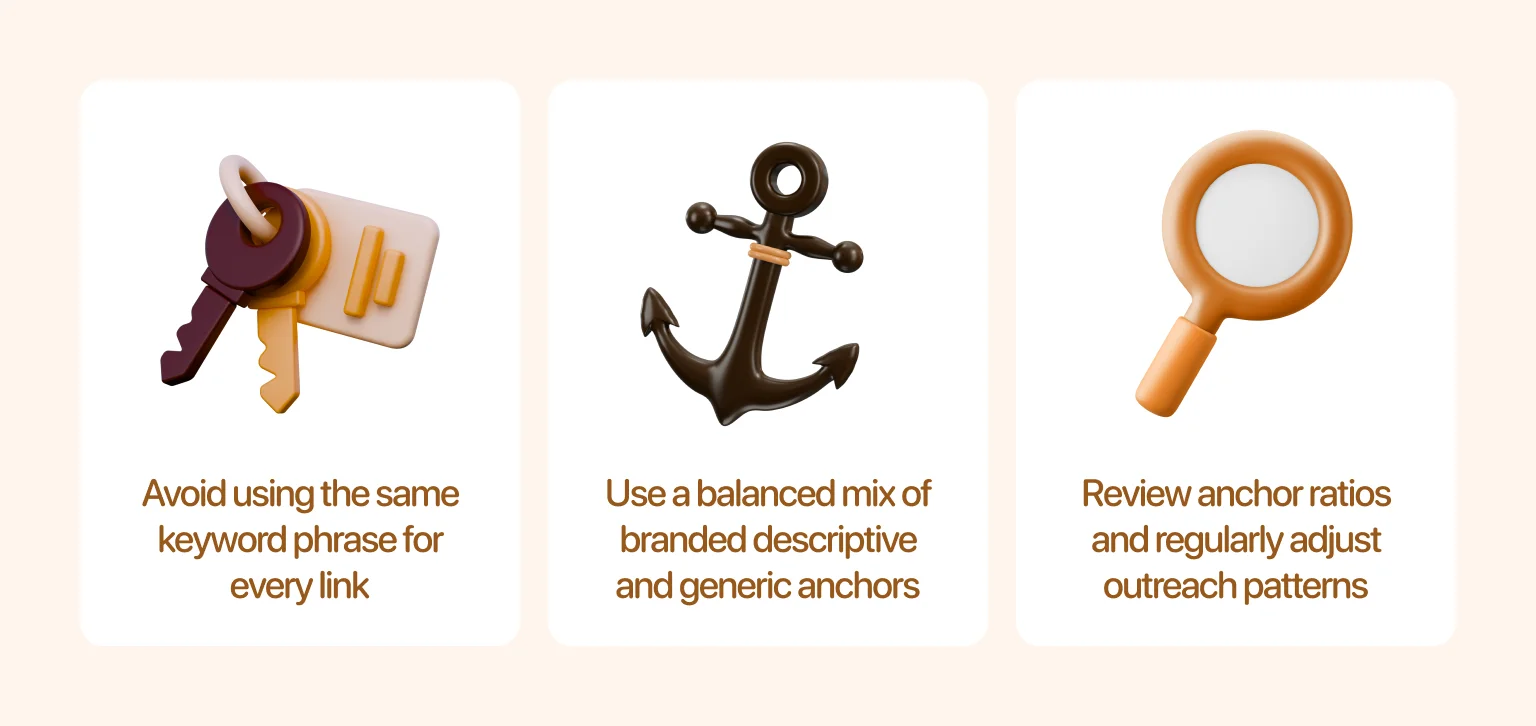
Anchor text tells search engines what your page is about, but when every link uses the same keyword phrase, it feels forced. Consistent repetition sends a mechanical signal that suggests manipulation. A balanced mix of branded, descriptive, and generic anchors creates the natural variation Google expects. Review anchor ratios regularly and adjust outreach to reflect genuine language patterns used by your audience.
Large number of low-quality backlinks
Not all backlinks carry value. Many links from unrelated blogs, forums, or directories weaken trust instead of strengthening it. Algorithms track both link relevance and domain strength; too many low-grade connections inflate your profile artificially. Focus on earning fewer, better links that match your niche and contribute real authority.
Unnatural link growth patterns
Link acquisition should look organic. A sudden jump of hundreds of backlinks in days — especially from unrelated sources — signals automation. Consistent, gradual link building aligns with natural discovery and content sharing. Steady growth keeps your domain stable in search performance and avoids algorithmic flags.
Links from irrelevant domains
Search engines expect topical relevance. A marketing site linked heavily from entertainment or gambling pages raises suspicion. These mismatched connections distort topic relevance and push your spam score higher. Prioritize context when building relationships; every backlink should make sense to both users and crawlers.
High ratio of follow vs. nofollow links
Healthy link profiles include both types. A profile dominated by followed links implies intentional PageRank manipulation. Nofollow links, though they don’t transfer ranking value, add credibility by reflecting natural referencing behavior. Balancing this ratio keeps your link graph authentic and algorithm-friendly.
Links from weak or low-value sources
Some sites exist solely to trade or sell links. Directories, expired domains, and link farms produce noise rather than authority. These connections harm your domain trust metrics and inflate perceived spam activity. Audit links quarterly and remove or disavow those from suspicious or unrelated sources to maintain clean signals.
Exact-match domains with spam patterns
Using an exact-match domain packed with keywords once worked for quick rankings, but now it triggers scrutiny. Domains like “besttechdealsnow.com” or “topcheapservices.net” often appear in spam networks. Keep naming natural and brand-driven; one keyword is fine, but clarity and memorability matter far more than forced optimization.
Sitewide or footer links in bulk
Footer links repeating across hundreds of pages were once common for SEO credit. Today, they often indicate manipulation. Google interprets mass identical placements as paid or automated linking. Limit sitewide references to genuine brand partnerships or credits, and ensure they add value to users.
Why spam score matters for SEO
Even though Google doesn’t use these metrics directly in its ranking algorithm, the behaviors that increase it — low-quality backlinks, irrelevant anchors, or weak on-page content — mirror the same indicators Google’s systems flag as risky. Monitoring this metric helps identify warning signs before they evolve into larger SEO setbacks.
“Treat your spam score as the check engine light for your SEO.”
A consistently low score signals that your domain maintains healthy link relationships and avoids manipulative patterns. Conversely, a high score often correlates with practices that can lead to traffic drops or even manual actions. Addressing these issues proactively strengthens site authority and safeguards visibility across search results. For actionable strategies that reinforce organic performance, read our article on how to increase organic traffic.
How a high spam score affects rankings
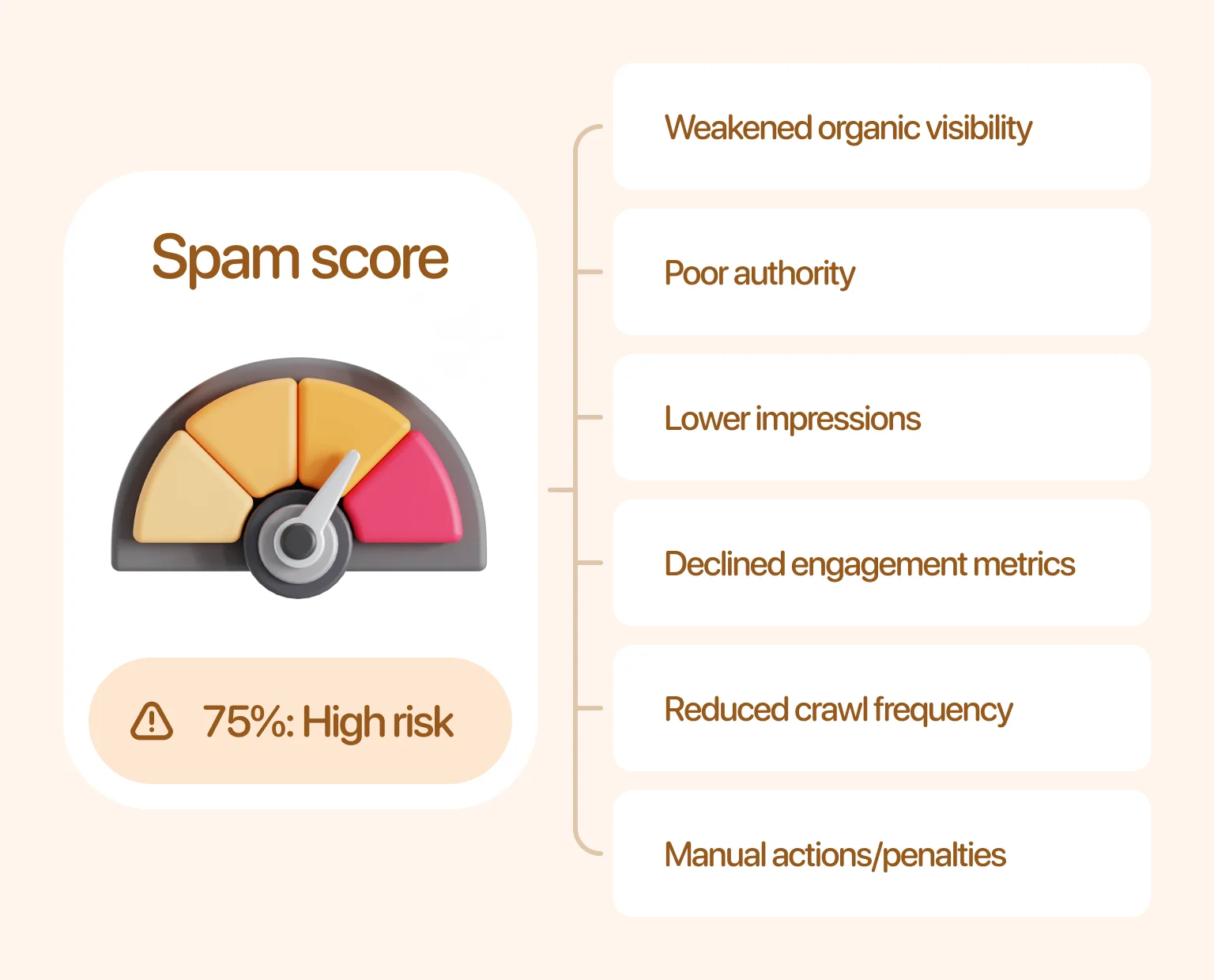
While Google does not use metrics directly in its ranking systems, a high percentage often mirrors patterns that search engines consider manipulative. Excessive backlinks from irrelevant or low-quality sites, duplicate content, and over-optimized anchor text all erode trust. Over time, this results in weakened organic visibility, lower impressions, and declining engagement metrics that reflect poor authority.
“Every toxic link is a crack in that foundation.”
The indirect effect comes through how algorithms perceive these factors. Sites showing spam-like behavior can experience reduced crawl frequency, limited indexation, or loss of keyword positions. Even small increases in this score can accumulate into noticeable traffic loss. Keeping a clean backlink profile and eliminating suspicious domains helps reverse these effects before they cause measurable ranking damage.
Spam score and site authority
High-authority domains maintain strong backlink profiles built on trust, relevance, and contextual consistency. When the website score rises, it often points to link dilution or inconsistent link acquisition strategies. These issues gradually weaken domain credibility, signaling instability to search engines and users alike.
Restoring authority requires active maintenance — assessing link sources, ensuring contextual alignment, and removing toxic or manipulative connections. Strengthening topical depth and publishing valuable content can help rebuild lost trust. Over time, these actions stabilize rankings, reinforcing your reputation as a reliable and authoritative source within your niche.
Why Google doesn’t use the spam score directly
Spam score tools such as Moz’s system are independent models built to estimate potential risks. Google, however, evaluates websites through far broader lenses — including user satisfaction, technical performance, and content integrity. This distinction means metrics should be viewed as a directional indicator, not a definitive ranking factor.
Maintaining a low score still benefits performance because it aligns with the same principles Google rewards: authenticity, quality, and balance. Auditing backlinks and improving link context creates a foundation that naturally supports stronger search rankings.
Correlation with manual penalties
Manual penalties often follow patterns that mirror high spam score readings — manipulative link exchanges, stuffed anchors, or unnatural traffic sources. When such activity is detected, reviewers may impose ranking restrictions or partial deindexing to maintain search integrity. These penalties can persist for months if ignored.
Reducing exposure involves proactive link cleanup, clear documentation of removal efforts, and transparent backlink acquisition. A gradual improvement in your link environment decreases the likelihood of triggering human review and restores organic visibility once the risk signals diminish. Oversight is key to avoiding long-term setbacks. For insights on resolving visibility issues, read our article Google doesn’t index my website.
Long-term risks of a high spam score
While a sudden spike in spam score can cause immediate ranking fluctuations, the more insidious threat lies in its long-term effects. Allowing a high-risk link profile to persist does more than just trigger algorithms — it systematically erodes the foundational trust your domain has built over time.
Persistently high spam metrics can lead to a gradual but steady decline in organic visibility, often so slow that it goes unnoticed until a significant portion of traffic is lost. This “slow bleed” occurs as algorithms become increasingly cautious about promoting your content, favoring competitors with cleaner, more authoritative profiles. Furthermore, a history marred by spam signals complicates future SEO efforts.
How to reduce the spam score of a website
Lowering risk signals across your domain takes strategy and consistency. The process involves cleaning up harmful backlinks, strengthening on-site value, and setting up monitoring systems that detect future threats early. Treat this as an ongoing maintenance routine — each improvement compounds your site’s trust over time. The methods below explain how to effectively reduce a website’s spam score by restoring balance to your link profile, improving relevance, and reinforcing domain credibility.
Regular backlink audits
Routine backlink audits uncover suspicious domains and manipulative link structures before they harm rankings. These checks reveal unnatural anchors, irrelevant linking sources, and unbalanced patterns that can damage overall trust. Using analytics platforms like Ahrefs, Moz, or Semrush provides a clear view of your inbound link network.
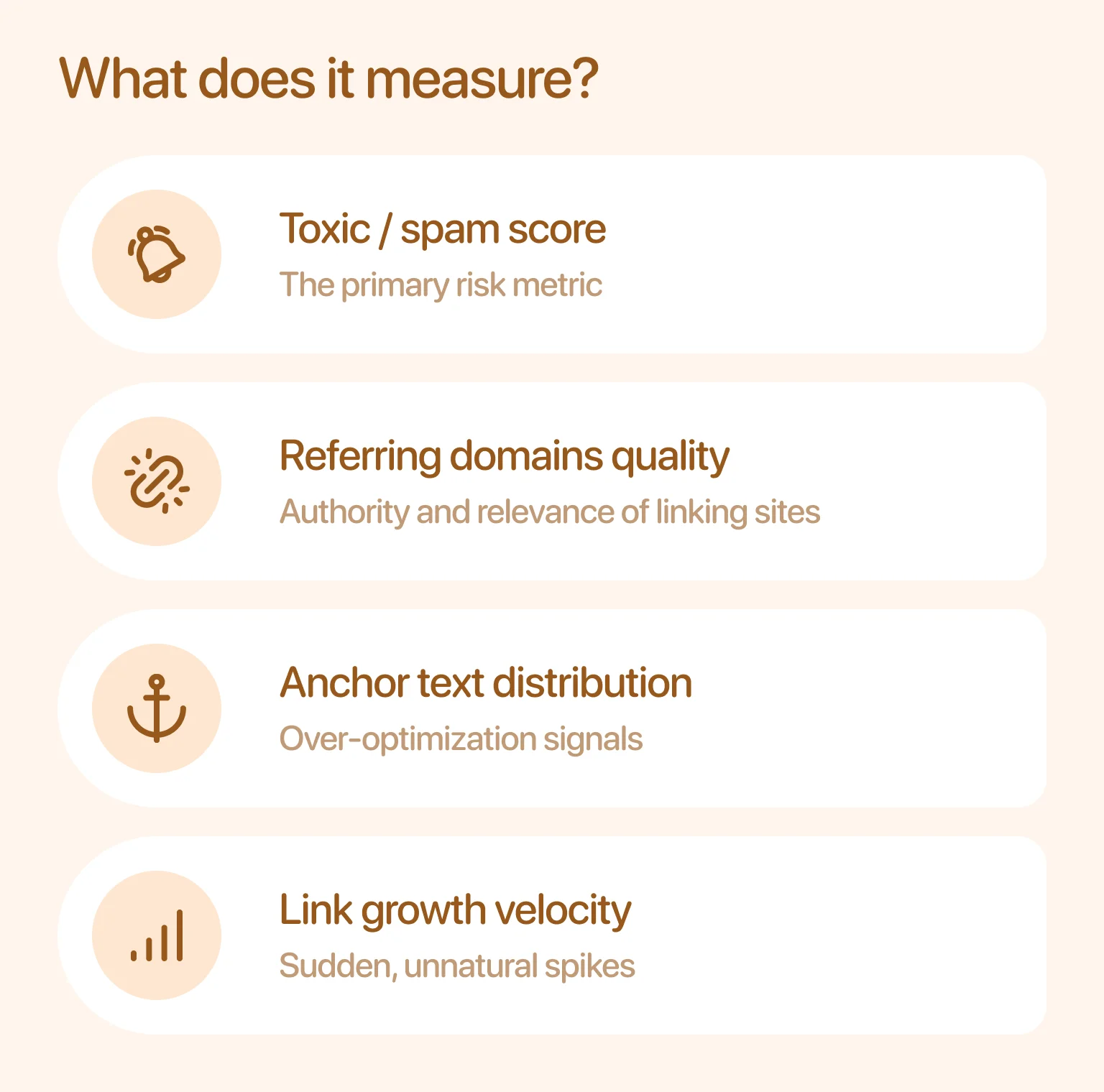
Here’s a quick approach to guide your audit process:
- Gather all inbound link data and review referring domains for topical relevance
- Highlight risky connections and outdated sources
- Create action lists for removal or disavow requests
Consistent audits reduce SEO vulnerability. For a professional evaluation that identifies deep-seated issues, book an expert SEO audit.
Disavowing toxic links
When link removal proves impossible, Google’s Disavow Tool becomes vital. It allows you to flag low-value or spammy backlinks that distort your authority profile. Submitting a concise, verified list of URLs tells Google’s algorithm to ignore them when assessing your site’s trust.
This step should always follow thorough analysis. Avoid disavowing links that add genuine context or traffic. The goal is precision — removing manipulation clues without stripping beneficial link equity.
Outreach to remove harmful links
Direct communication often succeeds where automated cleanup fails. Contacting site owners to request link removals adds a human element to link management. Personal messages explaining your concern about irrelevant or harmful backlinks usually yield better results than mass-produced forms.
Keep outreach professional and polite, documenting all correspondence. Such transparency not only supports future reconsideration requests but also builds positive relationships within your industry. Over time, it contributes to a cleaner, safer link environment.
Improving on-site content quality
Quality content naturally attracts trustworthy backlinks and reduces reliance on manipulative link schemes. When your pages provide original insights, clear structure, and useful data, they signal reliability to both users and search engines. Strong content decreases dependency on artificial link-building.
To strengthen your site’s content strategy:
- Update outdated articles and replace generic sections with detailed, factual information
- Expand coverage on topics that generate natural mentions and references
- Encourage internal linking that guides users logically through key pages
High-value content becomes a magnet for genuine links and organic authority. For expert support in crafting impactful materials, explore Halo Lab’s content marketing services.
“A healthy link profile is the result of constant curation and proactive defense.”
Diversifying anchor text profiles
Repetitive anchors signal manipulation. A natural distribution of branded, partial-match, and generic phrases helps maintain credibility. Anchor diversity mirrors real-world linking behavior, which reassures algorithms that connections formed organically.
Audit anchor text regularly to identify overused phrases or repetitive keyword structures. Aim for natural language that reflects how real users describe your brand, not automated patterns.
Building high-quality, relevant links
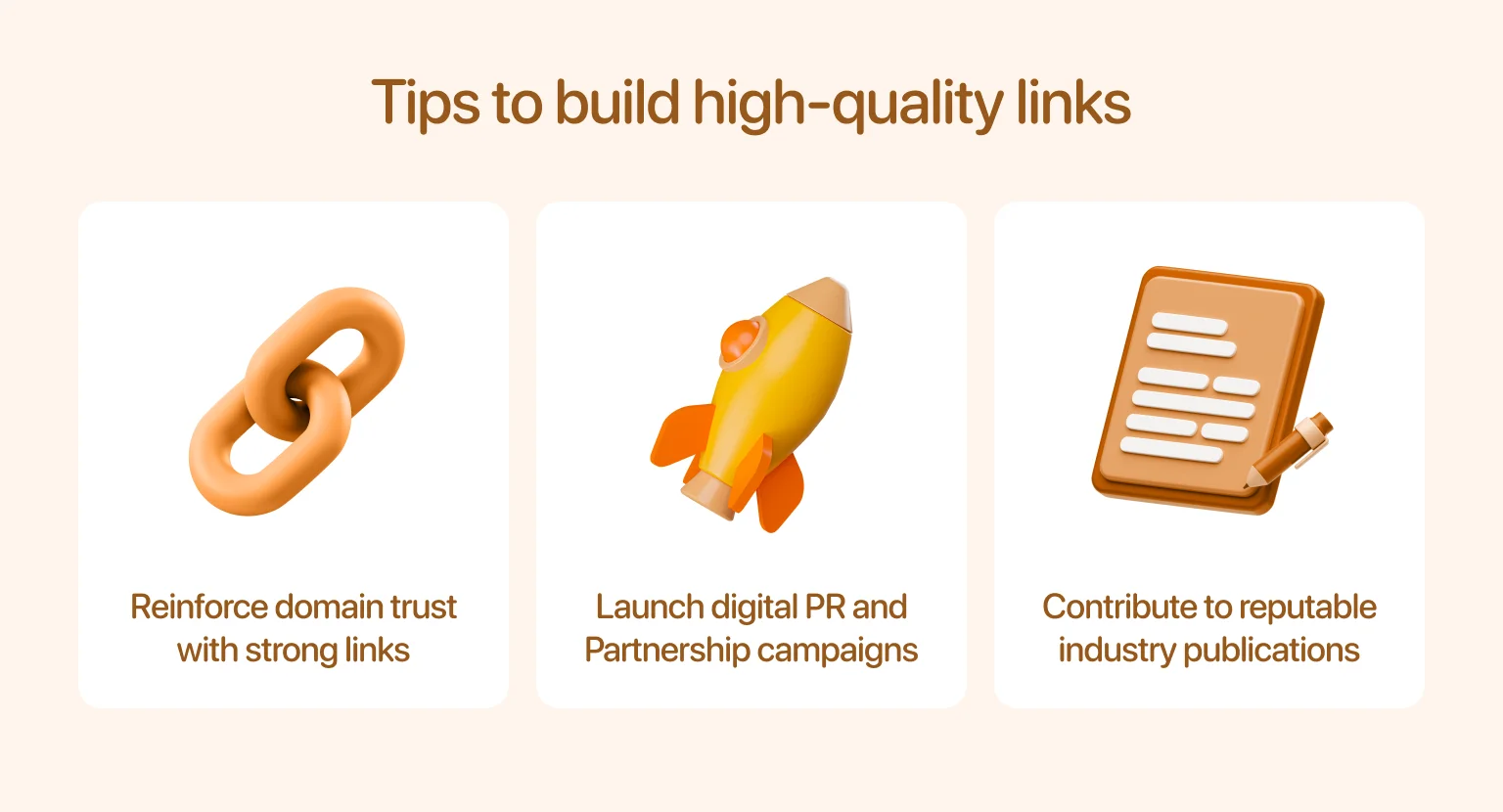
Strong backlinks reinforce domain trust. Effective methods include digital PR campaigns, partnerships, and contributing to reputable industry publications. Each relevant link from a credible source offsets the negative weight of spammy indicators.
Focus on earning mentions that align with your niche’s intent and audience expectations. Contextual authority matters far more than link volume. For proof of how strategic link-building impacts performance, see our SEO case study.
Monitoring link velocity
Link velocity represents the pace of backlink acquisition. Natural growth occurs gradually, whereas spikes indicate automated or unnatural activity. Search engines monitor these patterns closely to distinguish authentic expansion from manipulation.
Track link velocity monthly and investigate abnormal surges. Identify their sources and adjust your outreach or promotion campaigns accordingly. Maintaining steady, predictable growth helps signal authenticity and reliability.
Maintaining a natural link profile
A balanced link portfolio combines diverse anchors, trustworthy referring domains, and relevant content connections. Periodic reviews prevent any one pattern from dominating, keeping the overall link structure stable.
Establish internal processes for evaluation. Each review should classify links by trust, topic, and placement. Quick reactions to risk clues ensure you stay ahead of penalties and maintain sustainable SEO performance.
Following Google’s link guidelines
Adhering to Google’s linking standards safeguards against penalties and reinforces site credibility. The guidelines emphasize user-first value, relevance, and transparency in all link-related actions. Respecting these principles ensures your site stays compliant and resilient.
Revisit official documentation quarterly to align practices with evolving algorithm expectations. Ethical link-building grounded in relevance remains the most effective way to sustain strong rankings and reduce spam clues.
How to check website spam score
Knowing how to reduce the spam score of a website allows you to detect potential SEO risks before they escalate. Reliable analysis tools evaluate link quality, domain authority, and spam-related behaviors that may harm visibility. The goal isn’t to chase a perfect number but to maintain a healthy, credible link ecosystem that search engines can trust.
Here are some of the most effective platforms for ongoing monitoring and risk assessment:
- Moz Link Explorer
Moz introduced the original spam score model, built on 27 predictive signals that reflect spam-like characteristics. It reviews linking domains, anchor text usage, and link diversity, assigning each site a risk percentage. By examining these details, you can quickly identify problematic patterns across your backlink profile.
- Ahrefs Site Explorer
This tool digs deep into link origins, uncovering harmful backlinks and domains that could undermine your credibility. Its “Toxic Score” indicator highlights potential issues such as rapid link growth, link networks, or irrelevant referring pages. Ahrefs also allows comparison against competitors to understand relative link health.
- Semrush Backlink Audit Tool
Semrush combines machine learning and manual review to flag toxic links and suggest removal or disavow actions. It categorizes backlinks into risk levels, helping you decide which ones to retain, request removal for, or disavow. The audit feature also syncs with Google Search Console, ensuring data consistency across platforms.
- Diib SEO Tool
Diib offers ongoing link monitoring and real-time alerts for spikes in spam signals. It’s particularly effective for small and medium-sized businesses that need quick, automated insights without deep manual analysis. The tool grades your backlink profile health and suggests corrective steps when trends appear suspicious.
Checking these metrics keeps your site’s trust profile stable. Running audits once a month — or more frequently after link-building campaigns — ensures that harmful domains don’t accumulate unnoticed. Combining data from multiple sources gives a clearer, multi-faceted understanding of your domain’s reputation and helps prioritize cleanup tasks efficiently.
Final thoughts
Spam indicators shift constantly as search engines refine how they detect manipulation. Staying ahead means practicing disciplined link management and monitoring your backlink profile regularly. The faster you identify suspicious trends, the less damage they cause to authority, visibility, and traffic. Prevention, in this sense, becomes the most cost-effective SEO strategy.
Resilience depends on consistency — maintaining natural link growth, publishing valuable content, and avoiding shortcuts that attract penalties. Each cleanup effort strengthens your domain’s credibility and ensures that future campaigns perform more predictably. To see how proactive maintenance supports real-world SEO results, review our SEO case study.
FAQ
Does a high spam score mean my site is penalized by Google?
No. A high spam score is a warning, not proof of a penalty. It highlights behaviors that often lead to lower rankings.
Can my spam score get worse without any action on my part?
Yes. Spammy external sites may link to you without consent, raising perceived risk.
Can my competitors increase my spam score with negative SEO?
They can attempt it, but Google’s algorithms recognize most toxic link attacks. Monitoring and disavowal keep your site safe.
If my spam score is high, should I disavow all links?
No. Disavow selectively. Only reject links from irrelevant, low-quality domains verified as harmful.
How long does it take to see results after reducing the spam score?
Improvements usually appear within a few weeks to months as crawlers re-evaluate your backlinks.
What’s the difference between spam score and domain authority?
Spam score measures risk factors; domain authority measures strength. Both are independent metrics, used together for a full SEO picture.
How often should I audit my site for spam score issues?
At least quarterly. Regular checkups prevent toxic buildup and keep your rankings stable.